Technology
How MacBook Pro evolved over five years, from Intel to M4
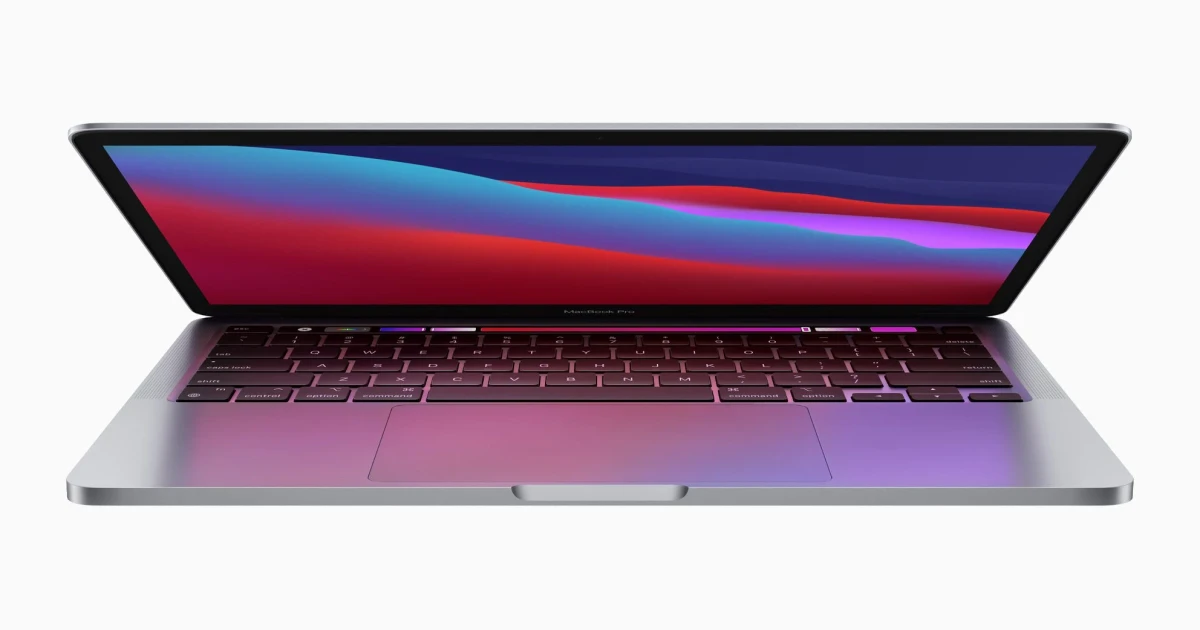
In November 2020, Apple introduced its first Apple-silicon 13-inch MacBook Pro with the M1 chip, alongside a new MacBook Air and Mac mini, kept the starting price at $1,299, and promised up to 20 hours of battery life. The move from Intel to Apple silicon changed what premium laptop buyers in the U.S. came to expect from a work machine: all-day battery life, fewer dongles, longer software support, and a cleaner performance story that rivals had to chase. Over five years, the MacBook Pro shifted from a familiar Intel notebook into a high-margin showcase for Apple’s own chips, and that shift reset the premium laptop market.
From Intel dependency to the M1 break
Apple called M1 its breakthrough chip for the Mac and its first chip designed specifically for the Mac, and the company promised up to 20 hours of battery life, versus up to 10 hours for the Intel version. The 13-inch M1 model carried a 13.3-inch Retina display, 500 nits brightness, and an 8-core CPU, but the real selling point was endurance, not just speed.
The 2021 redesign set the new premium standard
Apple’s biggest reset came in October 2021, when it unveiled 14-inch and 16-inch MacBook Pro models powered by M1 Pro and M1 Max. Apple said the redesigned notebook delivered extraordinary performance and battery life and featured the world’s best notebook display, while also bringing back more connectivity ports on the side of the machine.
Apple had spent years pushing many laptops toward USB-C minimalism, but the 2021 redesign acknowledged a premium buyer base that still wanted built-in connectivity instead of a bag full of adapters. For photographers, video editors, and office users alike, that meant less friction at desks and conference rooms, and it put pressure on Windows competitors to match both performance-per-watt and the practical convenience of having more ports on the chassis.
The redesign also showed how Apple was reshaping the product ladder. The 13-inch model did not disappear, but the 14-inch and 16-inch machines became the true flagship Pros, making the smaller notebook feel more like the entry point for the line than the center of it. Apple released macOS Monterey on October 25, 2021, giving the new hardware a software milestone to anchor the transition.

Repairability improved, but only at the margins
The 2021 redesign also became a case study in repairability. The battery in the new MacBook Pro was much easier to replace than in earlier models, iFixit’s teardown showed, helped by pull tabs that made battery swaps more successful. Even so, the broader machine was still not built like a repair-first laptop, and the improvement was limited rather than revolutionary.
Apple’s best-selling premium notebook became somewhat easier to service in one key area, but it did not turn into an open, modular machine. Apple now publishes repair manuals for models such as the 14-inch M4 Pro or M4 Max, but the ecosystem still centers on Apple’s parts, tools, and service channels rather than easy user upgrades.
Apple kept the lower rung, then stretched the top end
Apple did not abandon the lower end of the Pro line after the redesign. In 2022, it continued selling a 13-inch MacBook Pro with the M2 chip, which showed that the smaller model remained part of the lineup even as the 14-inch and 16-inch machines became the true premium showcase. That kept an entry point in place for buyers who wanted MacBook Pro branding without paying for the largest chassis or the highest-end silicon.
In 2023, Apple refreshed the line again with 14-inch and 16-inch MacBook Pro models using M3, M3 Pro, and M3 Max chips. Those 2023 models are compatible with macOS Sonoma and macOS Sequoia, and Sonoma launched on September 26, 2023, giving the new generation another clear software marker. Apple’s model guide shows where a machine fits in the history of MacBook Pro, and that history now stretches from Intel machines through multiple Apple-silicon generations.
M4 added AI and extended the software runway
Apple announced the MacBook Pro with the M4 family of chips in October 2024, alongside Apple Intelligence. Apple also introduced M4 Pro and M4 Max as joining M4 to form what it called the most advanced family of chips ever built for a personal computer.
The MacBook Pro was now a platform for Apple Intelligence. macOS Sequoia supports the 2024 14-inch and 16-inch MacBook Pro models, plus 2023, 2022, 2021, 2020, and several 2019 and 2020 Intel models.
What changed for buyers, and what changed for rivals
For U.S. consumers, the biggest gains were practical: better battery life, more built-in ports, stronger long-term software support, and at least one meaningful improvement in repairability around the battery. The tradeoff was that Apple used those gains to strengthen its pricing power and push the Pro line deeper into luxury territory, while keeping the 13-inch model as the lower-cost gateway and reserving the most dramatic changes for the 14-inch and 16-inch machines.
For competitors, the Apple silicon transition was a warning shot. Once Apple controlled both the chip and the notebook design, it could optimize battery life, thermals, display behavior, and port choices as one package, and that raised the bar for every premium Windows laptop. The company has continued that formula beyond M4 and now carries it into the M5 generation.
Sources
- [1]news.google.com
- [2]apple.com
- [3]support.apple.com