US News
How Medicaid cuts could push disabled Americans back into institutions

Rebecca Anger, a disabled social activist and aspiring attorney in Chicago, depends on the kind of Medicaid support that keeps people in apartments, family homes, and neighborhoods instead of institutions. That promise is now under pressure from new cuts and a Justice Department memo that alarms disability advocates because it suggests the state obligation to fund community-based care may be narrower than decades of disability rights law has treated it.
What Olmstead changed
The modern fight over disability care starts with Olmstead v. L.C., the 1999 Supreme Court decision that held unjustified segregation of people with disabilities is discrimination under the Americans with Disabilities Act. The U.S. Department of Health and Human Services still defines community placement as the most integrated setting appropriate to a person’s needs. For years, that framework has given disabled Americans a way to demand services that let them live where everyone else lives.
The case was not abstract. Lois Curtis and Elaine Wilson, the two women at the center of Olmstead, were kept in Georgia Regional Hospital at Atlanta even though they could live in the community with support. Their case became the backbone of a half-century push to replace institutional confinement with community integration, and it remains the standard that disability lawyers and advocates invoke when states try to cut back.
The Medicaid services on the line
Medicaid is the main public payer for home- and community-based services, or HCBS, and a 2025 KFF issue brief covers who is covered, what the program pays for, and how those supports work in practice. The vulnerable services are the ordinary things that make independence possible, including personal care attendants, help with bathing and dressing, homemaker services, transportation, respite for family caregivers, home modifications, and supported employment.
Most states deliver HCBS through Section 1915(c) waivers. In March 2025, MACPAC counted 46 states and the District of Columbia operating more than 250 of them in 2024. The Centers for Medicare & Medicaid Services tracks Medicaid and CHIP enrollment nationwide. Even before any new cuts, access is already limited: A Harvard Law Review note put the number of people on Medicaid HCBS waiting lists across states at 692,000 in 2023.
Who would lose access first
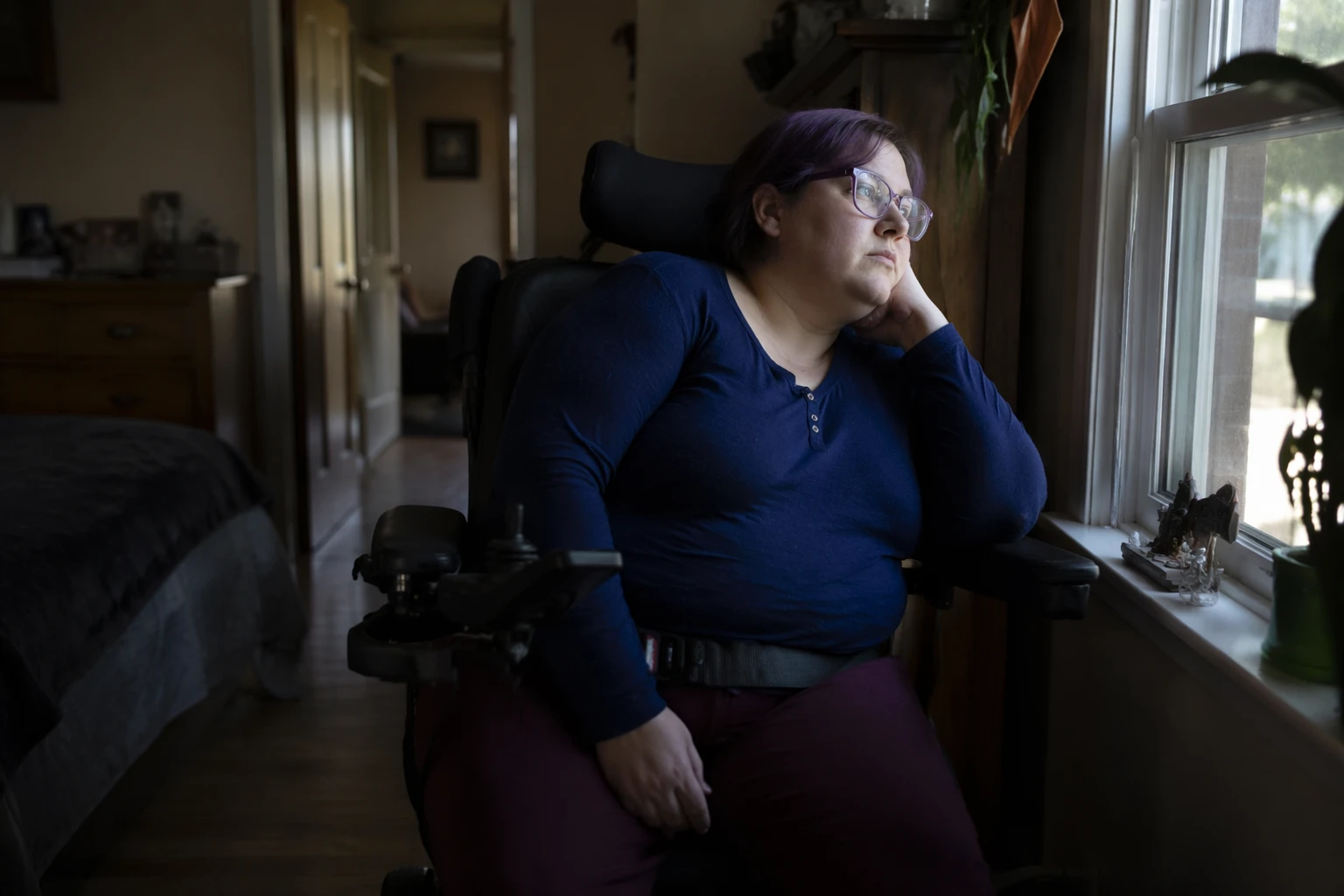
The first people squeezed out are usually the people already waiting. Someone on a waiver waiting list is not asking for a luxury benefit, but for the hands-on support that lets a person get dressed, get to work, or have a caregiver sleep through the night without fear of a crisis. People with the most intensive support needs, and families already balancing jobs with unpaid caregiving, are the most exposed when states slow enrollment or trim services.
Families in Parkville, Maryland, fear financial ruin as cuts and attacks on paid family caregiving loom, because the money they save by keeping a relative at home is often the difference between staying afloat and falling apart. If those supports vanish, the burden shifts to spouses, parents, and adult children, who may be forced to reduce work hours or leave jobs entirely.
What replaces community care
When community supports disappear, the alternative is usually an institution, and that is a far more rigid and expensive system. States must pay for round-the-clock staffing, facility operations, room and board, and the medical supervision that comes with institutional placement, while families absorb the hidden costs of travel, lost wages, and time away from their own lives. A person who could have remained in the community with a few hours of daily assistance can instead end up in a setting that is less personal, less flexible, and harder to leave.
Why the alarm is so sharp now
The fear intensified after a June 2026 Justice Department Office of Legal Counsel memo said states are not legally required to provide community-based care. Disability groups and advocates saw that as a threat to the integration mandate that has governed disability policy for years and feared a return to institutionalization. The memo was part of a broader Trump administration push affecting disability integration rights.
More than 30 protesters were arrested at a June 2025 demonstration against Medicaid cuts, including some people in wheelchairs.
Sources
- [1]nbcnews.com
- [2]hhs.gov
- [3]macpac.gov
- [4]harvardlawreview.org
- [5]kff.org
- [6]npr.org
- [7]nbcwashington.com
- [8]inthesetimes.com