Sports
How Northern Ireland helped shape the World Cup chant Olé, Olé, Olé
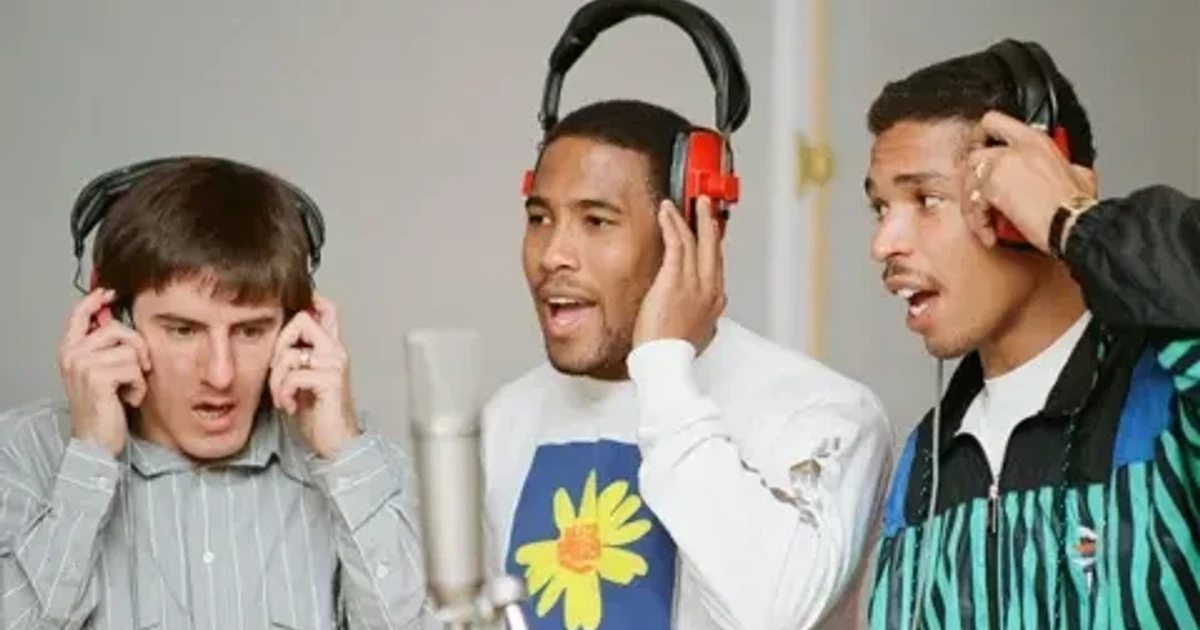
Some World Cup songs survive because they are built for thousands of voices, not for polished listening. Northern Ireland’s place in the story of Olé, Olé, Olé sits at the point where a simple refrain, a packed stadium and a major tournament turned pop culture into ritual.
A chant that could travel
The chant’s power came from how little it asked of the crowd. A short phrase, a steady rhythm and an easy refrain were enough to make it work in any stadium, in any language, with almost no musical training at all. That simplicity is why songs like this cross borders so quickly and why they can become part of national memory instead of fading with the final whistle.
The version that spread globally was rooted in a Belgian song originally titled “Anderlecht Champion,” later adapted into the Spanish-language “E Viva Mexico” for the 1986 World Cup. Once the refrain entered football culture, it moved far beyond its first setting and became familiar in stands around the world, including among Republic of Ireland supporters.
Mexico 1986 gave the chant its passport
The 1986 FIFA World Cup ran in Mexico from 31 May to 29 June 1986, and it is the tournament most closely tied to the chant’s rise. Northern Ireland were one of the home nations there, although they did not reach the last 16, while the broader tournament atmosphere helped transform a local football song into a mass chant.
That matters because the World Cup does more than crown a champion. It creates a temporary global language, where a chorus can be repeated by fans who have never met and may not even share a first language. In Mexico, the chant’s shape was simple enough to be borrowed, repeated and carried into later tournaments without losing its identity.
The route through Mexico, Spain and Italy shows how a World Cup song becomes a piece of shared memory rather than a fixed recording. Once a song is tied to crowd participation, its real life begins in the stands, not in the studio.
Why the simplest songs last
Football chants endure when they are easy to remember under pressure. The best of them are almost architectural in their design, built on repetition, a clear beat and a melody that does not collapse when sung by tens of thousands of people at once. That makes them useful at exactly the moments when fans need to feel united, after a goal, before a kickoff or in the long pause before a decisive match.
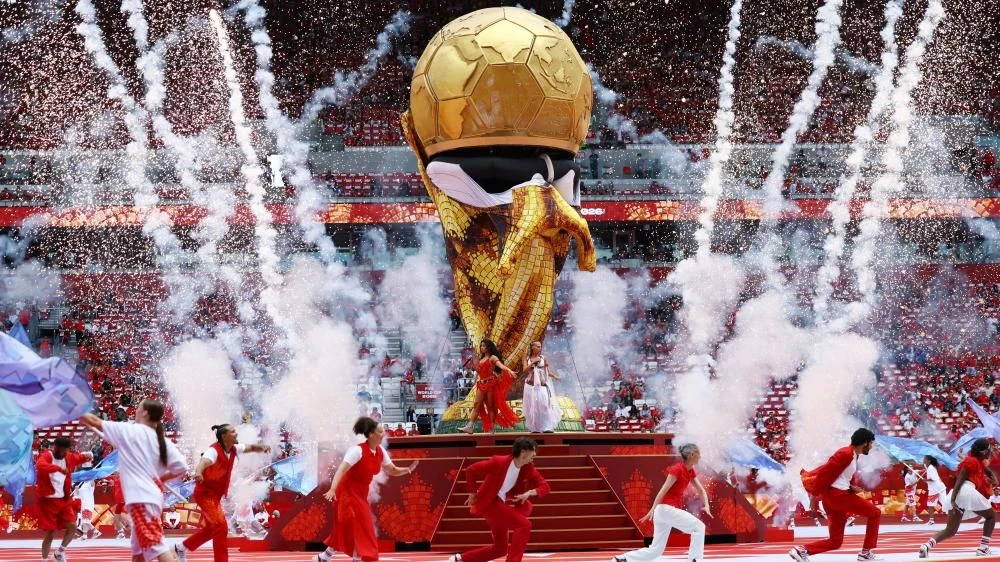
That is also why some tournament songs vanish and others keep returning. A complicated pop single may have a brief run on radio, but a chant that a crowd can claim as its own can outlive the competition that first popularized it. Olé, Olé, Olé worked because it was less a performance than a public action.
Italy 1990 gave Ireland its own anthem
If Mexico 1986 showed how a chant could spread, Italy 1990 showed how a national team could build its own soundtrack around football pride. The Republic of Ireland’s official World Cup song, “Put ’Em Under Pressure,” was produced by U2’s Larry Mullen Jr. and featured Moya Brennan on the intro. It stayed at No. 1 in the Irish charts for 13 weeks, giving the team a song that was inseparable from the mood of the country.
Ireland’s run in Italy was also its first appearance in the World Cup finals, and the tournament quickly became a landmark in Irish sporting memory. The team drew 1-1 with England, beat Romania on penalties in the last 16, and then lost 1-0 to Italy in the quarter-finals at the Stadio Olimpico in Rome on 30 June 1990. The song and the results reinforced each other, turning a short tournament run into a lasting cultural reference point.
That combination is what makes football songs endure across generations. They do not just accompany victories, they frame them, helping supporters remember where they were, who they were with and what the team seemed to mean at that moment. In Ireland’s case, “Put ’Em Under Pressure” became part of the match-day story itself.
FIFA keeps turning music into tournament identity
FIFA’s own history pages make clear that songs and anthems are not an accessory to the World Cup, but part of its official language. Modern World Cup songs are used as official anthems and broadcast or advertising themes, which means the tournament has long understood music as a way to brand memory and organize feeling.
That logic is still intact for 2026. FIFA announced “DNA” as the new official anthem on 10 June 2026 and said it would be performed at the opening ceremony in Mexico City on 11 June 2026. The anthem is being performed by Andrea Bocelli, David Guetta, Megan Thee Stallion and EJAE, a line-up that shows how seriously the tournament still treats the song as part of its identity.
The lesson from Olé, Olé, Olé is that the World Cup does not merely borrow pop culture, it ritualizes it. A strong chant survives because it is easy to sing, easy to share and easy to remember when a generation later the stadium lights come back on. Northern Ireland’s place in that story helps explain why some football songs disappear and others become the sound of the tournament itself.
Sources
- [1]bbc.com
- [2]wikipedia.org
- [3]news.bbc.co.uk
- [4]irishcharts.ie
- [5]officialcharts.com
- [6]plus.fifa.com
- [7]fifa.com