Science
How Remoras Thrive by Hitching Rides in the Deep Sea
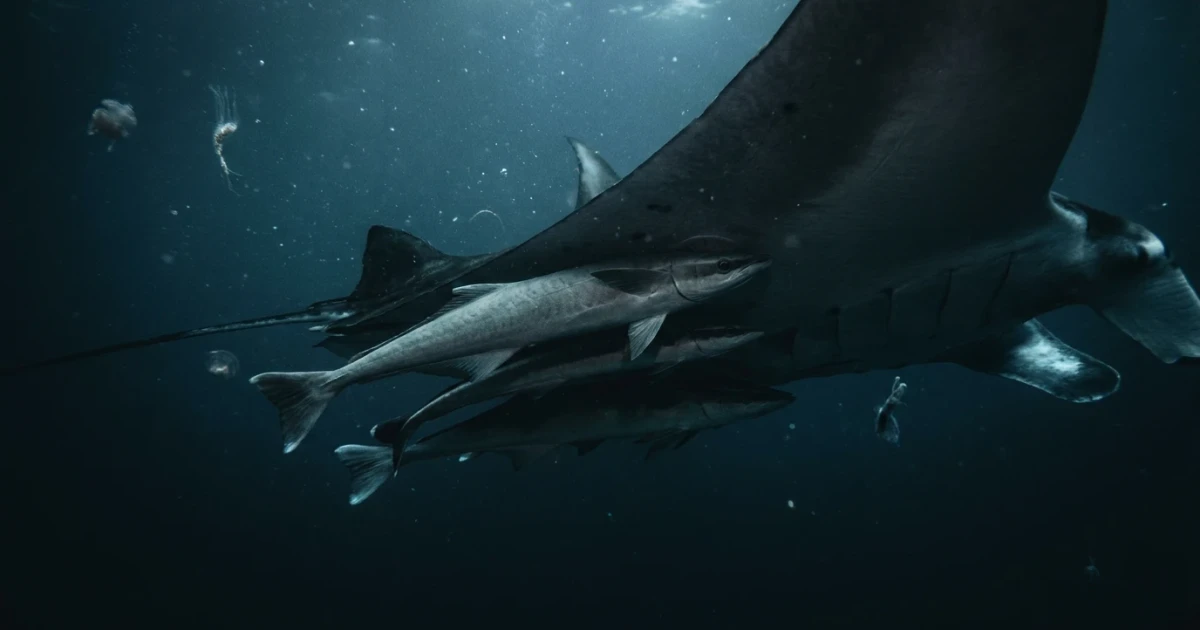
Remoras, known as hitchhiker fish, have developed a remarkable adaptation: they survive the deep ocean by attaching themselves to larger marine hosts, traveling through zones where sunlight barely penetrates. The New York Times reports that these fish, particularly Remora remora, are frequently found clinging to sharks, whales, and sea turtles as they traverse the sunless depths of the ocean.
Specialized Adaptations for a Hidden Lifestyle
The ability of remoras to attach to their hosts is made possible by a unique anatomical feature: a suction disc located on the top of their heads. This disc allows them to create strong suction, enabling the fish to remain attached even as their hosts dive to great depths. According to a recent study in Current Biology, the structure and muscles of the disc give remoras flexibility to attach to a variety of surfaces, from the rough skin of sharks to the smooth shells of turtles.
- Remora remora can reach lengths of up to 86 cm and are found in tropical and temperate seas worldwide.
- They are known for their symbiotic relationships with large marine animals, feeding on scraps and parasites.
The New York Times highlights that while the remora benefits from free transportation and access to food, their presence is generally harmless to the host animal. This commensal relationship has evolved to allow remoras to exploit ecological niches that would otherwise be inaccessible.
Life in the Absence of Sunlight
Remoras are often observed in the ocean's mesopelagic zone, between 200 and 1,000 meters deep, where sunlight is minimal or entirely absent. This habitat poses challenges for most fish due to low temperatures, high pressure, and limited food sources. By hitching rides, remoras conserve energy that would otherwise be spent swimming long distances in search of food or mates.
The IUCN Red List currently classifies Remora remora as a species of "least concern," indicating that their population is stable partly because their hitchhiking behavior helps them avoid many predators and exploit widely distributed resources.
Distribution and Genetic Insights
Data from the Global Biodiversity Information Facility (GBIF) shows that remoras have a cosmopolitan distribution, with records from the Atlantic, Pacific, and Indian Oceans. Their presence is closely tied to the migratory patterns of their hosts, allowing them to inhabit diverse marine environments.
Genomic studies, such as those available through the NCBI genome assembly for Remora remora, are beginning to reveal how the species has adapted at the molecular level to life in the deep sea and to its specialized mode of locomotion and feeding.
Ecological Role and Future Research
Remoras play an underappreciated role in marine ecosystems. By cleaning parasites from their hosts and consuming leftover food, they contribute to the health of larger marine species. Scientists are continuing to study the mechanics of remora attachment and their interactions with host animals to better understand deep-sea symbioses.
As research continues, remoras serve as a fascinating example of how life adapts to extreme environments by forming unique partnerships. Their ability to thrive where sunlight doesn't reach demonstrates the ingenuity of evolution in the ocean's most mysterious regions.