US News
How the Declaration of Independence survived, faded and endured over time
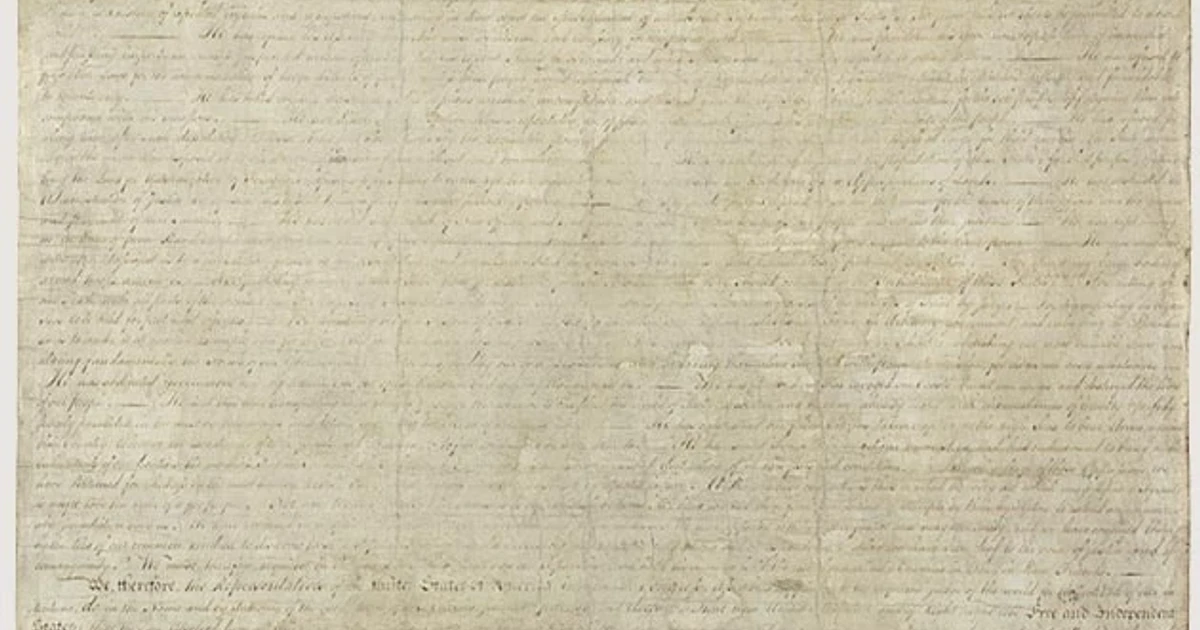
The Declaration of Independence did not simply age behind glass. It was rolled, unrolled, carried, copied, displayed in sunlight and eventually pulled from view for repair, and each mark on the parchment records how Americans treated their founding symbol. Its faded script is not a museum accident so much as a physical ledger of war, travel, public ceremony and preservation.
From adopted text to signed parchment
The Continental Congress adopted the Declaration on July 4, 1776, but the document most people imagine, the signed parchment copy, came later. On July 19, Congress ordered it to be engrossed, meaning written out in a large legible hand, and Timothy Matlack, a clerk in the Pennsylvania State House, carried out that work between July 19 and August 2, 1776. Most delegates began signing on August 2, turning the paper into the version that would become the nation’s most recognizable civic relic.
The parchment itself is about 29½ by 24 inches, with a large flourished title at the top: “The unanimous Declaration of the thirteen united States of America.” That physical scale matters because it was made to be read, displayed and handled as a public act, not stored as a private treasure. The manuscript’s size, lettering and later wear all show that it was meant to live in the world, not only in memory.
How the Declaration reached the public
The declaration spread first through print, not through the parchment that now sits at the National Archives. John Dunlap printed the first broadsides on July 4, 1776, and copies moved quickly to state assemblies, military officers and local leaders. Newspapers reprinted the text, and communities held public readings that made the document a shared political event as much as a founding statement.
The story changed again in January 1777, when Baltimore printer Mary Katharine Goddard published the first copies that included the signers’ names. That detail gave the declaration a new kind of public force, tying the idea of independence to the men who had accepted the risk of attaching their names to it. The nation’s first encounter with the Declaration was therefore not a single unveiling, but a fast-moving sequence of broadsides, newspaper text and public recitation.
Why the parchment faded
The wear on the original manuscript came from repeated use and from the conditions it endured. Conservation experts have described how the Declaration was rolled and unrolled countless times, stored in trunks or linen bags during wartime and later used to prepare facsimile copies. The parchment also spent long stretches in harmful light, most notoriously for 35 years beginning in 1841 in the Patent Office building across from a sunny window.
By 1876, observers were already describing the document as faded and time-worn, with some signatures only dimly discernible or wholly invisible. That damage was not the result of neglect alone, but of reverence mixed with convenience, a familiar pattern in how nations handle symbols they want both to preserve and to display. The National Archives says the condition of the parchment is itself a sign of how much Americans have valued it, because years of public exhibition faded and worn the document.
The damage also explains why the Declaration was copied so often. In 1820, Secretary of State John Quincy Adams commissioned William J. Stone to make a full-size copperplate engraving, an early preservation response to visible aging. The 1823 Stone engraving remains the most frequently reproduced version of the Declaration, shaping the image most Americans know today while the original continued to deteriorate.
What restoration revealed
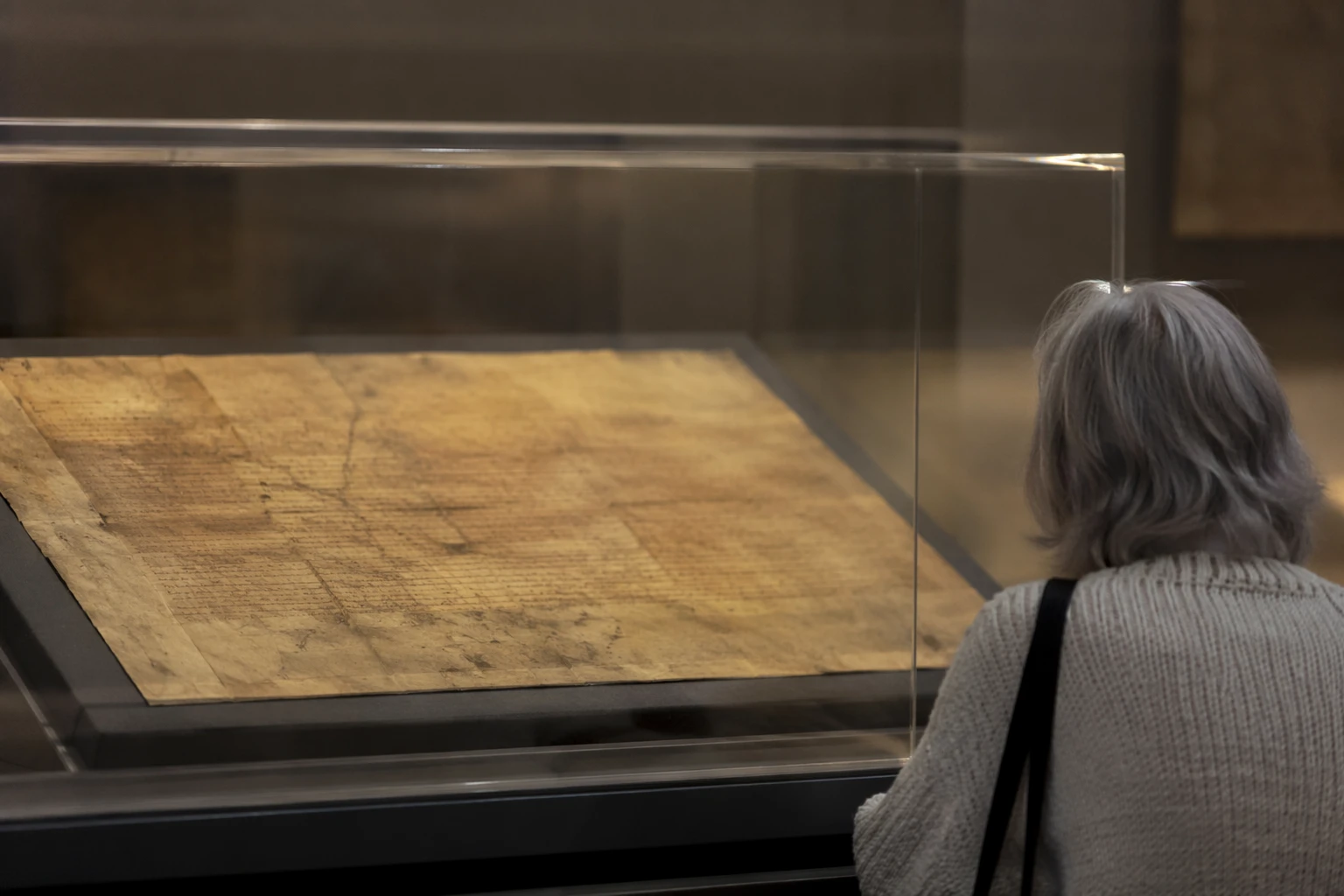
The manuscript was taken out of public view in July 2001 for needed repairs, and it was removed from the Rotunda that year so it could be placed in a new case. When staff examined the reverse side, they found two lines of docket text identifying it as the “Original Declaration of Independence dated 4th. July 1776.” Even the back of the sheet carried proof of its official life, not just its famous front.
Today the National Archives keeps the original under the most exacting archival conditions possible. That level of care is a direct answer to the history of damage that preceded it: movement, light, display and repeated handling all left a record in the parchment. The repairs did not erase that history, and the document’s survival now depends on acknowledging how fragile it became.
A symbol that outlived its first body
The original handwritten copy at the National Archives is not legally binding, but its civic force has only grown. The document was influenced by the Virginia Declaration of Rights, and Abraham Lincoln later called it “a rebuke and a stumbling-block to tyranny and oppression.” That reading gave the Declaration a moral life beyond the events of 1776, making it a text people have returned to in struggles over freedom and equality.
Its endurance says as much about public memory as it does about paper and ink. The faded parchment shows that Americans did not keep their founding symbol still, they used it, carried it, exposed it and eventually fought to save it. The Declaration survived because generations treated it as both a document and an obligation.