Politics
How the President Can (and Can’t) Bring Congress Back
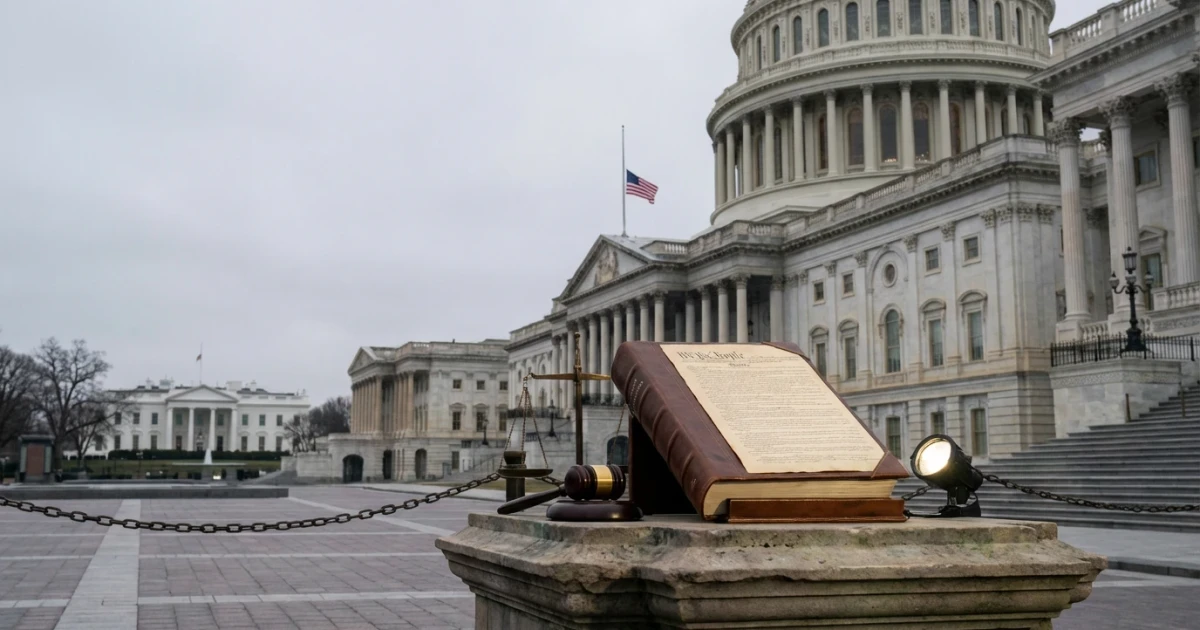
As political tensions rise in Washington, questions have emerged about whether the President—currently Donald Trump—can compel Congress to return from recess and resume legislative business. The issue, discussed recently by Punchbowl News, highlights a rarely invoked constitutional provision and a complex history of executive-legislative relations.
Presidential Power to Reconvene Congress
The U.S. Constitution offers the President certain powers regarding congressional sessions. According to Article II, Section 3, the President may, "on extraordinary occasions, convene both Houses, or either of them." This means the President can call Congress back into session when it is in recess, but only under specific circumstances considered "extraordinary." The provision was designed by the Founders to ensure that the government could respond to urgent national issues when Congress was not in regular session.
While this authority exists, it is rarely used in modern times because Congress now meets year-round, with only short recesses. As documented by the Congressional Research Service, the last time a president formally convened Congress was in 1948, when President Harry Truman called the "Turnip Day Session" to address urgent domestic issues.
Limitations of Presidential Authority
However, the President cannot force Congress to conduct business, pass legislation, or even guarantee a quorum during a special session. Once Congress reconvenes, both chambers set their own agendas under House and Senate parliamentary rules. Members could technically gavel in and out of session with minimal activity, as has been done through "pro forma" sessions to block recess appointments or other executive actions.
As explained in the CRS analysis of Senate procedure, a pro forma session is a brief meeting, often lasting just minutes, where no substantive business is conducted. Both parties have used this tactic in recent years to prevent presidents from making recess appointments, underscoring the limits of presidential power over congressional scheduling.
Adjournments and the President’s Role
Another constitutional clause—Article II, Section 3—states that if the House and Senate disagree on the time of adjournment, the President "may adjourn them to such time as he shall think proper." This power has never been exercised in U.S. history, as Congress typically agrees on its calendar or resolves disputes internally.
According to historical data compiled by the CRS, sessions, adjournments, and recesses of Congress are governed by a combination of constitutional provisions, chamber rules, and negotiated agreements between House and Senate leaders. The President’s role is generally reactive—convening or adjourning only when the legislative branch cannot resolve its schedule.
Recess Appointments and Political Strategy
Much of the debate about presidential authority to reconvene Congress is tied to the issue of recess appointments, where the President can fill certain positions without Senate confirmation when Congress is officially in recess. Both parties have used procedural tools like pro forma sessions to block such appointments, sometimes resulting in legal challenges up to the Supreme Court.
- Presidents have only called special sessions a handful of times since 1789.
- Congress can use pro forma sessions to avoid being officially in recess.
- The President’s power to adjourn Congress has never been used.
Analysis and Outlook
While President Trump—or any president—has constitutional tools to bring Congress back to Washington, the effectiveness of such moves is limited in practice. The executive cannot dictate legislative action or force Congress to take up specific bills. The threat of reconvening may have political value, signaling urgency to the public, but ultimately, the legislative branch retains control over its proceedings.
As uncertainty continues over the relationship between the White House and Capitol Hill, these rarely used constitutional provisions offer a reminder of the delicate balance of powers at the heart of American governance. For readers interested in the official rules, procedures, and historical data, resources like the U.S. Constitution, Congressional calendars, and CRS session tables provide in-depth background.
Whether or not President Trump attempts to invoke these powers, the process remains a testament to the enduring importance of constitutional checks and balances.