US News
How to handle teacher gifts without pressure or friction

In the 2020-21 school year, 94.8% of public school teachers paid for classroom supplies out of pocket without reimbursement, the National Center for Education Statistics found. A group gift can solve one problem and create another. It may stop the scramble to outspend other families, but if the contribution feels obligatory, the gesture can turn into a quiet test of who can afford to participate.
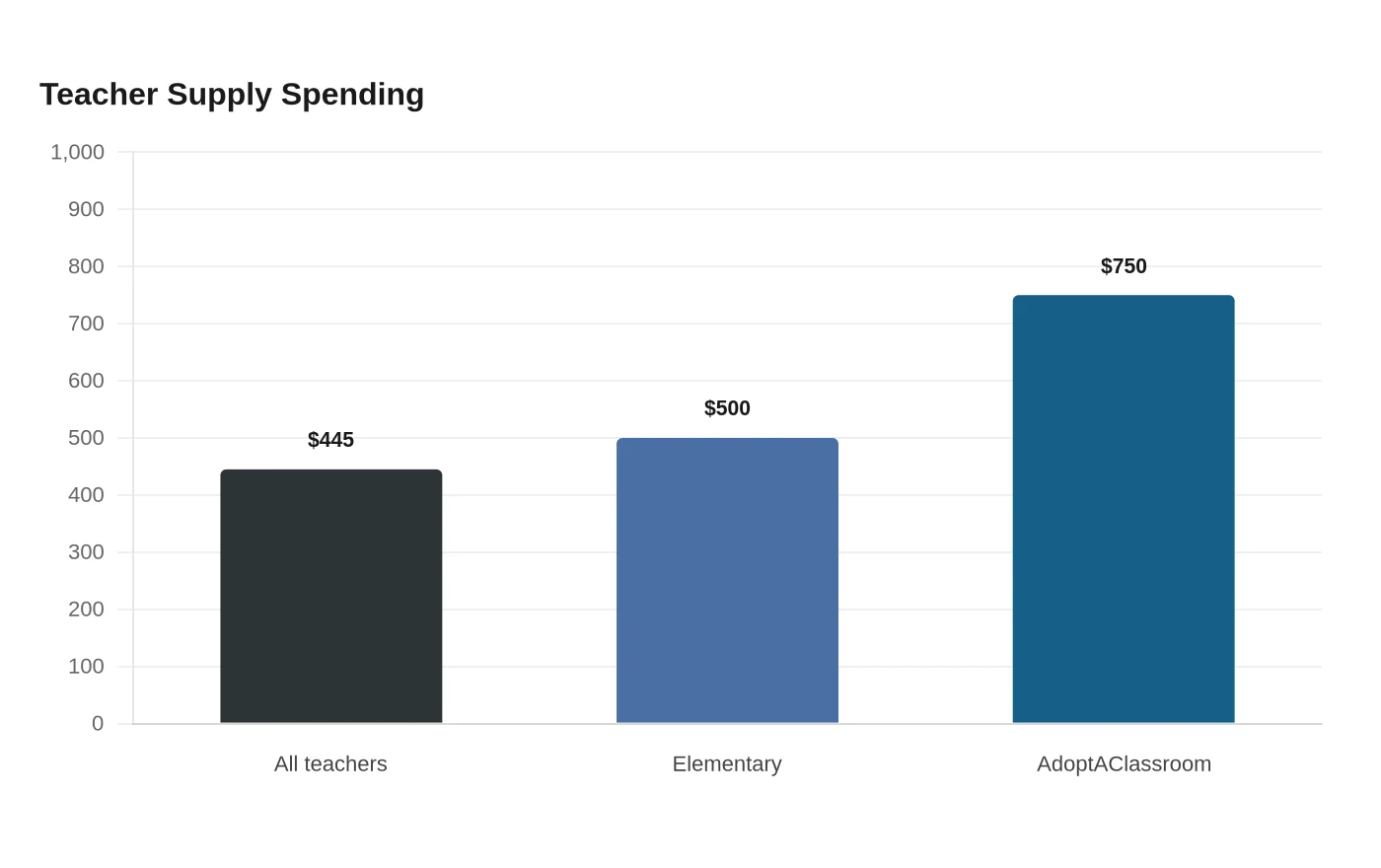
The average amount was $445 for all public school teachers and $500 for elementary teachers. AdoptAClassroom.org found an even higher burden in the same school year: teachers spent an average of $750 on supplies, and 30% spent $1,000 or more.
Why the money conversation gets sensitive
Once families know teachers are already subsidizing their own classrooms, a suggested collection can start to feel morally loaded. Some parents hear, “This is the expected amount,” even when no one says those words out loud. Others worry that skipping the pool will be noticed, or that contributing less will signal indifference to the teacher or the school.

The cleanest approach is to separate appreciation from obligation. National PTA guidance calls for group gifts to be open to all parents with no pressure around a specific dollar amount. A simple rule follows: everyone gives what they want and can afford, then the class or group chooses a gift based on the money actually received.
Set the rules before anyone feels watched
The easiest friction comes from vague expectations, especially when one parent casually names a target and everyone else treats it like a bill. A better model is to decide in advance that participation is voluntary, the amount is open-ended, and no family will be asked to justify what it gives. That protects both families on tight budgets and families who simply prefer to contribute time, a note, or a handmade item instead of cash.
National PTA’s financial guidance calls for funds collected and spent for PTA purposes to follow written procedures, be reviewed annually, and include safeguards such as dual administrators and monthly reconciliation. They reduce the risk of confusion, rumors, or the kind of mistrust that can spread quickly in a school community when money is collected informally.

A practical framework looks like this:
• State that the gift is optional and that no set amount is expected. • Let families contribute whatever they can, from nothing to whatever they choose. • Keep the collection and spending process written, simple, and visible to organizers. • Use two adults where possible, and reconcile the totals regularly. • Tell parents what kind of gift the group is aiming for before any money is collected.
Choose gifts teachers actually use

The best teacher gifts are rarely the most expensive ones. Teachers consistently say they value handwritten notes, student art, and practical options such as gift cards more than novelty items they already have in abundance. One former kindergarten teacher captured the mood bluntly, calling mugs the “fruitcake” of classroom gifts.
That reaction makes sense when the classroom itself is already a place of constant supply shortages. A generic trinket adds clutter, but a card or gift card gives a teacher something useful or personal. A gift card can cover books, coffee, classroom supplies, or a small personal expense without forcing the teacher to turn one more object into storage.
The message also matters. A child’s note or drawing costs little, but it carries a specificity that bulk gifts do not. It tells the teacher exactly who noticed a lesson, a reading breakthrough, or a hard week.
Make the pool fair enough for the whole class
The fairest group gifts are the ones that reduce the chance of social comparison. A suggested contribution can become awkward when it is framed as the “right” amount, especially in communities where some parents can write a check easily and others cannot. In that setting, a pool meant to build unity can end up reminding everyone who has slack in the family budget and who does not.
Teacher appreciation efforts often cluster around Teacher Appreciation Week. National PTA marked it for May 4-8, 2026, but the same rules apply in June pickups, holiday collections, and end-of-year sends. If the school’s parent group wants to do something larger during that week or any other time, the most equitable approach is to keep the entry point low and the participation open. No family should have to opt out publicly because the suggested amount was beyond reach.
In reality, a $5 contribution, a jar of collected notes, or a single gift card can coexist with larger donations without creating a hierarchy of care.
Sources
- [1]bbc.co.uk
- [2]ptaourchildren.org
- [3]pta.org
- [4]nces.ed.gov
- [5]adoptaclassroom.org
- [6]today.com