US News
How to make small rentals feel bigger and warmer
Cushions, throws and removable wallpaper can make a small rental feel less cramped without touching the walls or floor plan. Small rentals often feel cramped because every surface competes for attention, and the fastest fixes are usually the cheapest ones: softening hard lines, reducing visual clutter and adding enough warmth to make a room feel finished without trying to renovate it.
On 14 August 2024, Katherine Ormerod wrote in the Guardian that the goal is creating “a feeling of permanence and warmth,” pointing to low-cost moves such as adding colour with cushions and using removable wallpaper. In a market where renters have limited freedom and smaller floor plans, those changes are less about style points than about making a room feel livable.
Start with a calmer visual field
A small room reads larger when the eye has fewer interruptions. Blair advised in the Wall Street Journal: “Choose a consistent, calming palette to unify spaces and prevent visual clutter.” That advice works especially well in rentals because it does not depend on permanent changes, only on choosing a tighter group of tones for textiles, storage, and the few items that stay in sight all day.
A practical version of that rule is simple: pick two main colours and one accent, then repeat them in cushions, bedding, curtains, and a rug. Budget-wise, this can stay modest, often around $30 to $150 if you are swapping soft furnishings rather than buying new furniture. It is the easiest path for studio apartments and one-room rentals, where too many competing colors can make a small place feel even tighter.
Use warmth to make temporary spaces feel settled
Renters are often told to decorate as if they will move out tomorrow, which can leave rooms feeling unfinished. Cushions, throws and removable wallpaper are small interventions, but they change the way a room reads at a glance. They give you texture and depth without asking a landlord for permission.
• Cushions and throws: Budget, about $25 to $120. Effort, low. Best for anyone who needs an instant warmth boost in a bedroom or living room.
• Removable wallpaper: Budget, often $60 to $250 for a feature wall depending on the wall size and pattern. Effort, medium. Best for a blank entryway, a home office corner or a narrow hallway that needs a focal point.
• Soft curtain panels: Budget, about $40 to $180. Effort, low to medium. Best for renters who want to hide plain windows or visually soften a boxy room.
These are renter-friendly because they change atmosphere rather than architecture. They are also practical in small homes where one decorative decision has to do the work of several.
Let lighting do more than brighten the room
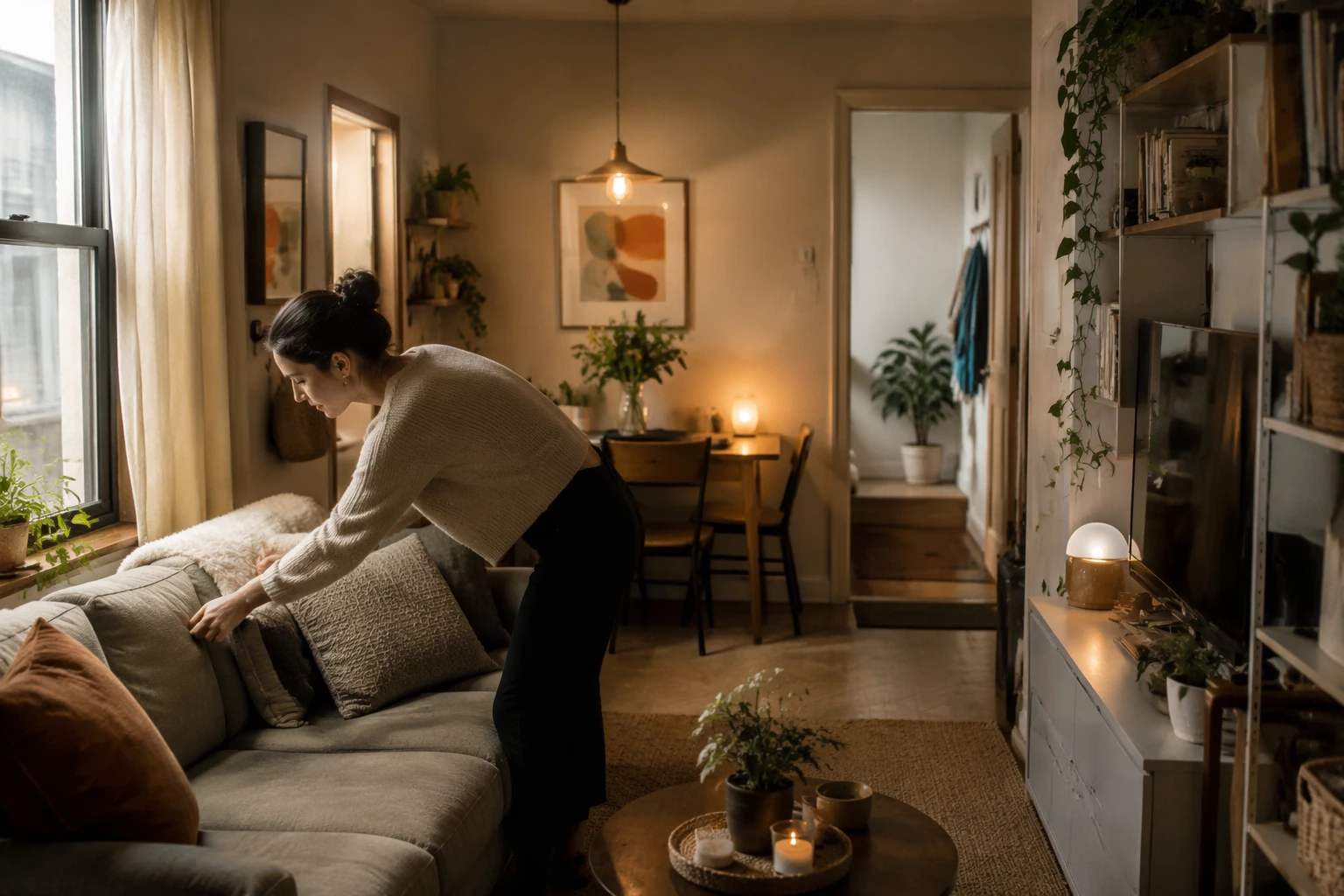
Lighting is one of the most powerful small-space tools because it changes how deep a room feels. Across recent small-room coverage, including Food52’s 2 June 2025 piece on a small-space lighting trick, the same point holds: a single harsh overhead fixture can flatten a room, while more thoughtful light placement creates dimension.
For renters, the best approach is usually layered and portable. A table lamp, a floor lamp, or a clip-on light can cost roughly $20 to $150 apiece, depending on style and quality, and the effort is usually low unless you need new bulbs or a dimmer. This works best in rooms with weak natural light, low ceilings or dark corners, where a little glow does more for perceived space than another piece of furniture ever will.
Think vertically, not just horizontally
Vertical design keeps returning in small-space coverage because walls are often underused. In a tight room, the space above eye level matters as much as the floor. Apartment Therapy’s piece, “The 4 Rules Interior Designers Always Follow in Small Spaces,” and Food52’s small-space and renter-focused articles on paint tricks, small-bedroom decorating and small apartment living room ideas all point in the same direction: move storage and visual interest upward.
The low-cost version of that strategy includes wall shelves, tall bookcases, hooks, over-door organizers and curtain rods mounted higher than the window frame. Budget can stay around $20 to $200, and effort ranges from low to medium depending on whether installation is required. It works especially well for renters with narrow rooms, because vertical lines make ceilings feel higher and keep the floor clear.
Choose furniture that can change jobs
Flexible furnishings matter in small rentals because a room may need to serve as a living room, office and guest space in the same day. Pieces that fold, stack, tuck or roll make that possible without filling the floor with one-purpose objects. In small rentals, space-saving furniture works better than oversized statement pieces.
Look for nesting tables, storage ottomans, folding desks, slim consoles and lightweight chairs that can move when the room changes function. Budget varies widely, from about $40 for smaller storage pieces to $300 or more for a good folding desk or compact sofa table, but the effort remains moderate because the gains come from flexibility, not renovation. This is the best lane for studio dwellers, frequent movers and anyone working from home in a room that cannot stay static.
Use mirrors and rugs to define space
Mirrors and rugs are old tools, but they keep showing up in small-space roundups because they solve two different problems at once. Mirrors bounce light and extend sightlines, while rugs carve out zones so a single room can feel organized instead of accidental. Together, they help a rental feel intentional even when the footprint is small.
A mirror usually costs about $30 to $300 depending on size and frame, and a rug can range from roughly $50 to $250 or more. The best use case is a dark hallway, a narrow living room or a studio where the sofa, bed and dining area need visual boundaries. In those settings, use one large mirror and one well-sized rug.
Sources
- [1]npr.org
- [2]theguardian.com
- [3]wsj.com
- [4]food52.com
- [5]apartmenttherapy.com