Health
How to protect health as wildfire smoke worsens nationwide

One AQI reading is never enough during wildfire season. Wildfire smoke carries harmful chemicals and fine particles that can make healthy people sick, and it becomes more dangerous as conditions shift hour by hour. The most useful protection is to watch the air in real time, act before symptoms build, and treat indoor shelter as only one layer of defense.
How to judge when smoke exposure becomes dangerous
The Air Quality Index is the fastest way to decide whether outdoor air is safe enough for normal activity. AQI from 0 to 50 is generally considered good, 51 to 100 is moderate, 101 to 150 is unhealthy for sensitive groups, 151 to 200 is unhealthy, 201 to 300 is very unhealthy, and 301 to 500 is hazardous. Once readings climb above 100, people with higher medical risk should reduce exposure; above 150, everyone should cut back on time outside; and at the upper end of the scale, outdoor activity should stop.
Smoke levels can change quickly. Check local air-quality alerts and AQI updates before you leave home, before children go outside, and again if the sky, smell, or visibility changes. Smoke events can move in and out with wind shifts, and the CDC Foundation estimates tens of millions of people are affected nationwide each year.
Who faces the greatest risk
The CDC identifies children, pregnant women, older adults, and people with chronic heart or respiratory conditions as higher-risk groups. The American Thoracic Society lists inhaling smoke as especially dangerous for people with lung disease, heart disease, pregnant women, older adults, and children. That includes people with asthma or COPD, who may need to take extra precautions and consult a healthcare provider about their medications and action plan before smoke arrives.
Wildfire smoke can still harm people without a diagnosed condition. Smoke can make anyone sick, even healthy individuals, because the particles are small enough to reach deep into the lungs. Households with no known medical vulnerabilities should still treat heavy smoke as a health risk.
What to do before you step outside
When AQI climbs, the first move is to reduce breathing in polluted air, especially during prolonged smoke episodes. Keep strenuous exercise indoors or postpone it, because exercise increases how much smoke you inhale. If you must be outside during a smoky stretch, keep the outing short and watch for symptoms such as headache, eye irritation, cough, wheeze, or trouble breathing.
A simple decision rule helps:
- Check the AQI before planning outdoor time.
- If it is above 100, sensitive groups should stay alert and trim exposure.
- If it is above 150, treat outdoor exertion as a health risk for everyone.
- If symptoms start or worsen, go back inside and reassess.
Why staying indoors helps, but does not solve everything
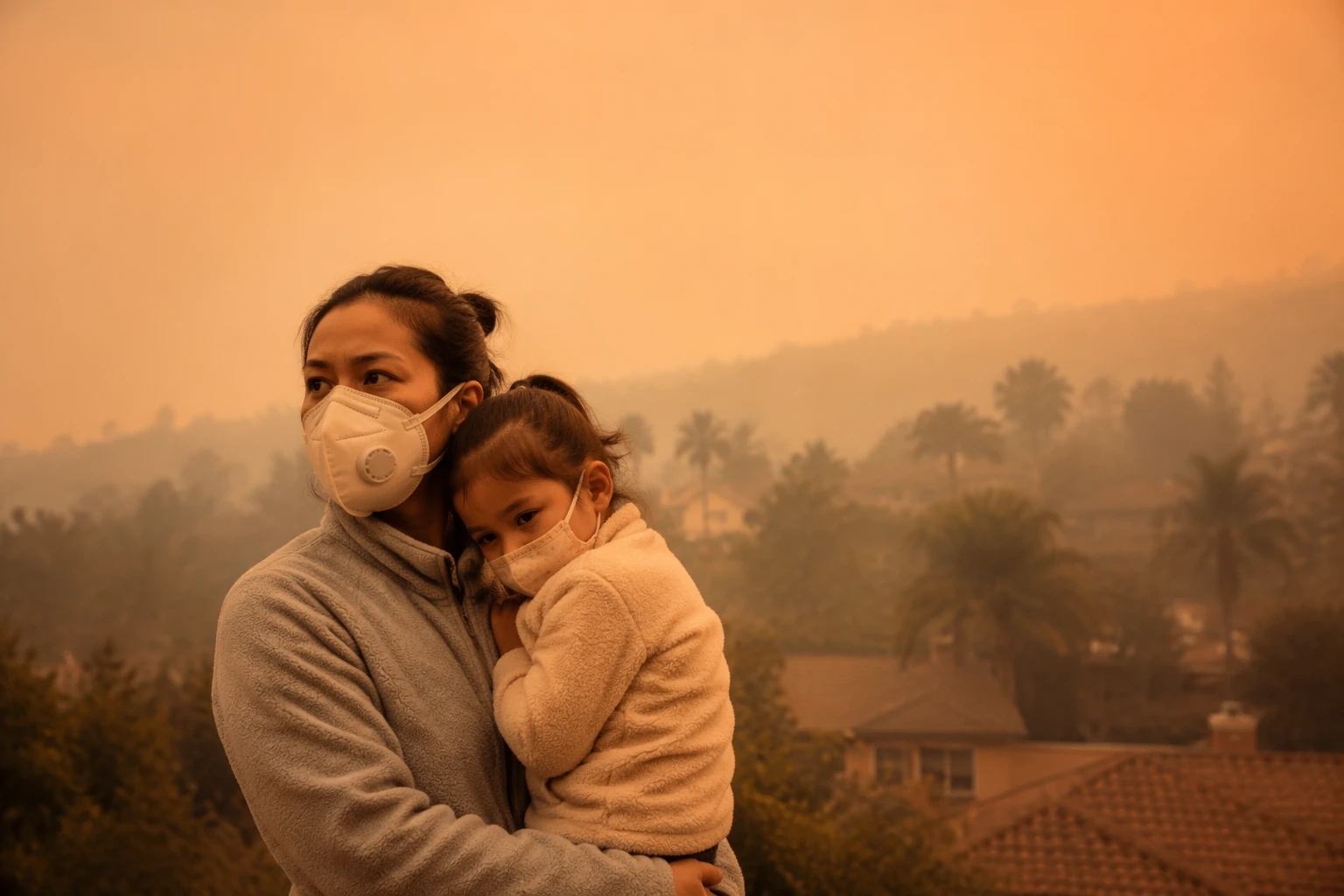
Smoke can enter homes. Closing windows and doors is an important first step, but it is not a complete shield if outside air is heavily polluted or if smoke leaks through gaps, vents, and mechanical systems. The practical goal is to keep the dirtiest air out and limit the pollution already inside.
That means closing windows and doors, shutting vents when possible, and reducing indoor pollution sources while smoke is present. EPA guidance advises changing air-conditioning settings to recirculate indoor air and, where possible, closing outdoor air intakes. If your home has a portable air cleaner or a high-efficiency filter, use it in the room where people spend the most time.
Make the cleanest room in the house
When smoke is persistent, one room can become the safest place to wait it out. Choose a room where doors can stay closed, run filtration if you have it, and keep that space free of indoor pollution sources such as smoking, candles, or heavy cooking. This approach does not eliminate exposure, but it can lower it enough to matter for children, older adults, and people with heart or lung disease.
If your home is still hot after closing everything up, balance heat and smoke risk carefully. Smoke exposure and overheating can overlap, so the safest option may be a cleaner indoor space elsewhere if your home cannot stay cool without pulling in outside air.
When to seek medical care
Do not wait for symptoms to become severe if smoke is affecting breathing. Headache, eye and mucous membrane irritation, cough, wheeze, and trouble breathing are all warning signs that exposure is taking a toll. People with asthma or COPD should follow their treatment plans closely and contact a healthcare provider if symptoms flare or rescue medication is not working as expected.
Chest pain, severe shortness of breath, confusion, or worsening breathing trouble require urgent medical attention.
The wider public-health stakes
The CDC Foundation identifies 2023 as the hottest year on record. Smoke moves across states and county lines.
Sources
- [1]nytimes.com
- [2]cdc.gov
- [3]epa.gov
- [4]cdcfoundation.org
- [5]thoracic.org