Sports
How to turn World Cup watch parties into dating opportunities
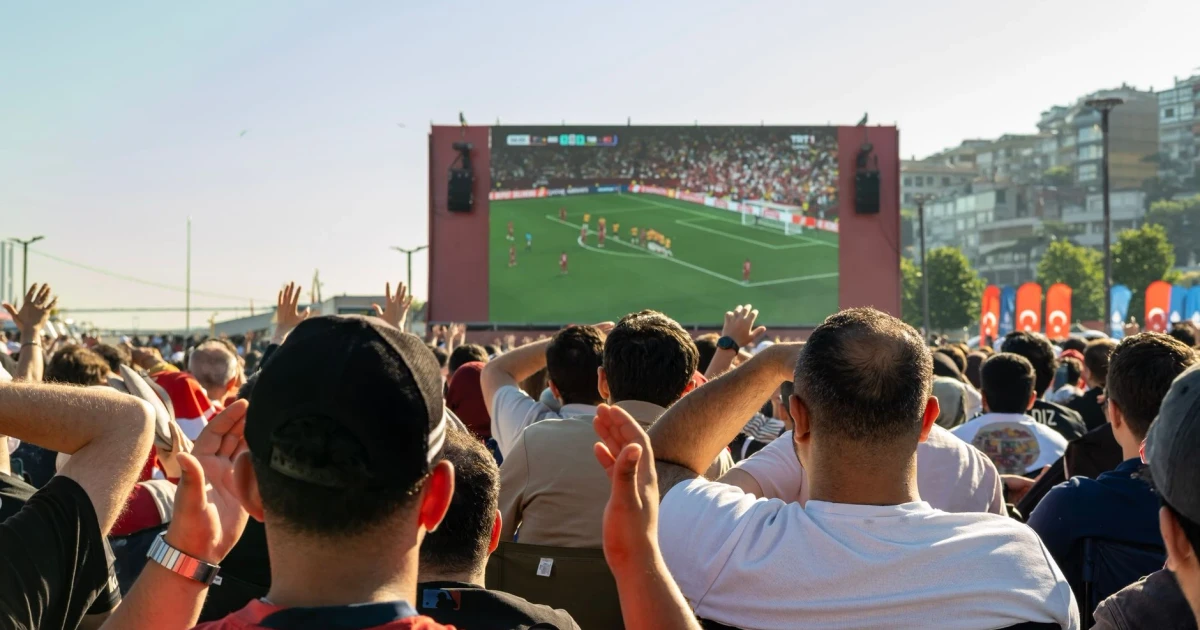
A World Cup watch party gives strangers a built-in reason to talk, and this tournament stretches that opportunity across 48 teams, 104 matches, and 16 host cities in Canada, Mexico, and the United States. FIFA lists every kickoff in Eastern Time on its official schedule page, which makes the social calendar as easy to follow as the bracket.
Why the tournament is primed for real-world connection
The appeal starts with structure. A watch party solves the hardest part of meeting someone in public: it supplies the setting, the topic, and the timing in one place, without the friction of a swipe screen or an empty bar conversation. In a tournament with 104 matches, the same venue can become a recurring social room instead of a one-night novelty.
The geography matters too. With host cities spread across three countries, the World Cup creates local and travel-based gathering points at once. That gives fans multiple chances to meet the same people again, which is often what turns a brief introduction into something more than a passing chat. A single kickoff can become the start of a summer routine.
Why matchmakers see an opening
Maria Avgitidis sits at the center of this shift because her work is built around turning structured settings into real introductions. She is the CEO of Agape Match, a fourth-generation matchmaker, the host of the dating and relationship podcast Ask a Matchmaker, and the co-founder of the Matchmakers Alliance, which says it connects more than 450 professional matchmakers and dating coaches.
Her business gives her advice a practical edge. Agape Match says it has produced thousands of meaningful matches, and it says tens of thousands of eligible singles have joined its community. That scale shows there is still demand for curated introductions, even in a market dominated by apps that promise volume but often deliver fatigue.
That is why the watch-party angle is more than a novelty. Avgitidis’ profile as a recurring expert on dating trends and relationship advice suggests that people are looking for more controlled, lower-pressure ways to meet in person. A soccer crowd offers exactly that: a shared focus, a built-in conversation starter, and a reason to stay engaged long enough for chemistry to form.
How to use a watch party as a dating setting
The best opening is the game itself. Because FIFA posts all kickoffs in Eastern Time, it is easy to plan around the start window and arrive before the room settles in. That early stretch matters most, because it is when people are still finding seats, ordering drinks, and deciding who they are watching the match with.
A tournament atmosphere also gives you a natural script. Ask which team someone is backing, whether they are following a specific host city, or how many matches they plan to watch. The point is not to interrogate; it is to use the match as a shared frame so the conversation feels connected to the event instead of forced onto it.
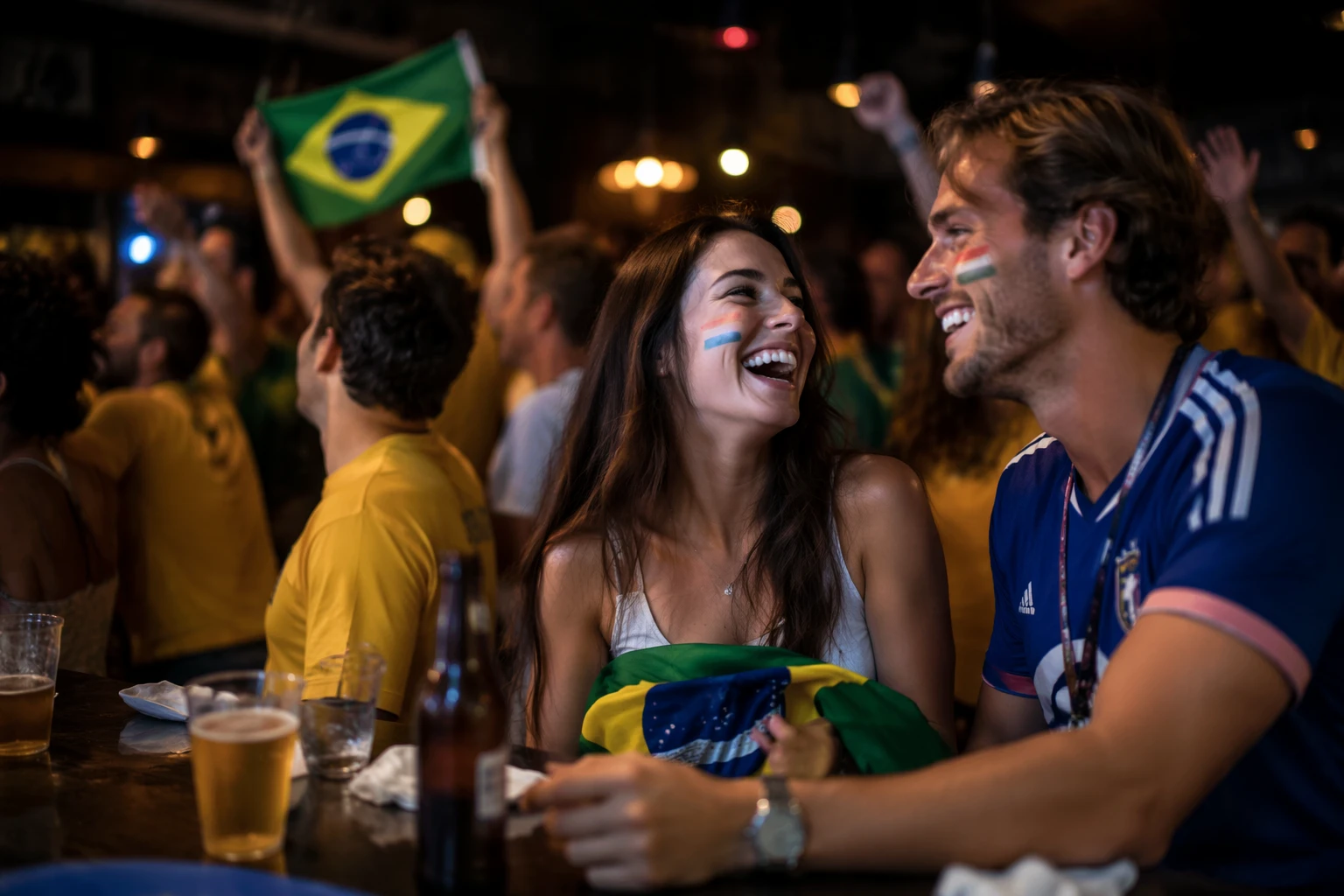
The format rewards repeated contact. With 104 matches on the calendar, one party is not the whole opportunity. The people who treat the World Cup as a social season, not a single night out, will have the easiest time turning casual recognition into familiarity.
What makes this different from app-based dating
Dating apps are optimized for endless choice, while a watch party is optimized for immediate context. At a crowded screening, you already know something about the other person: they showed up, they care enough to watch, and they are willing to share space with strangers for 90 minutes or more. That reduces the guesswork that often stalls online matches before they become real-life meetings.
The tournament itself also creates a more forgiving social pace. A goal, a missed chance, or a penalty call gives everyone in the room something to react to together. Those shared reactions are small, but they are often enough to move a conversation past the polite small-talk stage.
Who is building around the demand
The broader business picture is clear. Agape Match is not just selling matchmaking as an abstract service; it is positioning itself around community, scale, and repeat introductions. The company’s claim that tens of thousands of eligible singles have joined its community suggests that people want more than algorithmic matching, especially when they are looking for a real-world spark.
The Matchmakers Alliance points in the same direction. A network of more than 450 professional matchmakers and dating coaches is a sign that curation is becoming an industry, not just a personal service. That matters for mega-events like the World Cup, because the people most likely to turn a watch party into a dating opportunity are often the ones already building systems for in-person connection.
Will it last after the final whistle
The real test comes after the tournament ends. The World Cup’s 104 matches will eventually give way to a quieter calendar, and that is where the trend will either fade or harden into habit. If the connection depends only on the novelty of the event, it will disappear with the last kickoff.
What lasts are the habits that the event makes easier: showing up in person, returning to the same places, and treating shared interests as a reason to meet again. Agape Match’s community, the Matchmakers Alliance network, and the rhythm of watch parties all point to the same conclusion: the appetite for face-to-face introductions is still there, and major sporting events can give it a temporary home.
Sources
- [1]cbsnews.com
- [2]fifa.com
- [3]matchmakermaria.com
- [4]agapematch.com