US News
How trains defined America, from the Golden Spike to Big Boy
Crews drove the Golden Spike at Promontory Summit, Utah, on May 10, 1869, completing a line built from 1863 to 1869 and turning the continent from a map of separate regions into a single commercial system.
A railroad that redrew the power map
The railroad was not just an engineering project, it was a state-building instrument. The Pacific Railway Act gave the Union Pacific and Central Pacific government bonds and large land grants, and Congress had already commissioned surveys because private corporations would not take on the route without federal help. That same federal backing made the line a tool of military strategy during the Civil War era and a commercial corridor that would keep widening long after the last spike.
The Library of Congress says railroad mileage expanded from about 30,000 miles in 1860 to 270,000 miles by 1890, while the U.S. population climbed from 31 million to more than 76 million. Surveys by Grenville Dodge, Peter Dey, Theodore Judah, and Samuel Montague shaped later corridors, including the east-west path now closely followed by Interstate 80.
Time became railroad time
On November 18, 1883, North American railroads adopted standard time because mismatched local timetables had become a safety hazard, and industrial America quickly organized itself around that clock. Before that shift, cities kept their own local time; after it, factories, schedules, and station boards increasingly answered to a shared system that made commerce faster and more predictable.
Standard time let freight leave on schedule, passengers connect across regions, and corporations synchronize work across far-flung territories.
The labor and land behind the feat
The human cost was built into the route. The railroad brought major change for Indigenous peoples across the West and was tied to land grants, settlement, and military campaigns that further marginalized tribal nations. The railroad opened the interior to markets and migrants, but it also accelerated the loss of Indigenous land, control, and mobility.
Chinese labor was central to the railroad’s construction. The Library of Congress says more than 10,000 Chinese workers blasted tunnels, built roadbeds, and laid hundreds of miles of track on the Central Pacific, often in punishing weather, and Golden Spike National Historical Park says the voices of roughly 11,000 Chinese workers on the first transcontinental railroad were largely left out of the historical record. No personal writings, letters, or diaries by those workers have been found, which is one reason the labor story survives mostly through fragments, photographs, and hostile second-hand accounts.
Why Big Boy still stops traffic
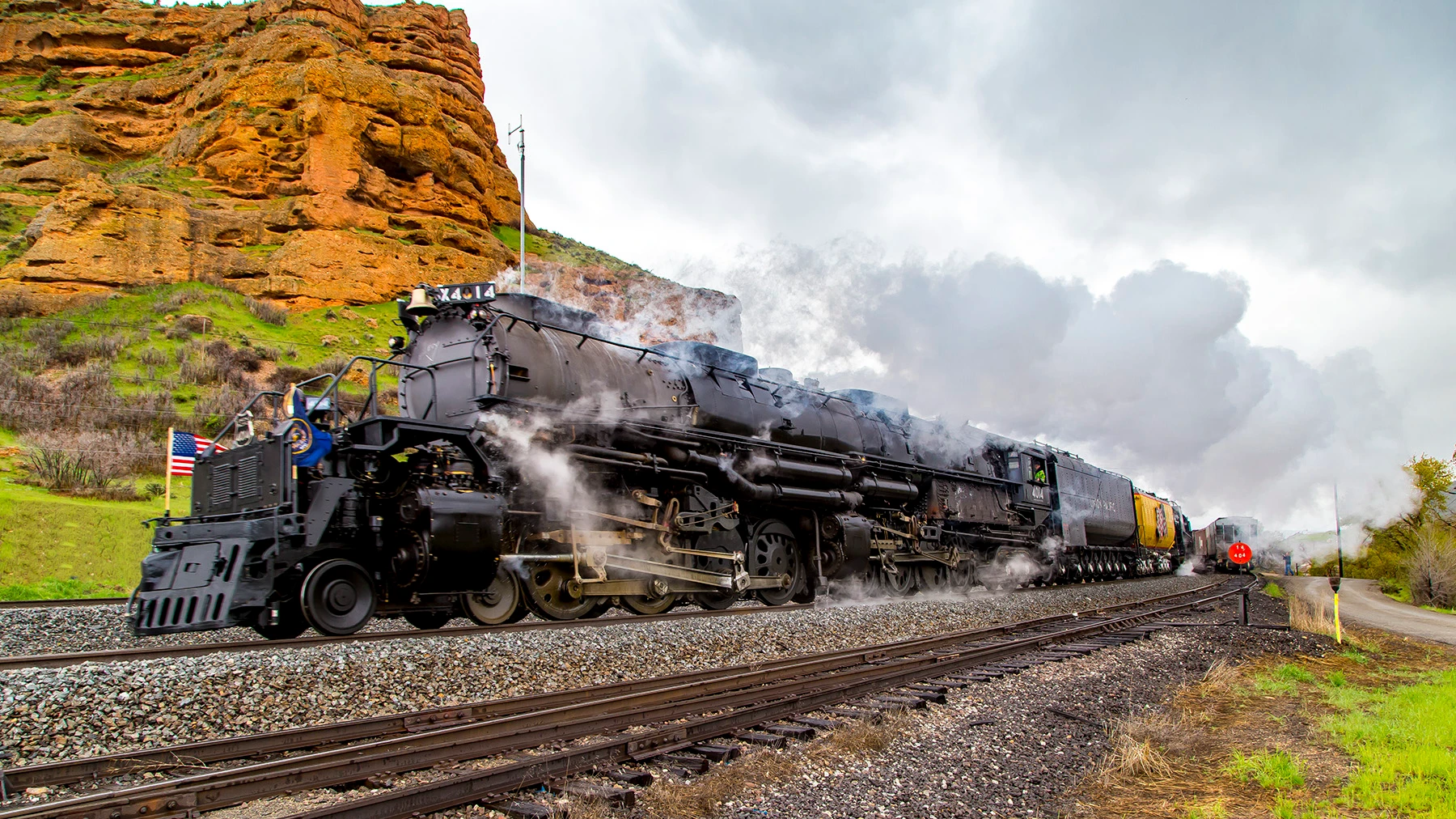
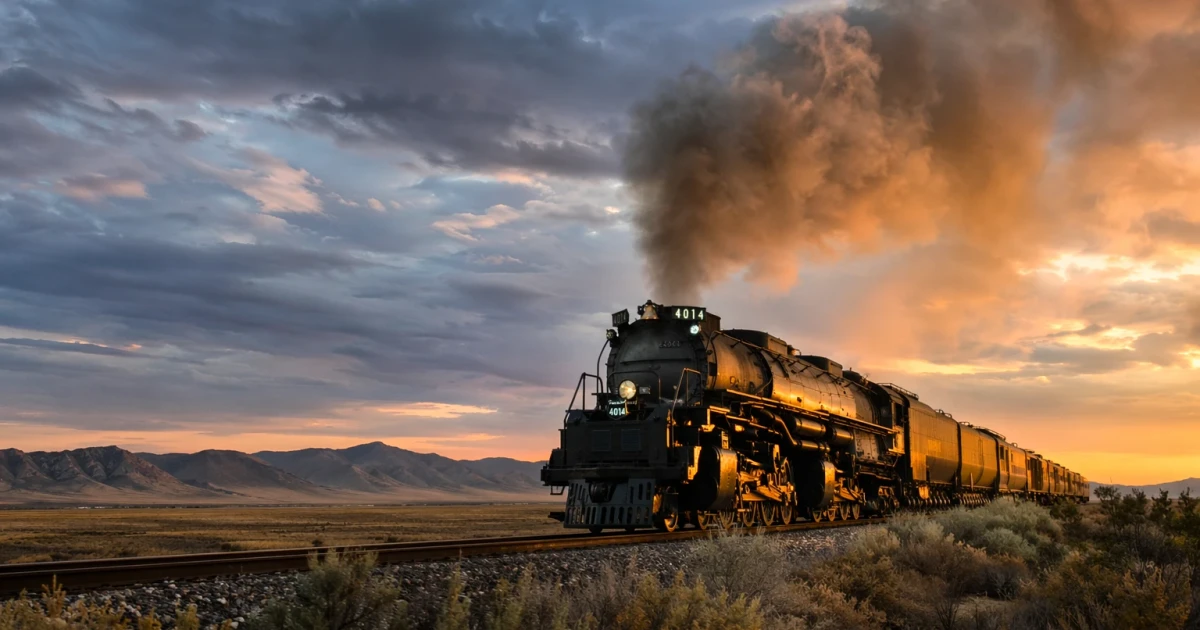
Big Boy No. 4014, originally delivered in December 1941, is the world’s only operational Big Boy and the world’s largest operating steam locomotive. Union Pacific says 25 Big Boys were built exclusively for Union Pacific, each 132 feet long, weighing 1.2 million pounds, and using a 4-8-8-4 wheel arrangement that let the engines articulate through curves.
The National Park Service says the last Union Pacific Big Boy revenue run came in 1959 and only eight survived scrapping. Steamtown National Historic Site’s Big Boy No. 4012 is the only one on exhibit in the U.S. eastern time zone.
Where the history is visible now
Steamtown in Scranton, Pennsylvania, makes that history tangible. The park’s train rides range from short 30-minute yard trips with a narrated ranger program to full-day excursions through the Poconos and Lackawanna Valley, letting visitors see the industrial landscape that railroads created and sustained. David Pogue visited Steamtown.
Union Pacific says No. 4014 is making its first-ever coast-to-coast tour, including a Fourth of July celebration in Philadelphia, more than 50 whistle-stops in 10 states, and public display events in Pennsylvania and other eastern states as part of America’s 250th-anniversary celebrations.
Sources
- [1]cbsnews.com
- [2]nps.gov
- [3]up.com
- [4]library.si.edu
- [5]loc.gov