Politics
How US and UK Elections Differ in Process and Practice
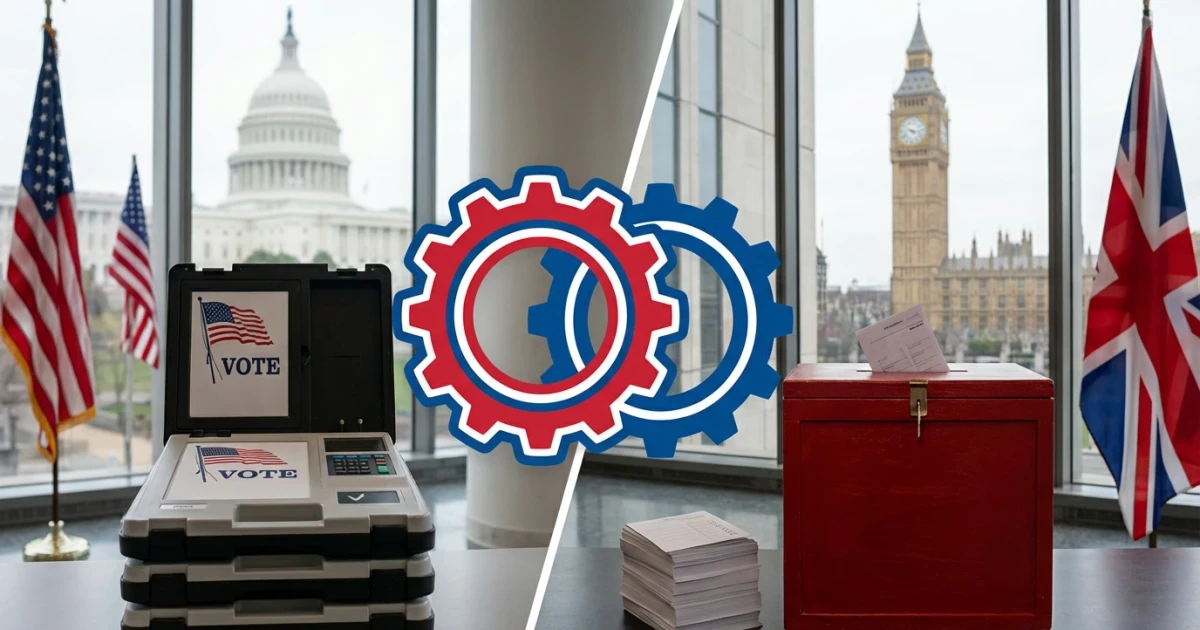
Understanding the election processes in the United States and the United Kingdom reveals significant differences in how each nation approaches democracy. While both are established democracies with frequent, high-profile elections, their systems diverge in structure, procedure, and political outcomes, shaping the nature of governance and voter engagement in each country.
Electoral Systems: First-Past-The-Post and Beyond
Both the US and UK primarily use the first-past-the-post (FPTP) system in general elections, where the candidate with the most votes wins. In the UK, this applies to parliamentary constituencies, each electing one Member of Parliament (MP) to the House of Commons. The United States applies FPTP in most states for Congressional and gubernatorial races, while the presidential election uses the unique Electoral College system, which is not mirrored in the UK.
- United Kingdom: 650 constituencies each send one MP to Parliament.
- United States: 435 congressional districts for the House of Representatives, with two senators per state elected at-large, and presidential contests decided by electoral votes rather than direct popular vote.
Election Administration and Timing
The UK holds general elections at least every five years, with the Prime Minister able to call for an election earlier under certain circumstances. US federal elections, including for the presidency and Congress, occur on fixed schedules: every two years for the House, every six years for the Senate (with staggered terms), and every four years for the presidency.
Election oversight in the UK is centrally managed by the Electoral Commission, which sets standards and oversees conduct. In contrast, US elections are decentralized, managed by individual state and local governments, resulting in a variety of rules and procedures across the country. This difference affects everything from ballot design to counting procedures.
Voter Registration and Participation
Another key distinction is voter registration. The UK employs a centralized system where citizens must register before they can vote, and local authorities maintain electoral rolls. In the US, voter registration is also required, but the process and deadlines differ by state, sometimes creating barriers to participation.
According to UK Office for National Statistics data, registration rates in the UK are consistently high, while US turnout and registration rates can fluctuate more widely, as shown in Federal Election Commission statistics.
- UK turnout in general elections typically ranges from 60%-70% of registered voters.
- US presidential election turnout has varied between 50%-66% in recent decades, with lower rates in midterm years.
Vote Casting and Counting
In the UK, voters cast ballots in person at polling stations, by post, or through a proxy, with strict regulations but relatively simple ballots—usually a single X for one candidate. US voters may face longer ballots with multiple races and initiatives, and methods for casting votes include in-person, absentee, and early voting, which vary in availability by state.
The UK typically announces results within hours of polls closing, with a centralized count and quick reporting. In the US, counting can take longer, especially for presidential races, due to decentralized administration, large numbers of absentee ballots, and differing state laws.
Political Implications
The differences in electoral systems influence political outcomes. The UK’s FPTP system often leads to majority governments, sometimes with less than half the vote, and can marginalize smaller parties. In the US, the Electoral College can result in a president elected without a popular vote majority, as seen in several recent elections. Both systems have faced criticism for their lack of proportionality.
Moreover, the US system’s state-by-state rules can impact access and turnout, while the UK’s more uniform system provides a consistent experience nationwide.
Conclusion: Shared Goals, Distinct Paths
Despite their shared commitment to representative democracy, the United States and United Kingdom have crafted distinctive electoral systems that produce unique challenges and outcomes. For citizens and observers alike, understanding these differences is key to interpreting political events and debates in both nations. As both countries continue to examine and reform their processes, the comparative study of their election systems remains an essential topic for democratic engagement.