Technology
Hsinchu's chip boom lifts fortunes, luxury homes and birthrates
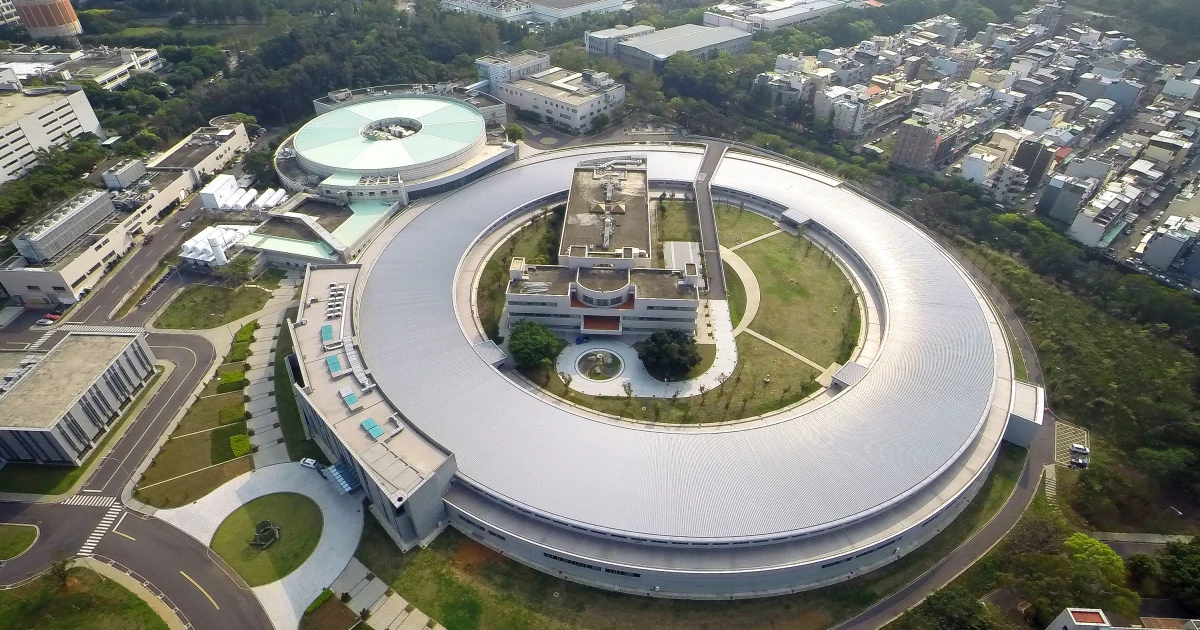
Hsinchu has become the clearest place in Taiwan to see how a semiconductor city can redraw everyday life. A park founded in 1980 now spans 686 hectares, anchors a broader cluster of more than 900 firms, universities and institutes, and generated NT$1.51 trillion in turnover in 2024. The prosperity is visible in salaries, luxury buildings and bank deposits, but it is just as visible in crowded childcare systems and a birth pattern that sets the city apart from the rest of Taiwan.
The industrial core behind the boom
Hsinchu Science Park is more than a business district. It is the industrial heart of the city and the symbolic center of Taiwan’s chip economy, with a focus on semiconductors, computers and peripherals, communications, optoelectronics, precision machinery and biotechnology. The Hsinchu Science Park Bureau says turnover rose 6.66 percent from NT$1.42 trillion in 2023 to NT$1.51 trillion in 2024, while import-export trade volume climbed 44.04 percent to NT$2.49 trillion.
TSMC is headquartered in Hsinchu Science Park and has long tied the city to the highest-value parts of global chipmaking. The company says it pioneered the pure-play foundry business model, and it is now pushing ahead with 2nm technology in both Hsinchu and Kaohsiung, a reminder that the city remains central even as Taiwan spreads parts of its advanced manufacturing footprint. The scale is hard to overstate: Taiwan accounts for more than 60 percent of global foundry revenue and more than 90 percent of leading-edge chip manufacturing, and the semiconductor industry generated more than $165 billion in revenue in 2024, equal to about 20.7 percent of Taiwan’s GDP.
That concentration has real labor consequences. The science park employed more than 177,000 people last year, creating a dense job market that pulls engineers, technicians, researchers and support workers into one urban corridor. In a global economy increasingly organized around advanced chips, Hsinchu is where supply-chain dominance becomes neighborhood change.
How high incomes change a city
The boom has pushed Hsinchu City and Hsinchu County to the top of Taiwan’s annual household-income rankings. High salaries in the technology sector have made the area unusually affluent, and county officials frame that wealth as the delayed payoff from policies and plans laid down 30 to 40 years ago. The city’s rise is not just a story of new money. It is a story of how long-term state-backed industrial planning can reshape a local economy so thoroughly that it alters who moves in, who can stay, and which kinds of family life become possible.
That prosperity also changes the built environment. Hsinchu has emerged as a real-estate hub, with housing prices and bank deposits rising over the past decade as tech professionals have poured into the area. Luxury housing follows the same logic as the foundries and software labs: where wages are highest, capital rushes in fastest. The result is a city where the outward signs of success sit close to the pressures that success creates.
A city where children outnumber seniors
Hsinchu’s demographic profile is striking in a country facing a deep fertility crisis. It is the only city in Taiwan where the number of children under 14 exceeds the number of seniors, and children make up 15.7 percent of its roughly 450,500 residents. The city’s total fertility rate has hovered around one child per woman for several years, which is high by Taiwan’s standards but still low by replacement level.
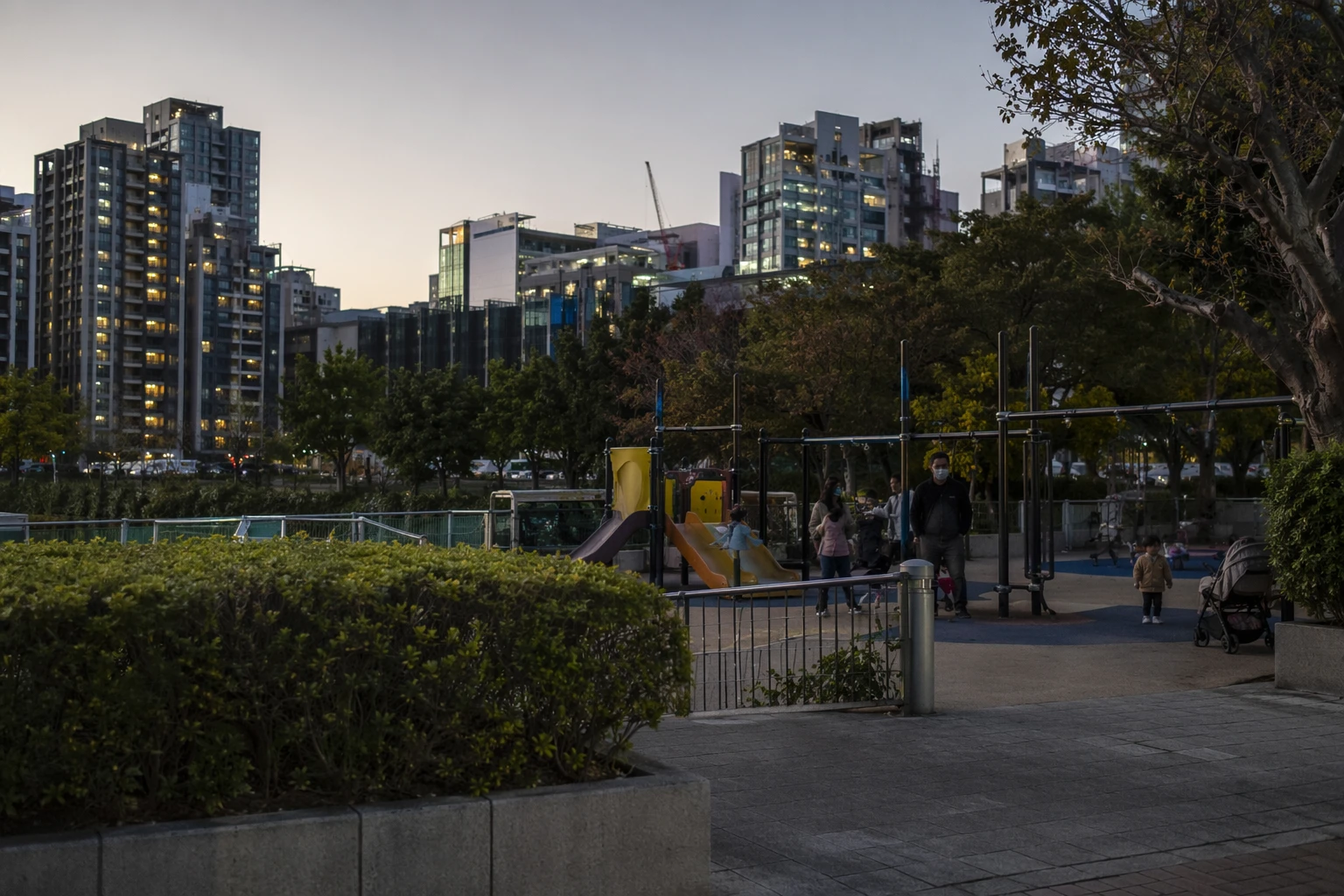
The contrast with the national picture is sharp. Taiwan’s crude birth rate fell to 4.62 per 1,000 people in 2025, and the country recorded just 107,812 newborns, the lowest total on record. National fertility has been projected below 0.8, a level that signals profound demographic contraction. Hsinchu does not escape those pressures, but it absorbs them differently because the city keeps pulling in young adults during the years when they are most likely to form families.
That local pattern has been described as a positive but strained “HSP effect.” Young, educated workers move to Hsinchu for jobs, and that influx helps sustain births and family formation. Demographer Yang Wen-shan of Academia Sinica points to those arrivals in their prime childbearing years as a major reason the city’s fertility rate stays higher than elsewhere in Taiwan. Yet the same growth is outpacing the infrastructure meant to support it. Liu Chong-hsian, a Hsinchu city councillor and former UMC engineer, has said the pace of population growth is so high that childcare infrastructure is struggling to cope.
Schools, childcare centers and postpartum services feel that strain first. In a city where the workforce keeps replenishing itself with young professionals, demand for family support can rise faster than public and private systems can expand. Hsinchu’s birthrate is not evidence that the fertility crisis has been solved. It is evidence that one city can briefly outrun the national decline when enough high-paying jobs, housing demand and family formation cluster in the same place.
Housing, affordability and the new urban divide
The housing market is where Hsinchu’s contradictions become hardest to ignore. June 2026 property data put the city-center apartment price-to-income ratio at 14.40, while the average monthly net salary stood at NT$79,032.22. Even in a city with some of Taiwan’s highest household incomes, housing remains expensive enough to shape where families settle, how much space they can afford, and whether younger workers can imagine putting down roots.
That is the social geography of the chip boom in its most tangible form. High wages lift some households into the market for new apartments and luxury development, while others are pushed toward longer commutes, smaller homes or delayed family plans. The same cluster that sustains Taiwan’s export strength and global chip leadership also deepens local inequality between those inside the high-tech corridor and those priced around it.
What Hsinchu reveals about the global AI economy
Hsinchu shows that the benefits of the AI and semiconductor economy do not spread evenly across a country, even when the country sits at the center of that supply chain. The city’s prosperity is real, measurable and anchored in world-scale manufacturing power. So are the costs: strained childcare, expensive housing and a development pattern that rewards the households closest to the chip industry while leaving the rest of the island to absorb the consequences of aging and low fertility.
The lesson is not that chip cities are uniformly prosperous, but that industrial dominance creates very specific local winners and losers. In Hsinchu, the same force that lifts fortunes and finances new construction also determines who can have children, who can afford a home, and how long a family can stay in the city that makes Taiwan indispensable to the global semiconductor economy.
Sources
- [1]nytimes.com
- [2]web.sipa.gov.tw
- [3]sipa.gov.tw
- [4]idipc-hsinchu.org.tw
- [5]investor.tsmc.com
- [6]trade.gov
- [7]restofworld.org
- [8]asianews.network
- [9]hsinchu.gov.tw
- [10]taiwannews.com.tw
- [11]numbeo.com