Science
Hubble Reveals the Hidden Lives of Blue Straggler Stars That Defy Aging
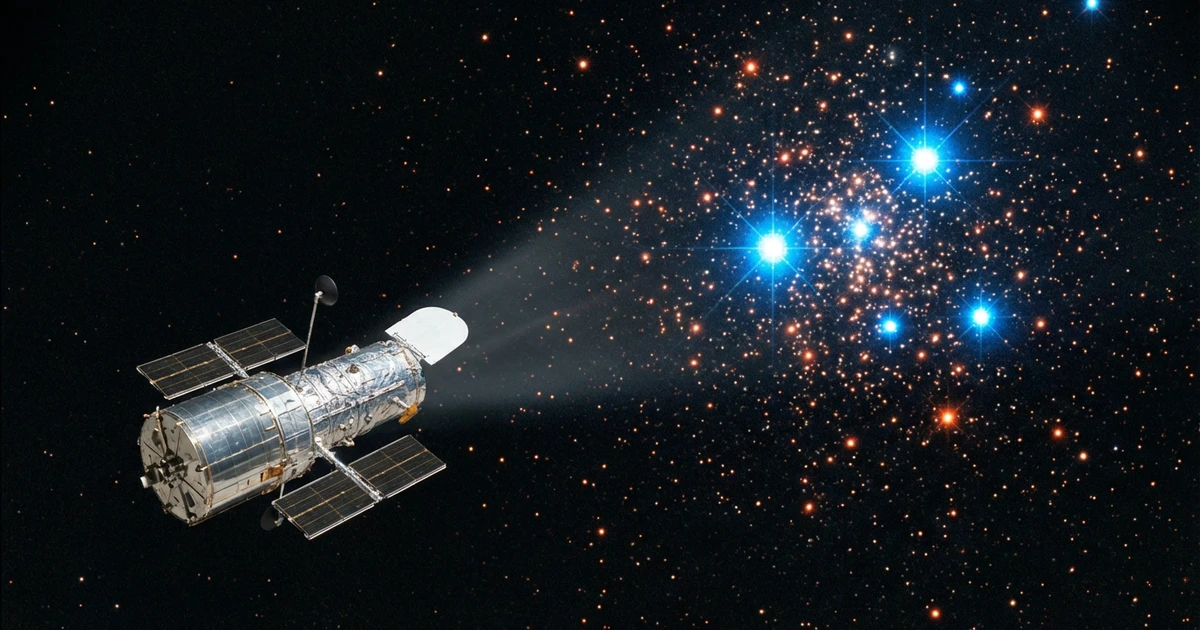
The Hubble Space Telescope has once again pushed the boundaries of our cosmic understanding by uncovering the secret behind the mysterious blue straggler stars—stellar anomalies that appear to defy the aging process in ancient star clusters. The findings offer profound insights into stellar evolution and the dynamic environments of globular clusters.
What Are Blue Straggler Stars?
Blue stragglers are a peculiar class of stars found in old, densely populated regions of space known as globular clusters. While most stars in these clusters are ancient and have evolved into cooler, redder states, blue stragglers stand out for their surprising youthfulness, appearing hotter, brighter, and bluer than their stellar neighbors. This has long puzzled astronomers, as these stars seem to be outliers—looking much younger than the rest of the stars born at the same time.
Hubble’s Observations: Peering Into Stellar Youth
Recent observations by the Hubble Space Telescope have provided new clues about how blue stragglers form and endure. By targeting multiple globular clusters, astronomers detected patterns in the distribution and properties of blue stragglers, helping to unravel the mechanisms that keep these stars looking 'forever young.'
- Blue stragglers are found predominantly in the dense cores of globular clusters.
- They exhibit higher temperatures and luminosities compared to other stars in the same clusters.
- Their prevalence suggests ongoing processes that rejuvenate these stars.
The Secret to Their Youth: Stellar Mergers and Mass Transfer
Hubble’s high-resolution imaging points to two primary processes that likely create blue stragglers:
- Stellar Mergers: In crowded environments, close encounters can cause two stars to collide and merge, forming a single, more massive star that burns hotter and bluer—resembling a young star.
- Mass Transfer in Binary Systems: In binary star systems, one star can siphon material from its companion, effectively gaining mass and reigniting nuclear fusion at a higher rate, which rejuvenates the star’s appearance.
These findings, as highlighted by both Phys.org and the European Space Agency, confirm that blue stragglers are not exceptions to stellar aging but are the result of dynamic interactions only possible in the densely packed environments of globular clusters.
Implications for Stellar Evolution
The discovery is crucial for our understanding of stellar lifecycles and the evolution of star clusters. Blue stragglers serve as cosmic laboratories, revealing how stars can change their fate through interactions with neighbors. This also impacts how astronomers interpret the history and age of star clusters, as the presence of blue stragglers can skew age estimates if not properly accounted for.
Looking Forward: Expanding the Study of Stellar Oddities
With Hubble’s revelations, astronomers now have a clearer picture of the physical processes shaping blue straggler stars. This paves the way for future research using next-generation telescopes, like the James Webb Space Telescope, to study these phenomena in even greater detail and across more distant clusters.
For those interested in further details or the technical aspects of this discovery, explore the latest updates from the Phys.org article on Hubble's blue straggler findings.
The bottom line: Hubble’s observations have solved a decades-old mystery, revealing that blue stragglers are not young rebels but products of cosmic cooperation and collision, giving astronomers new tools to unlock the secrets of our universe’s oldest star clusters.
Sources
- [1]Phys.org