Science
Hubble Spots Rare Spin Reversal in Comet 103P/Hartley 2
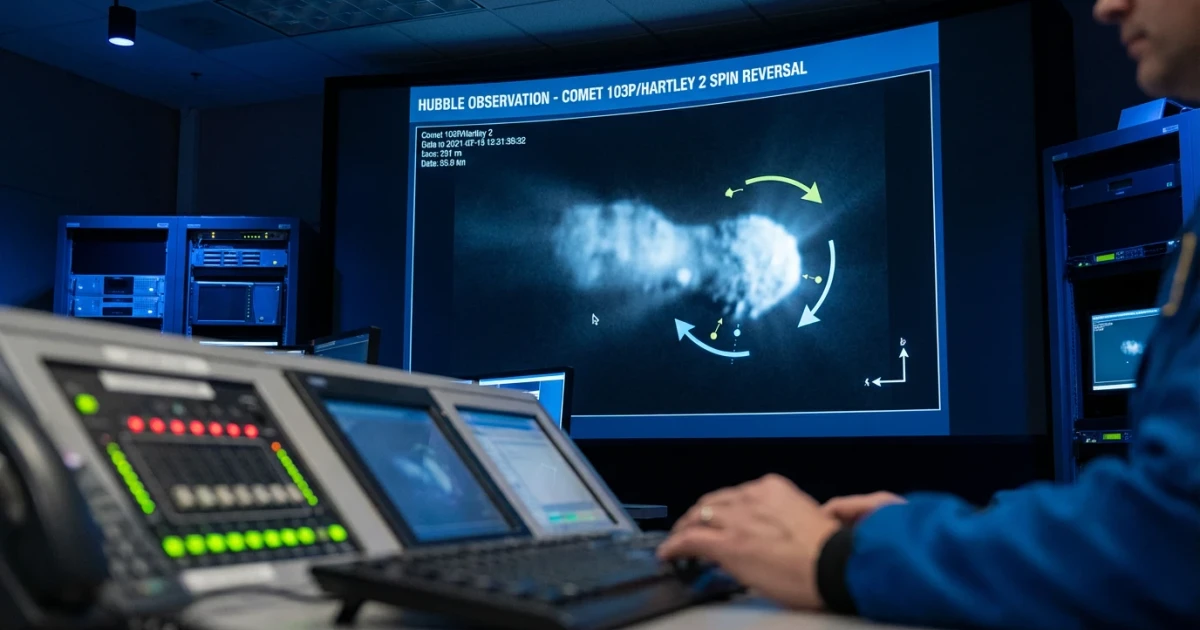
NASA’s Hubble Space Telescope has made a groundbreaking observation, capturing the first-ever reversal in the rotation of a comet. The finding, centered on the tiny yet active comet 103P/Hartley 2, provides scientists with a rare window into the complex forces shaping the evolution and eventual demise of these icy solar system wanderers.
Unprecedented Comet Behavior Detected
According to NASA’s official release, Hubble’s observations revealed that 103P/Hartley 2—a comet just 1.2 kilometers wide—unexpectedly slowed its rotation and then began spinning in the opposite direction. This marks the first time astronomers have definitively witnessed a comet reverse its spin, an event predicted by theory but never before confirmed by direct observation.
- Hubble tracked changes in the comet’s rotation over several months, using high-resolution imaging and photometric measurements.
- The reversal was measured by monitoring shifts in surface features and light curves, as detailed in the Hubble Space Telescope data archive.
- Comet 103P/Hartley 2’s rotation period increased from about 16 to over 18 hours before reversing, a change linked to outgassing jets on its surface.
Why Did the Spin Reverse?
Comets like Hartley 2 are known for their spectacular tails, created when the Sun heats their icy nuclei, causing jets of gas and dust to erupt. NASA scientists explained that these jets can act as natural thrusters, gradually altering a comet’s spin. In the case of Hartley 2, persistent outgassing from localized regions exerted enough force to not only slow the rotation but ultimately push it into reverse.
Space.com and NASA’s Science division both emphasized that this process is a delicate balance between rotational inertia and the thrust produced by jet activity. The finding confirms long-held theories about how comets evolve—and sometimes meet their end—under the relentless influence of sunlight.
Implications for Cometary Science
The discovery offers new insight into the life cycle of comets. As reported by NASA, a spin reversal may mark a critical stage in a comet’s life, as repeated changes in rotation can lead to surface break-up, increased fragmentation, and eventual disintegration. Hartley 2’s ongoing activity, coupled with its diminishing structural integrity, signals that it may be on a doomed path.
- The findings help refine models of cometary evolution and the role of rotational forces in their aging and destruction.
- Understanding spin dynamics is crucial for predicting future comet behavior, including potential hazards to Earth and spacecraft missions.
- Hubble’s precision allowed astronomers to track minute changes in rotation, setting a new standard for comet monitoring.
Looking Forward: What’s Next for Hartley 2?
Comet 103P/Hartley 2, discovered in 1986, has made several close passes to Earth—its next perihelion is tracked by NASA’s CNEOS. As it continues its journey around the Sun, astronomers will keep monitoring for further changes in its rotation and structure. The spin reversal signals that Hartley 2 may be entering the final chapters of its existence, as outgassing and rotational stresses take their toll.
For now, the peer-reviewed analysis of Hubble’s data offers a landmark case study in cometary physics—one that could reshape how scientists understand the fragile balance of forces at work in these ancient bodies.
As NASA’s Hubble marks over three decades of service, this observation underscores the telescope’s ongoing legacy in deepening our understanding of the dynamic processes shaping our solar system.