Science
Hubble Unveils Stunning Pillars and Jets in Trifid Nebula
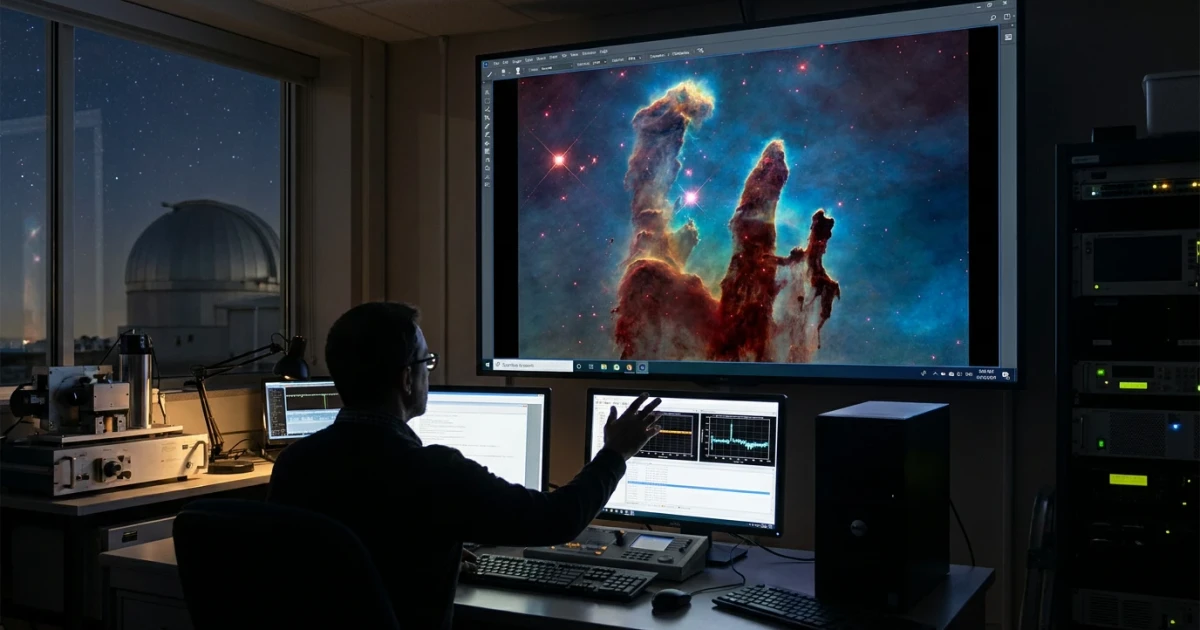
NASA’s Hubble Space Telescope has once again delivered a captivating glimpse into the cosmos with its latest images of the Trifid Nebula’s pillars and jets. Released on May 3, 2026, the observations spotlight the nebula’s striking structures, illuminating the dynamic processes that sculpt star-forming regions in our galaxy.
What the Hubble Images Reveal
The Trifid Nebula (M20), located approximately 9,000 light-years from Earth in the constellation Sagittarius, is renowned for its colorful appearance and complex features. Hubble’s new visual data show massive pillars of gas and dust—towering columns shaped by intense ultraviolet radiation and stellar winds from nearby young stars. These pillars, some stretching several light-years, act as cosmic nurseries where new stars are born.
- High-resolution imagery reveals the fine structure of these pillars, with dark, dense regions shielding nascent stars from harsh radiation.
- Energetic jets, seen as thin, bright streams, blast outward from embryonic stars buried within the pillars. These jets result from material ejected along the stars’ rotational axes, carving channels through the surrounding gas.
- The interplay of ultraviolet light, stellar winds, and gravity is responsible for sculpting the nebula’s dramatic landscapes.
Scientific Significance
According to NASA, observing these pillars and jets in detail provides valuable clues about the birth and evolution of stars. The dense cores inside the pillars are thought to collapse under their own gravity, igniting nuclear fusion and giving rise to new suns. Jets signal the presence of actively accreting protostars, offering astronomers a window into the earliest stages of stellar development.
- Hubble’s data archive includes multiple filter exposures, enabling scientists to analyze the composition, temperature, and motion of the gas within the nebula.
- Peer-reviewed studies, such as those in Astronomy & Astrophysics, have used these datasets to measure the physical properties of the pillars and the forces shaping them.
These findings help researchers better understand how massive stars influence their environment—both by triggering new waves of star formation and by dispersing the raw materials needed for future generations of stars and planets.
A Nebula Rich in History and Beauty
The Trifid Nebula is a favorite target for both professional astronomers and amateur skywatchers, thanks to its vivid colors and intricate structure. The name "Trifid" comes from the nebula’s appearance, which is divided into three prominent lobes by dark dust lanes. Its mix of emission (red), reflection (blue), and dark (opaque) regions make it a textbook example of a star-forming region.
Previous Hubble views have showcased the nebula’s complexity, but these latest images offer unprecedented detail, revealing how jets and pillars interact in real time. According to NASA’s official release, ongoing observations will continue to refine our understanding of the physical processes at work in regions like M20.
Looking Ahead
With upcoming missions like the James Webb Space Telescope set to build on Hubble’s legacy, astronomers anticipate even deeper insights into how massive stars shape their birthplaces. For now, Hubble’s latest images of the Trifid Nebula stand as a testament to the enduring power of space-based observation and the ongoing quest to unravel the mysteries of the universe.