Science
Hunga Tonga Eruption Surprises Scientists With Methane Destruction
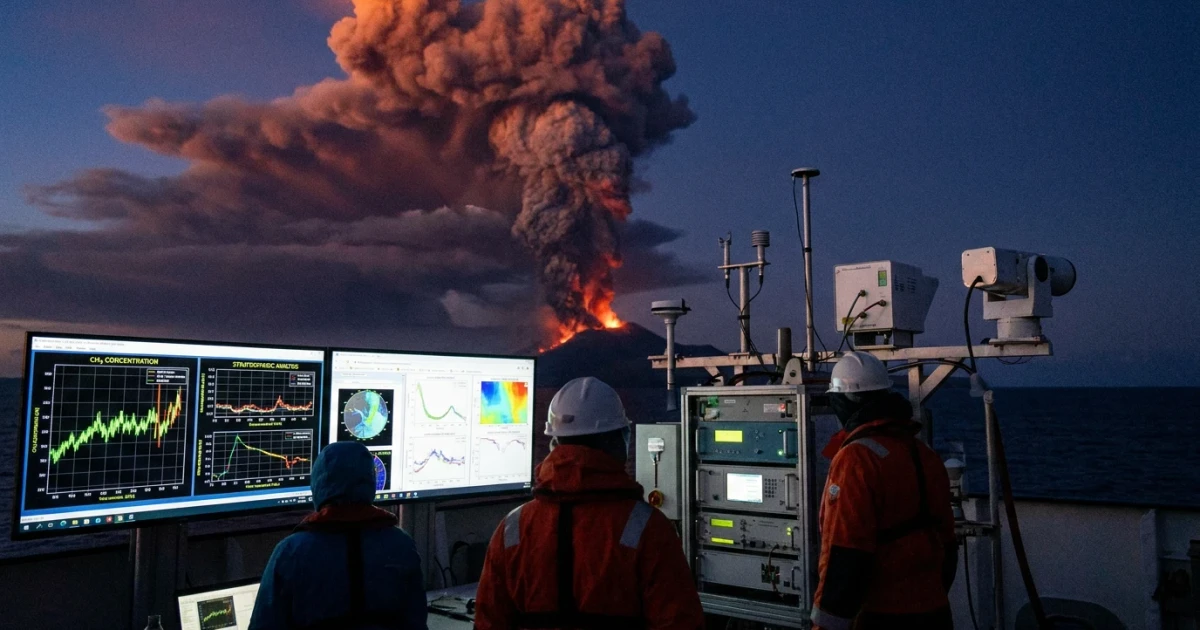
The 2022 eruption of the Hunga Tonga-Hunga Ha'apai volcano continues to yield surprises for scientists, with recent research revealing that the massive underwater blast triggered an unprecedented destruction of methane in the stratosphere—a phenomenon not previously observed with such intensity after volcanic events.
Unexpected Methane Cleanup in the Atmosphere
Methane is a potent greenhouse gas, considered over 25 times more effective than carbon dioxide at trapping heat in the atmosphere over a 100-year period. Normally, volcanic eruptions are associated with injections of gases that can warm or cool the planet. However, scientists analyzing the aftermath of the Hunga Tonga eruption found that instead of increasing methane, the event led to a dramatic decrease of the gas in the stratosphere, as highlighted in ScienceAlert’s report on the phenomenon.
Volcanic Eruption’s Unique Impact on Methane
Unlike typical eruptions, the Hunga Tonga event blasted an extraordinary volume of water vapor—estimated at about 146 teragrams—directly into the stratosphere. According to recent research, this was the largest such injection in recorded history. The excess water vapor triggered a series of chemical reactions that increased the formation of hydroxyl radicals (OH), highly reactive molecules that efficiently break down methane in the upper atmosphere.
- Hunga Tonga injected around 150 million tons of water vapor into the stratosphere—unprecedented in the satellite era.
- Subsequent chemical reactions led to the destruction of millions of tons of methane that would otherwise contribute to global warming.
Scientific Surprise and Broader Implications
Before this event, scientists generally expected volcanic eruptions to have only a minor effect on methane, mostly through changes in sunlight due to increased aerosols. The Hunga Tonga eruption upended those assumptions. As ScienceAlert reported, researchers were “stunned” by the rapid and large-scale methane removal, calling it a “hidden atmospheric cleanup” that was never expected from volcanic activity.
The process unfolded as follows:
- Massive amounts of water vapor reached the stratosphere.
- This created optimal conditions for the formation of hydroxyl radicals (OH).
- OH radicals reacted with methane, breaking it down into less persistent compounds.
- Satellite and ground-based observations confirmed a significant drop in stratospheric methane levels in the months following the eruption, as seen in NASA datasets.
The implications are significant: methane’s role as a greenhouse gas means any unexpected process that destroys it in the atmosphere could temporarily slow warming. However, scientists caution that such events are rare and unpredictable and do not offer a reliable climate solution. Further, the same eruption injected enough water vapor to have a slight warming effect, partially offsetting the methane decrease, according to ongoing research on radiative forcing.
What’s Next for Atmospheric Research?
The Hunga Tonga eruption underscores how much remains unknown about volcanic impacts on atmospheric chemistry. Ongoing analysis of stratospheric water vapor and aerosol data is expected to yield deeper insights into these complex interactions and their long-term climate implications.
Scientists are now looking at other large eruptions to see if similar effects occurred in the past and to model what such events might mean for future climate scenarios. This remarkable example of nature’s “hidden cleanup” serves as both a scientific revelation and a reminder of Earth’s unpredictable atmospheric processes.