US News
ICE Agents Deployed to TSA Checkpoints Amid Shutdown
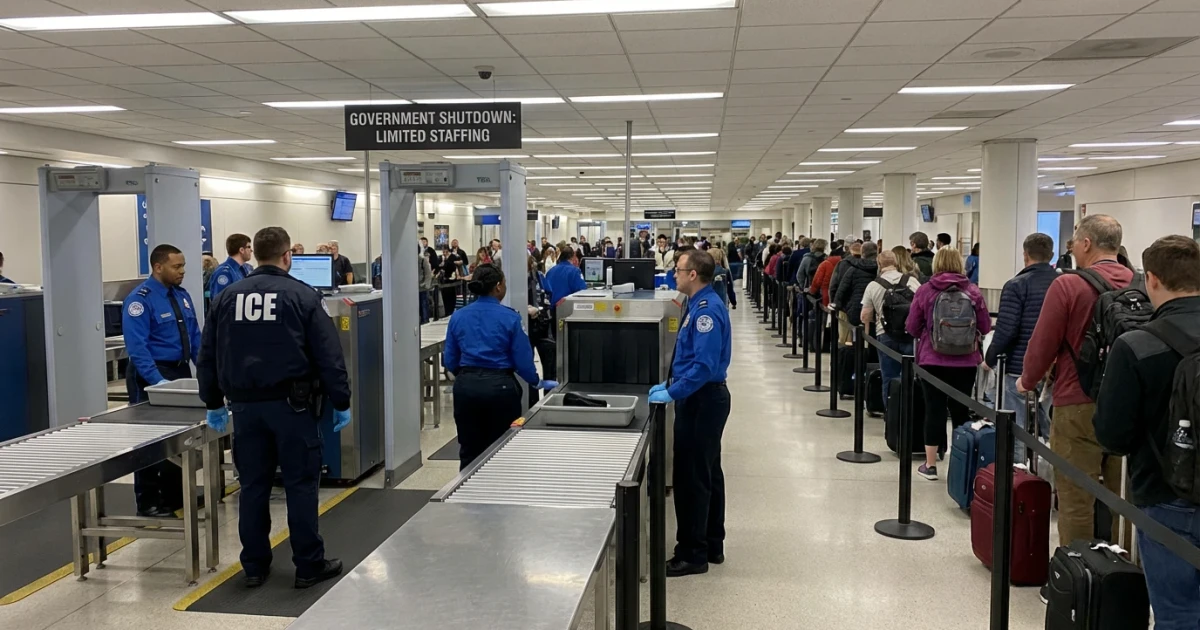
U.S. airports are seeing a new layer of federal presence as Immigration and Customs Enforcement (ICE) officers are deployed to Transportation Security Administration (TSA) checkpoints, following an order from former President Donald Trump amid an ongoing partial government shutdown. The move, reported by AP News, comes as TSA grapples with widespread employee absences, raising concerns about the continuity of airport security and the impact on travelers nationwide.
ICE Officers Sent to Airports as TSA Faces Staffing Shortages
AP News reported that ICE agents are expected to arrive at major airports including Atlanta, a critical hub for domestic and international travel. This deployment follows a presidential directive issued during a partial shutdown of the federal government, a situation that has left many TSA employees without pay and prompted a significant uptick in workers calling out sick. The result has been longer checkpoint lines and mounting pressure on airport security operations.
- ICE presence at checkpoints marks a shift from their traditional focus on immigration enforcement in non-public airport areas to a direct role in passenger screening.
- TSA Annual Statistics show that the agency typically processes millions of travelers each week, making staffing disruptions particularly impactful during peak travel periods.
Checkpoint Security and Traveler Impact
The sudden integration of ICE into TSA checkpoint operations is unprecedented in recent years, and comes at a time when Government Accountability Office analysis has highlighted the vulnerabilities that government shutdowns create for aviation security. GAO research found that past shutdowns led to increased absenteeism, longer wait times, and heightened stress among remaining staff—a trend now exacerbated by the current situation.
- Many TSA employees, classified as essential but unpaid during shutdowns, are calling out, leading to reduced staffing at key airport checkpoints.
- ICE agents are being tasked with supporting basic screening functions and maintaining order, roles typically performed by TSA personnel.
The TSA security screening process is complex, requiring both technical knowledge and rapid decision-making. Bringing in ICE officers, while bolstering the federal presence, raises questions about the training required for effective passenger screening and the potential for confusion or delays.
Legal and Operational Context
The deployment follows funding gaps after Congress failed to pass a Department of Homeland Security appropriations bill, leaving agencies like TSA and ICE operating under emergency orders. ICE maintains an official presence at airports for enforcement purposes, but their expanded role at checkpoints is a direct result of the shutdown’s acute staffing shortages.
Operational data from Customs and Border Protection and ICE’s 2023 annual report show that coordinated federal activity at airports is standard, but rarely involves ICE officers in frontline passenger screening roles.
Concerns and Forward Outlook
Industry analysts, as cited in RAND research, warn that such emergency measures may provide only temporary relief. Prolonged reliance on ICE for TSA functions could disrupt established protocols, create legal ambiguities regarding enforcement authority, and undermine public confidence in airport security procedures.
- Travelers are advised to allow extra time at airports and stay informed of updates from both TSA and ICE.
- The situation remains fluid, with ongoing negotiations in Congress aimed at restoring full funding to DHS agencies.
As the partial government shutdown continues, the deployment of ICE agents to TSA checkpoints underscores the broader challenges facing U.S. airport security infrastructure. The coming weeks will test the resilience of airport operations and the capacity of federal agencies to adapt under financial and operational strain.