US News
ICE Deployment at Airports Leaves Travelers Facing Long Delays
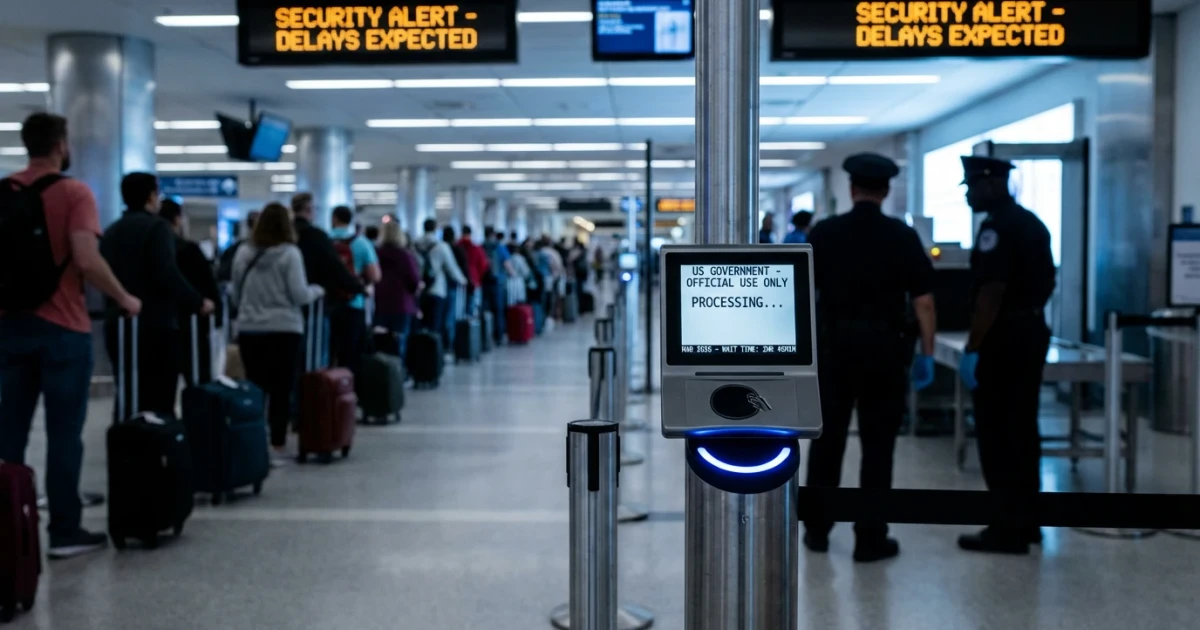
Travelers at major U.S. airports continue to face lengthy lines and delays, despite the recent deployment of ICE agents to assist with security screening, a move authorized by former President Donald Trump. The effort, rolled out amid mounting complaints about airport congestion, has failed to ease the bottlenecks or resolve the underlying staffing disputes hampering Transportation Security Administration (TSA) operations, according to The Washington Post.
ICE Agents Added to Security Lines
The decision to assign Immigration and Customs Enforcement (ICE) personnel to airport security lines marked an unusual step in federal airport management. Typically tasked with immigration enforcement, ICE agents were brought in to check identification and assist with screening at select airports experiencing the worst congestion. The Washington Post reported that the measure was implemented as a stopgap while negotiations with TSA staff continued.
- ICE agents began checking IDs at some airport security lines, a duty usually handled by TSA officers.
- The move was intended to address staffing shortages and reduce passenger wait times.
- Despite the additional personnel, long lines persisted at major airports across the country.
Little Impact on Wait Times and Passenger Experience
According to The Washington Post, the presence of ICE agents has not led to significant improvements in throughput or wait times for air travelers. In fact, daily TSA passenger volume data shows that airport lines remain longer than average for this time of year, with some passengers reporting waits of over an hour at peak periods. The underlying labor dispute between the TSA and its workforce—a key driver of the current crisis—remains unresolved, limiting the effectiveness of stopgap solutions like ICE deployment.
- Wait times at security checkpoints remain elevated, with many travelers expressing frustration over continued delays.
- ICE agents, while trained in identification procedures, are not specialists in aviation security protocols, leading to concerns about efficiency and safety.
- Airports have seen no measurable drop in congestion, according to recent GAO analysis of airport security efforts.
Ongoing Labor Dispute and Policy Challenges
The Washington Post noted that the impasse between TSA management and airport security personnel continues to undermine efforts to restore normal operations. While ICE agents provide temporary relief, they are not a permanent replacement for trained TSA screeners. The Cybersecurity and Infrastructure Security Agency (CISA) has outlined best practices for airport security that emphasize specialized training and coordination—areas where ICE agents are less prepared.
- ICE involvement has raised questions about the appropriate role of different federal agencies in airport operations.
- Travel industry groups and civil rights advocates have voiced concerns about the expanded law enforcement presence in civilian travel settings.
- No end to the labor dispute is in sight, leaving the TSA reliant on ad hoc measures.
Analysis and Outlook
The attempt to use ICE agents as a quick fix for airport congestion highlights the complexity of managing large-scale transportation systems. While the move has increased the number of federal agents on hand, it has not addressed the core issues driving long lines and traveler frustration. Most experts agree that resolving the TSA staffing dispute and implementing best practices for airport security are necessary steps for lasting improvement.
Until a comprehensive solution is reached, passengers are advised to arrive early and monitor official guidance for updates on security wait times and operational changes. The situation remains fluid, with both the Department of Homeland Security and airport authorities under pressure to restore efficient, secure travel for the public.