US News
ICE Officers to Aid TSA as Shutdown Impacts Air Travel
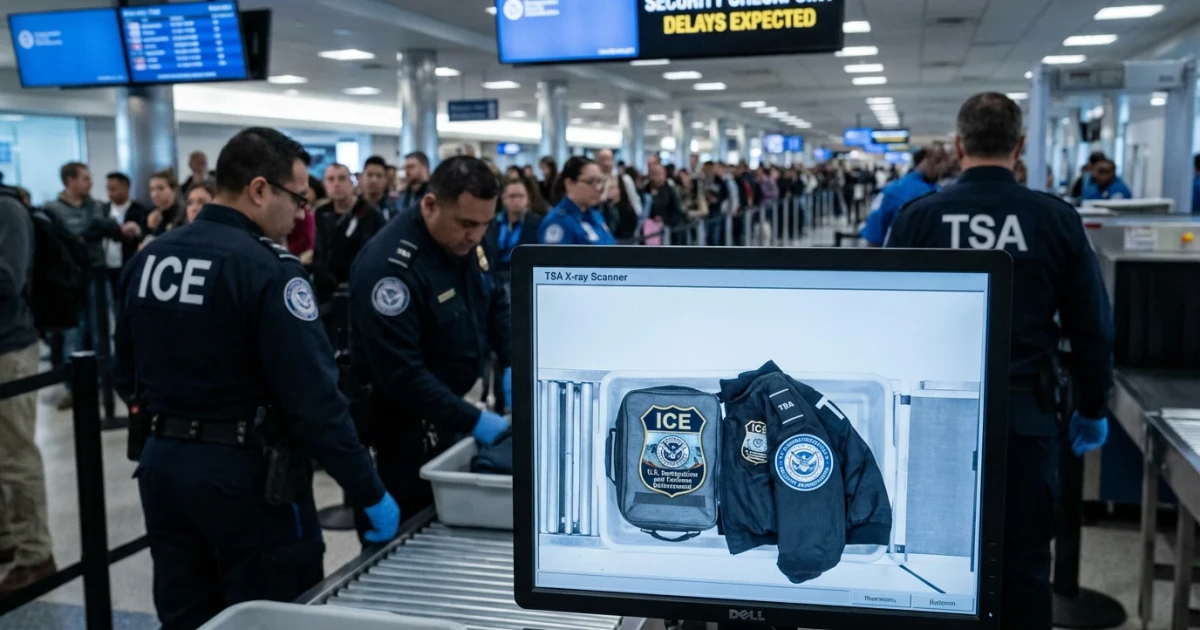
U.S. airports are preparing for significant changes as the ongoing partial government shutdown forces Immigration and Customs Enforcement (ICE) officers to assist Transportation Security Administration (TSA) operations, aiming to address mounting staffing challenges and minimize disruptions for travelers.
Staffing Shortages Disrupt Security Lines
As the government shutdown continues, TSA employees face ongoing uncertainty over pay and working conditions, resulting in increased absenteeism at airports nationwide. Reports from AP News indicate that callouts have surged among screeners, particularly at major hubs like Atlanta’s Hartsfield-Jackson International Airport, where travelers have already encountered longer wait times and reduced throughput in recent days.
- Screening lanes at several airports are operating with fewer agents, causing lines to stretch longer than usual.
- Travelers have reported missed flights and increased anxiety due to unpredictable wait times.
- According to TSA employment statistics, the agency relies on over 50,000 screening officers, many of whom are working without pay during the shutdown.
ICE Officers Step In
To help alleviate the pressure, ICE officers are being deployed to support TSA workforce gaps. Live updates from AP News confirm that ICE agents are expected to arrive at Atlanta’s airport as one of the first major deployments. While ICE’s primary mission is immigration enforcement, their federal law enforcement training allows them to assist with basic security functions during emergencies.
Customs and Border Protection has previously detailed similar collaborations, noting that joint operations between TSA and ICE have increased during prior shutdowns, as shown in the TSA and ICE Collaboration Statistics.
Travelers and Employees Express Frustration
The impact is being felt on both sides of the security lines. Travelers have voiced concern over missed connections and delayed flights. Meanwhile, TSA agents—many working without pay—face mounting stress. The ongoing absenteeism highlights the financial and emotional toll on federal workers.
The Government Accountability Office has analyzed the effects of shutdowns on the federal workforce, finding that such disruptions lead to increased absenteeism, decreased morale, and operational slowdowns for agencies like TSA and ICE. These findings are detailed in the GAO Report: Impact of Government Shutdowns on Federal Workforce.
Operational Challenges Remain
While the deployment of ICE officers is intended as a stopgap, it raises questions about the long-term sustainability of such measures. ICE agents are not typically trained for the nuanced tasks of passenger screening and may require rapid orientation to TSA procedures. This could affect the efficiency and security of airport operations if the shutdown persists.
Recent research from RAND underscores the limitations of cross-agency staffing during shutdowns, noting that while short-term relief is possible, it cannot replace fully trained TSA personnel.
What Travelers Should Expect
- Longer wait times: Passengers are advised to arrive earlier than usual for flights, especially at major airports.
- Changes at checkpoints: ICE officers may be visible at security checkpoints, assisting with crowd control and basic screening.
- Possible delays: Schedules may fluctuate, and some screening lanes may be closed or consolidated.
The situation remains fluid, and officials urge travelers to monitor airport advisories and be prepared for adjustments. While the collaboration between ICE and TSA aims to keep air travel moving, the underlying staffing crisis will likely persist until the shutdown is resolved.
Looking Ahead
The partial government shutdown continues to test the resilience of the nation's airport security system. Until federal funding is restored, agencies are relying on improvisation and interagency cooperation to maintain essential operations. The long-term effects on employee morale, operational readiness, and traveler confidence remain uncertain as the crisis unfolds.