Business
IMF sees global economy growing unevenly amid war and AI shocks

The International Monetary Fund kept its 2026 global growth forecast at 3.0 percent on Wednesday, but the route to that number now runs through war damage on one side and an AI-powered tech cycle on the other. Its July World Economic Outlook update lifted 2027 growth to 3.4 percent, put global headline inflation at 4.7 percent in 2026 from 4.1 percent in 2025 before easing to 3.9 percent in 2027, and shows disinflation that began in early 2024 has stalled. For the United States, that mix points to slower export demand, volatile markets and less room for borrowing costs to fall quickly if global prices stay sticky.
The IMF’s core split is geographic and sectoral. The war shock is weighing on energy importers and vulnerable economies, while AI-driven demand is lifting countries tied closely to the global technology value chain. The IMF assumes the Strait of Hormuz begins reopening in mid-July and conditions normalize to pre-war levels by March 2027, with June 10 market pricing implying average oil at $89 a barrel in 2026. That keeps U.S. gasoline, freight and airline fuel costs exposed even if the global economy avoids a synchronized downturn, while chipmakers, server suppliers, cloud providers and other AI-linked firms remain on the stronger side of the cycle.
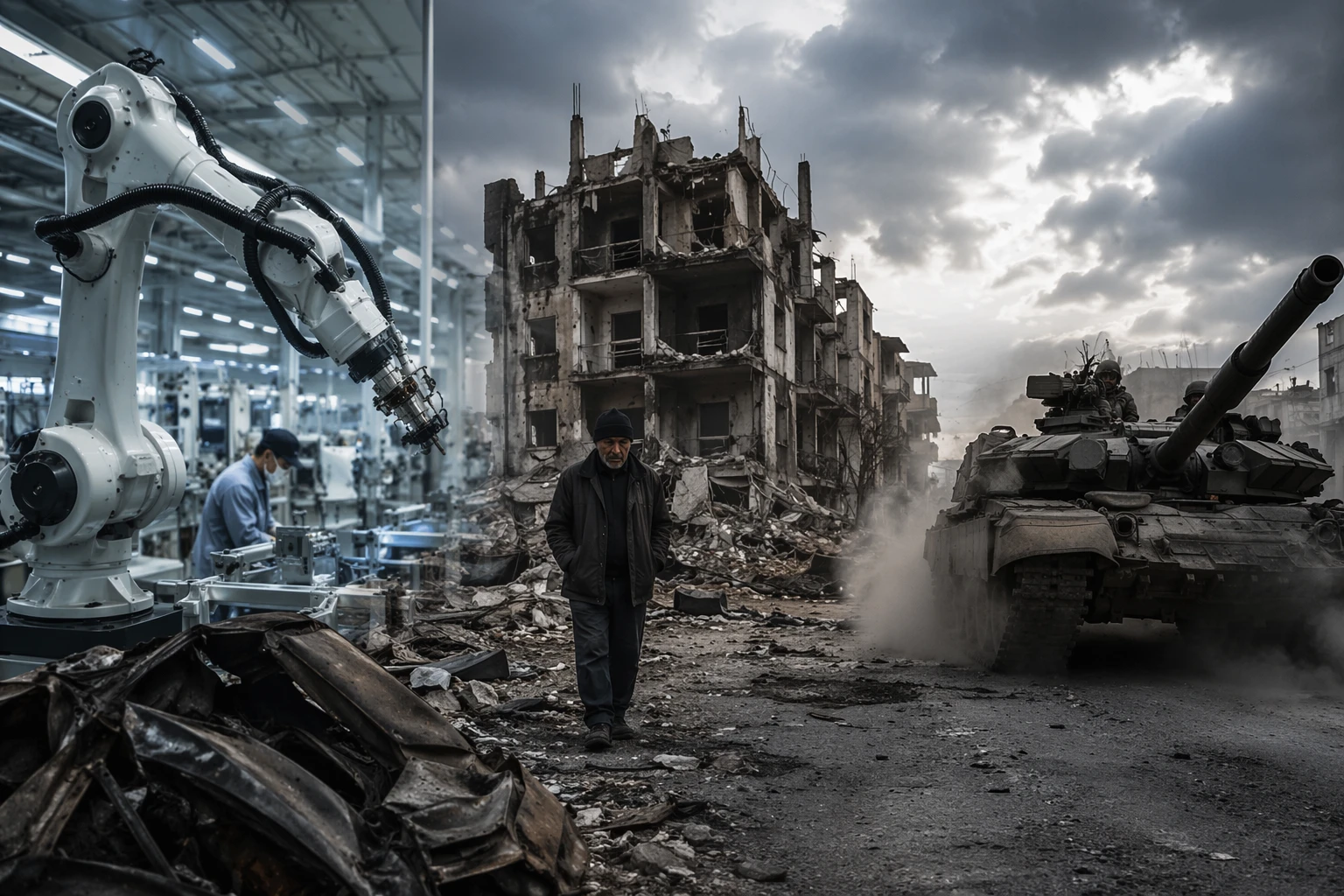
Risks are more balanced than in April, but still tilted down. The downside list includes renewed conflict, financial market repricing, further trade fragmentation and a correction in technology-driven expectations. Petya Koeva Brooks, the IMF deputy director of research, called it “a V-shaped recovery,” but that rebound is uneven: energy exporters outside the conflict zone gain from better terms of trade, while many low-income countries, as energy importers with little presence in the tech chain, remain vulnerable.
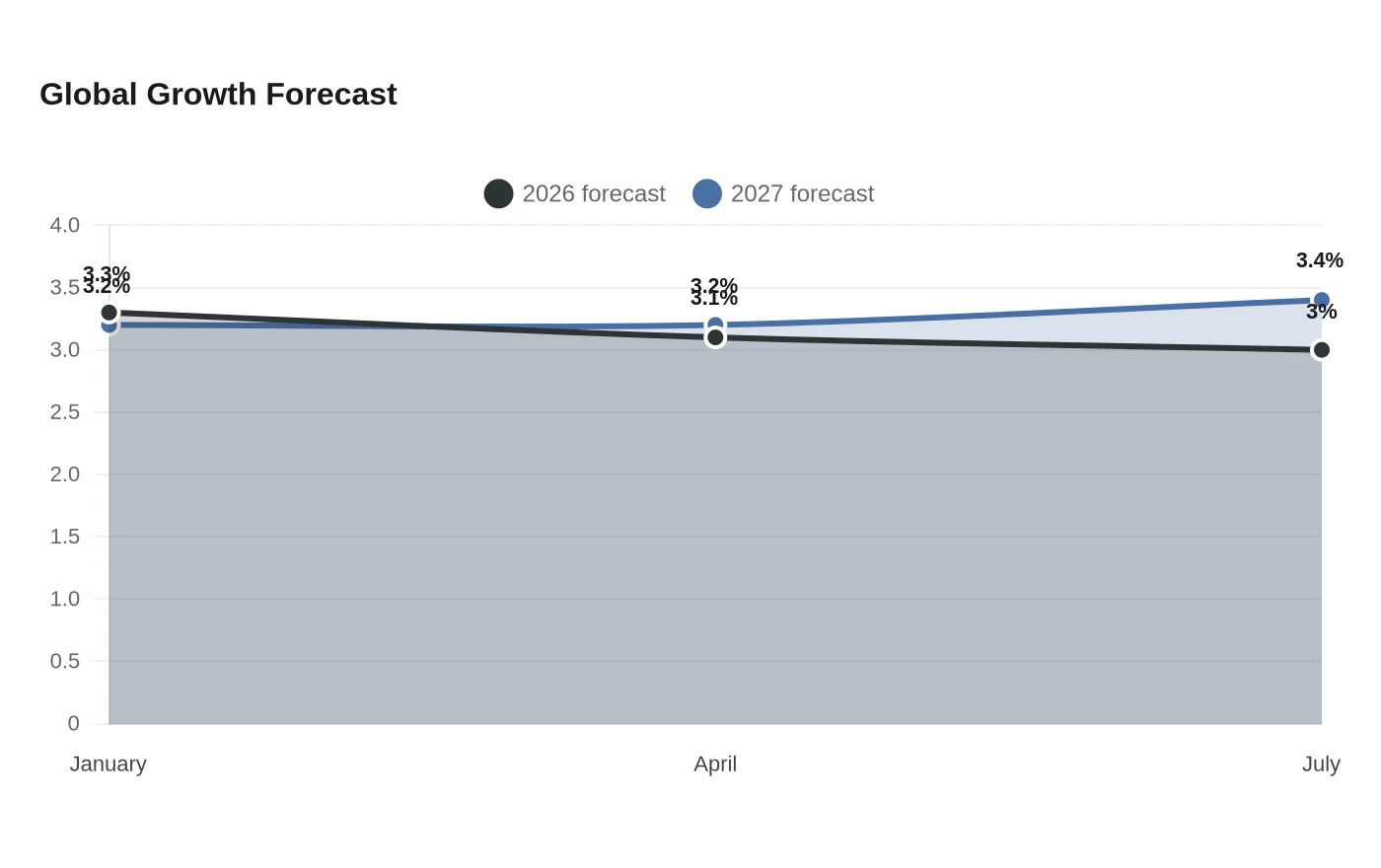
January’s projection called for 3.3 percent global growth in 2026 and 3.2 percent in 2027; April cut that to 3.1 percent and 3.2 percent; July now puts the path at 3.0 percent and 3.4 percent. U.S. companies face uneven demand rather than outright recession, with exporters of machinery, autos and branded consumer goods facing the softer side of the cycle, and tech hardware, data-center gear and power infrastructure tied to AI still attracting capital.