World
IMF Warns Iran Conflict Threatens Global Economic Outlook
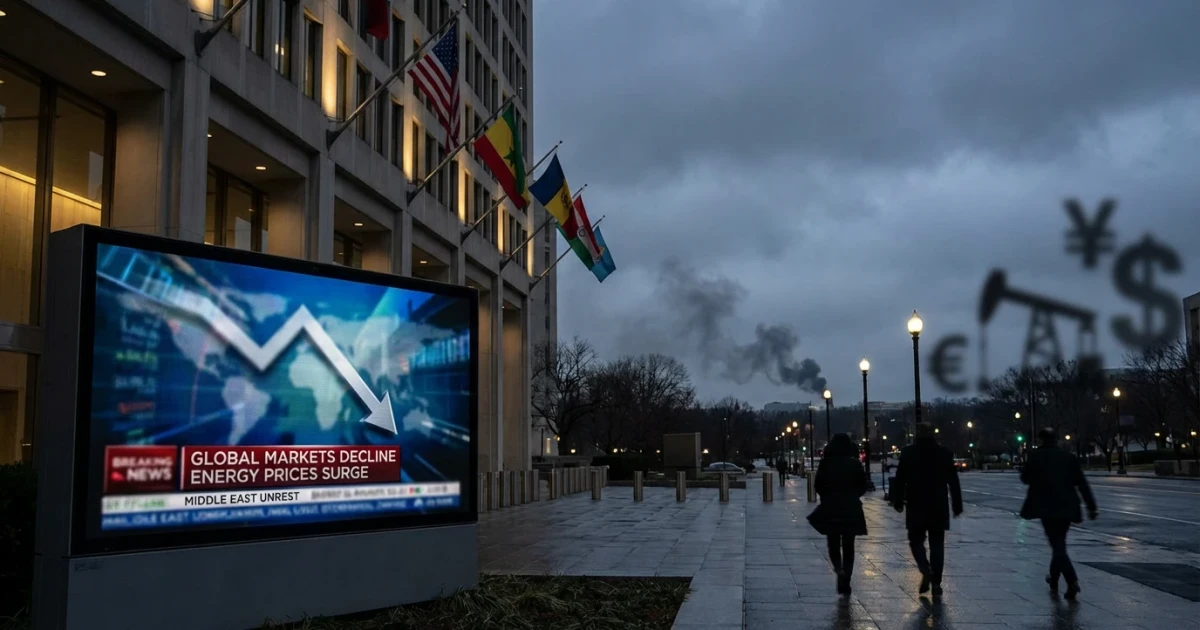
The International Monetary Fund (IMF) has issued a stark warning that the ongoing conflict in Iran is set to dampen global economic growth, raising concerns among policymakers and investors worldwide. Both The New York Times and the Boston Herald report that the conflict’s repercussions are reverberating through energy markets, supply chains, and overall economic confidence.
IMF Lowers Growth Projections Amid Rising Geopolitical Risks
The IMF’s latest assessments, as detailed in their World Economic Outlook, point to a "drag" on growth stemming from the war in Iran. While the organization had previously forecasted modest expansion for the global economy, the recent escalation in the Middle East has prompted a downward revision. According to the IMF, increased uncertainty has led to more cautious investment, with knock-on effects expected across both developed and emerging markets.
- IMF now projects global growth to fall below earlier estimates, citing the Iran conflict as a primary factor.
- Energy prices have spiked, reflecting fears over potential disruptions to oil supply from the region, which remains a critical exporter.
- Financial markets have displayed increased volatility, with investors seeking safer assets.
Energy Markets Face Renewed Volatility
The IMF’s concerns are echoed by recent analysis from the International Energy Agency (IEA), which notes that oil prices have risen sharply since the outbreak of hostilities. Iran’s strategic position in global energy supply means any sustained conflict can have outsized effects on both prices and availability. As reported in both The New York Times and the Boston Herald, these energy shocks are likely to feed through to higher inflation and increased production costs worldwide.
Historically, shocks to energy supply have dampened global GDP growth by constraining consumption and business investment. The IMF warns that current events could mirror such patterns, particularly if oil prices remain elevated for an extended period.
Broader Economic Risks and Policy Challenges
Beyond energy, the IMF highlights that the conflict in Iran adds to an already uncertain global environment. Ongoing geopolitical tensions, including those in the Middle East, are complicating efforts by central banks to manage inflation and support growth. The IMF’s analysis, as cited by The New York Times, underlines the challenge of balancing price stability with the need to avoid a deeper economic slowdown.
- Trade routes in the region are at risk, potentially disrupting supply chains and raising costs for businesses globally.
- Investor confidence has weakened, as reflected in increased capital outflows from emerging markets and a strengthening of traditional safe-haven currencies.
- Global inflation, already a concern for many economies, could be exacerbated if energy prices continue to climb.
Outlook and Policy Recommendations
The IMF urges policymakers to remain vigilant and adaptable in response to the evolving risks posed by the Iran conflict. While the organization stops short of predicting a global recession, it emphasizes the need for international cooperation and targeted policy interventions to mitigate the fallout. The IMF’s chief has called for coordinated action among major economies to stabilize energy markets and ensure continued support for the world’s most vulnerable regions.
Looking ahead, the IMF plans to update its economic forecasts as the situation develops, while urging governments and central banks to prepare for a potential period of heightened volatility. The combination of geopolitical uncertainty, elevated energy prices, and cautious investment could weigh on the world’s economic prospects for the foreseeable future.
For more in-depth data and analysis, readers can explore the official IMF Data Portal and the World Bank’s Global Economic Prospects for the latest regional and sectoral breakdowns.
Conclusion
As the conflict in Iran continues, the IMF’s cautionary statements underscore the interconnected nature of geopolitical events and the global economy. While the full impact remains uncertain, the consensus among economists and international organizations is clear: renewed tensions in the Middle East threaten to slow growth, disrupt markets, and test policymakers in the months ahead.