Sports
Immigrants and streaming made soccer truly global in America
Soccer is no longer something Americans merely borrow from elsewhere. Immigrants, streaming, and a World Cup unfolding across three countries have made the United States one of the sport’s most influential markets, with the power to expand the game and to reshape it in American terms.
From marginal pastime to national platform
The United States Soccer Federation dates to 1913, and a professional soccer league already existed by 1921, yet the sport still struggled to break out of the margins for most of the 20th century. It was often treated as a recreational activity or a college game, not a centerpiece of American sports life. Waves of European immigrants helped keep local teams alive in the interwar years, but soccer remained culturally segmented, carried by communities that already knew what the sport meant.
That early pattern matters because it shows how long soccer lived in the United States as an imported habit rather than a mass public one. The sport had institutions, but not broad ownership. What has changed is not just the size of the audience, but who the audience is and how it connects to the game.
Immigration widened the map of fandom

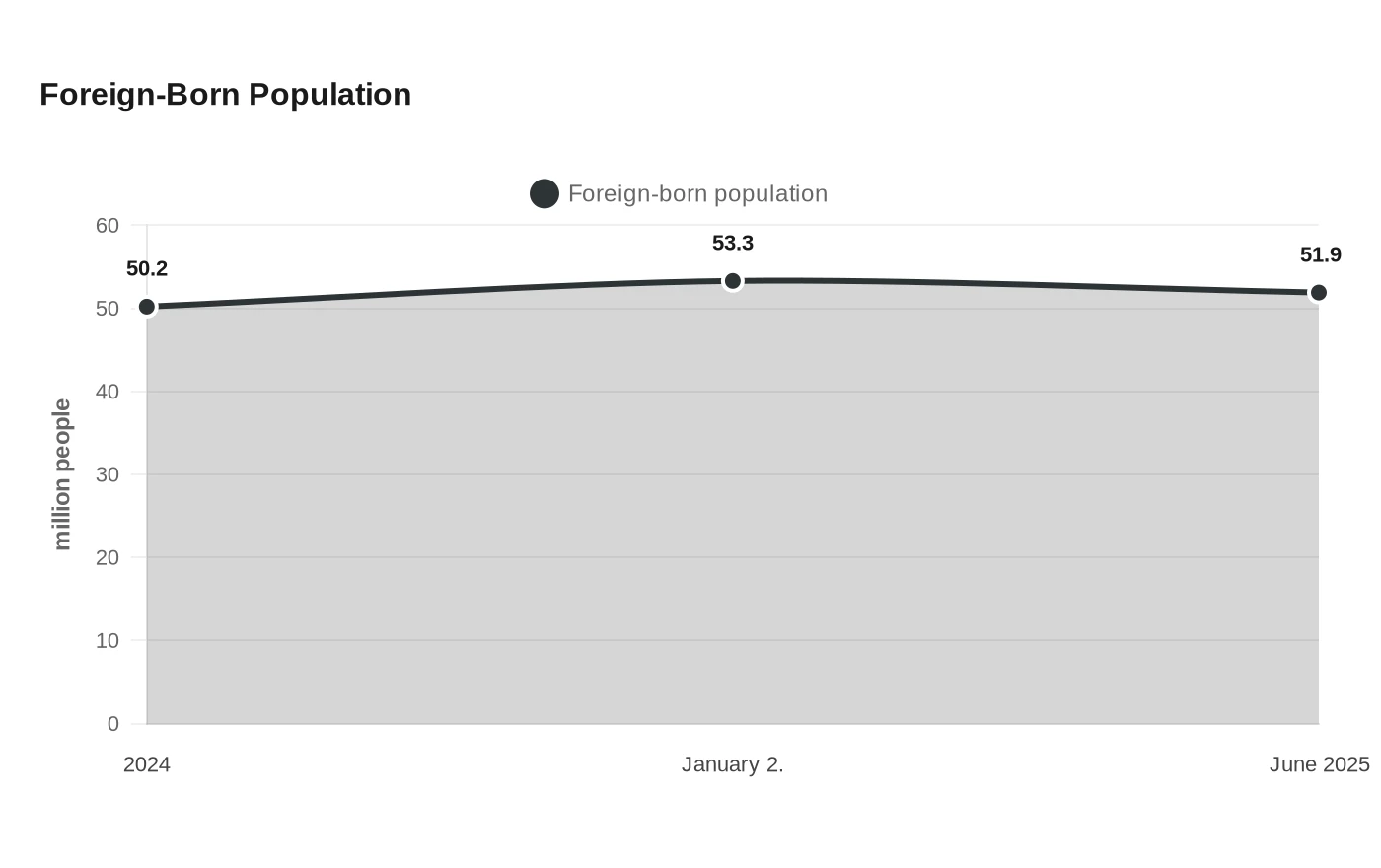
The foreign-born population in the United States hit 53.3 million in January 2025, then fell to 51.9 million by June 2025, the first decline of that kind since the 1960s. In 2024, Census-based estimates put the foreign-born population at about 50.2 million people, or 14.8% of the U.S. population, a share last reached in 1890. That is not a footnote to soccer’s rise in America. It is one of the main reasons the sport now feels geographically and culturally broader than it once did.
Nearly one-third of immigrants in the United States come from Asia, more than any other region except Latin America. That shift helps explain why World Cup loyalties, club allegiances, and television habits are increasingly global inside the United States. In practical terms, it means a stadium in Los Angeles, a bar in New Jersey, or a living room in Texas may be filled with fans tracking different national teams, different leagues, and different narratives all at once.
The social impact runs deeper than entertainment. For immigrant communities, soccer can function as a bridge between home and here, a way to preserve memory without living in the past. It also gives second-generation families a shared language that crosses generations, neighborhoods, and accents, which is why the sport can feel both personal and public at the same time.
Streaming changed who gets to watch
The internet removed one of soccer’s old barriers in the United States: access. Apple and Major League Soccer announced a 10-year media partnership beginning in 2023, with every live MLS match available through the Apple TV app and MLS Season Pass running through 2032. That arrangement did more than make games easy to find. It placed soccer inside a subscription platform that reaches beyond the traditional sports bundle, making the league part of a broader digital entertainment economy.

That shift has consequences. On one hand, streaming can grow the audience by making matches available anywhere and by connecting fans to teams they might never have seen on local television. On the other hand, it can also turn the sport into another paywalled product, available only to those who can afford multiple subscriptions and know where to look. Soccer grows, but the cost of belonging can rise with it.
MLS’s roster makeup shows how global the league has become. In June 2024, the league said its teams included players from 79 countries across six continents, making MLS the most geographically diverse top men’s professional sports league in North America. That diversity matters because it changes what American soccer looks like on the field: not just where the players come from, but how the league markets itself, how fans identify with clubs, and how the sport is presented to a country that is increasingly multilingual and multinational in its tastes.
The 2026 World Cup is the accelerant
The 2026 FIFA World Cup will be the 23rd edition, the first with 48 teams, the first hosted by three countries, and a tournament built around 104 matches in 16 cities. FIFA’s June 2026 schedule shows the opening match on June 11, 2026, with the United States, Mexico, and Canada all staging group-stage games. That scale matters because it places the United States not on the edge of global soccer, but at the center of how the sport is staged and sold.
The 1994 World Cup remains the crucial precedent. FIFA still points to that tournament as an important historical turning point because it helped establish the commercial and cultural case for major soccer events in America. The lesson of 1994 was that the U.S. could host the game successfully. The lesson of 2026 is that the country can now help define the game’s economics, media habits, and global reach.
Evidence of that shift is already visible in audience behavior. Nielsen said U.S. sports audiences watched record amounts of soccer in 2024, and in its World Cup-era reporting said U.S. viewers spent nearly 80 billion minutes watching soccer in 2025. Nielsen also found that a significant share of Americans expect their interest to grow ahead of the tournament. The audience is not just larger. It is becoming more habitual, more diverse, and more valuable to leagues, broadcasters, and advertisers.
The new power center of the sport
This is where the tension becomes unavoidable. Immigration and streaming have made soccer more accessible, more global, and more socially inclusive in the United States. They have also made the country one of the sport’s most consequential markets, where the size of the audience can influence what leagues prioritize, what rights packages get sold, and how the game is packaged for consumption.
That influence can be constructive. It can fund better coverage, bigger events, and more ways for fans to follow clubs and national teams that once felt far away. It can also Americanize the sport by pulling it toward subscription models, corporate branding, and platform logic that traditional fans around the world often resist. The story of soccer in America is no longer about catching up with the rest of the world. It is about how the United States, through its immigrant communities and its digital media power, is starting to change the rest of the world’s game.
Sources
- [1]nytimes.com
- [2]britannica.com
- [3]sheffield.ac.uk
- [4]census.gov
- [5]pewresearch.org
- [6]migrationpolicy.org
- [7]apple.com
- [8]mlssoccer.com
- [9]fifa.com