Entertainment
In Brazil’s Amazon, a century-old rivalry fuels Parintins festival

Deep on Tupinambarana Island in the Amazon River, Parintins turns a cultural rivalry into civic identity. The town sits about 369 kilometers from Manaus, but during the Festival Folclórico de Parintins it becomes one of Brazil’s most visible stages, a place where color, family allegiance, and local pride matter as much as the performance itself.
A rivalry built into the town
Parintins is split by two century-old boi-bumbá traditions that trace back to 1913. Garantido, founded by fisherman Lindolfo Monteverde, wears red and white and is marked by a red heart, a symbol that helped earn it the nickname “People’s Boi.” Caprichoso, founded by the Cids and Gonzaga families, wears blue and white and is represented by a blue star.
That split is not just decorative. It shapes how many residents see themselves, their neighborhoods, and their place in the city’s public life. The festival has long functioned as a civic marker in Brazil’s North, where people do not simply attend the event; they inherit it, defend it, and help reproduce it year after year.
How the festival took its current form
The Festival Folclórico de Parintins was officially created in 1965 by young people linked to the Catholic Church, through Juventude Alegre Católica, as a way to raise money for the construction of the Cathedral of Nossa Senhora do Carmo. Its early life was tied to simpler street performances, which gave the celebration a local, communal character before it expanded into the massive production it is today.
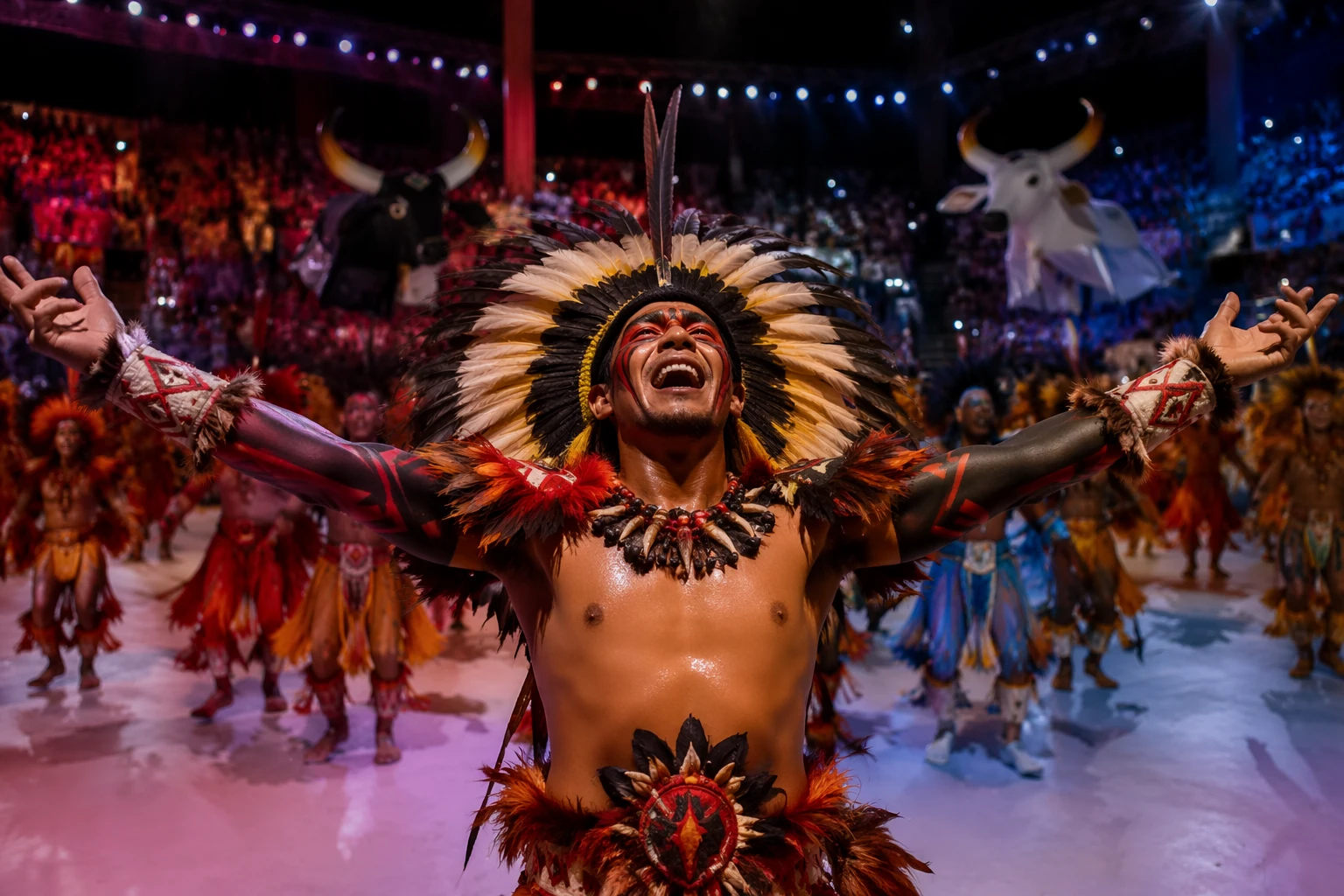
That evolution accelerated with the opening of the Bumbódromo in 1988. Moving the contest into a dedicated arena formalized the rivalry, sharpened its competitive structure, and gave the city an architectural symbol equal to the event itself. What began as a church-linked fundraiser became a highly organized cultural contest with rules, judges, and national visibility.
What happens over the three nights
The festival runs for three nights in late June, when both sides present an intricate mix of music, dance, giant floats, Amazonian legends, Indigenous references, and popular culture. The scale is what gives it force: the event is widely described as the largest open-air folklore spectacle in the world, and the production around it resembles a citywide mobilization more than a single show.
Inside the arena, 10 judges score 21 criteria across the three nights. The lowest score in each category is discarded before the champion is determined, a system designed to reward consistency as much as spectacle. That scoring structure matters because it turns every performance element into a high-stakes contest, from choreography and storytelling to visual design and crowd energy.
Why the rivalry still divides the city
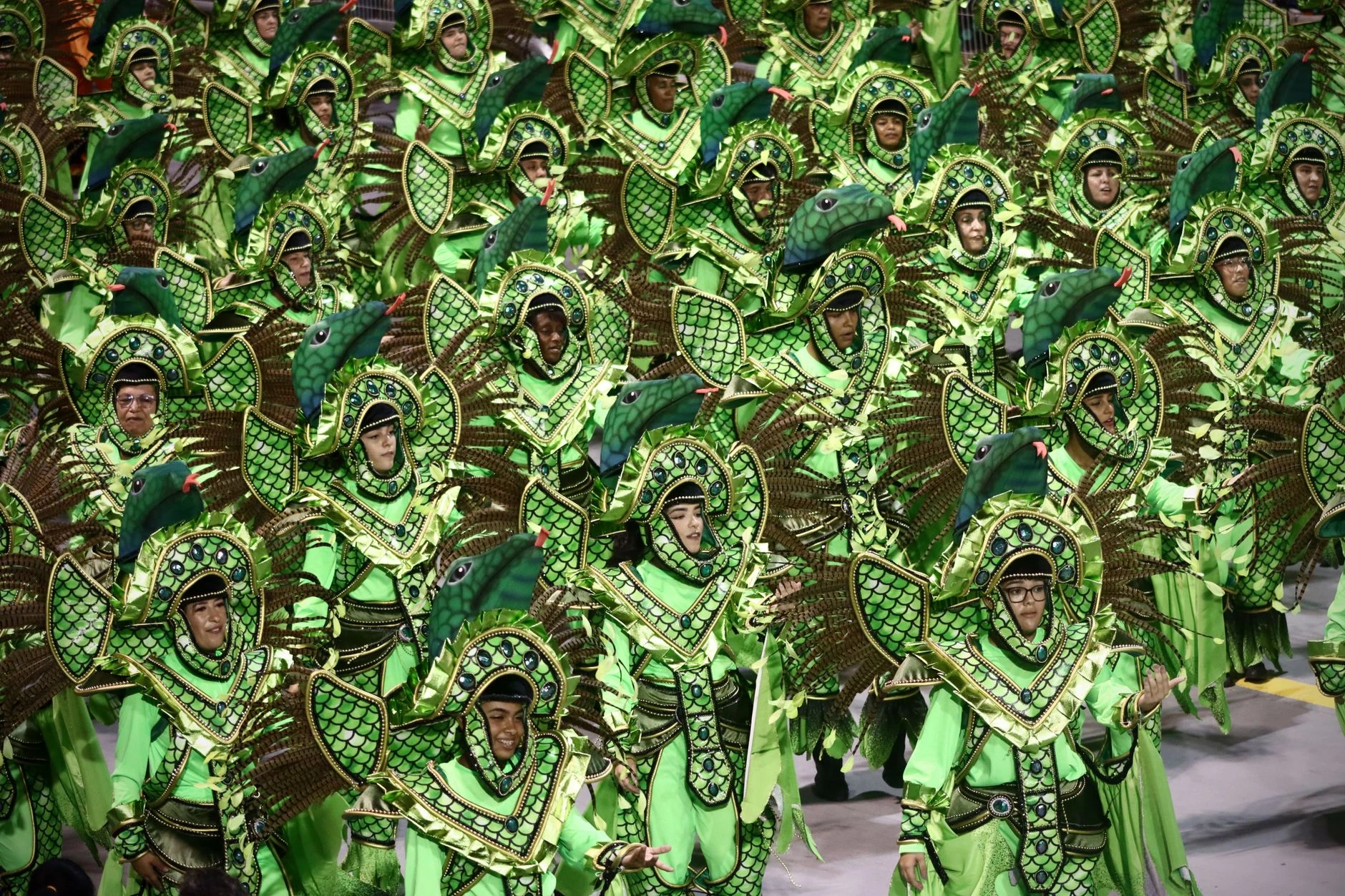
The red and blue split in Parintins is a culture-and-identity story with national resonance because it works like a permanent local membership test. Supporting Garantido or Caprichoso is not only about the nights of the festival; it helps define family loyalties, friendships, and the social texture of the town. In a city this size, the rivalry carries the weight of belonging.
It also acts as a local divide in the practical sense that public attention, patronage, and status flow through the festival. The competition gives residents a shared frame for ambition and status, while also creating pressure on local institutions to deliver on logistics, infrastructure, and crowd management. In Parintins, culture is not separate from civic life. It is the form civic life takes.
The economic engine behind the spectacle
The numbers show why officials treat the festival as more than a folklore event. In 2025, city and state officials said the festival drew more than 120,000 visitors over the three nights. Amazonastur estimated the economic impact at R$184 million, while a separate government-linked report put direct tourist revenue at R$215.6 million.
Those figures capture different layers of the same event. The first reflects broader economic activity tied to the festival, while the second measures money brought in directly by visitors. Together they show how a three-night cultural contest can function as a major economic engine for a remote Amazon municipality, especially one that has to absorb tens of thousands of people in a short window.
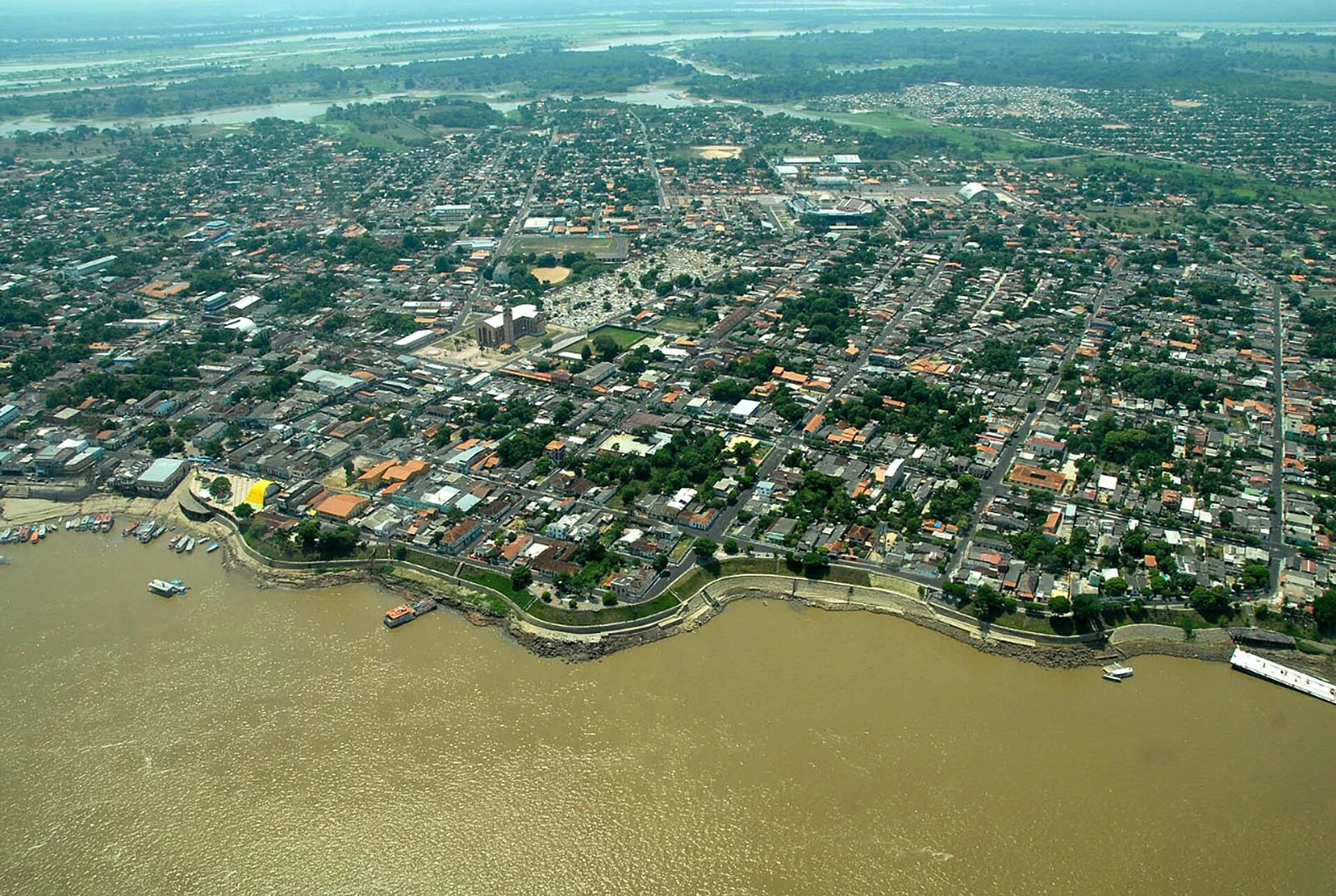
The long-run tourism data point in the same direction. The Amazonas tourism agency said Parintins received more than 527,000 tourists from 2019 through 2025, averaging about 105,000 a year when 2020 and 2021 are excluded because of the pandemic. That steady flow suggests the festival is not a one-off boost but a recurring source of demand for transport, lodging, food, staging, and services.
What Parintins has become
The town’s challenge is the same as its advantage: it must stage a spectacle large enough to hold national attention while remaining rooted in a rivalry that residents recognize as their own. The remote geography, the river crossing from Manaus, the arena, and the scale of the visitor surge all make the event logistically demanding, but they also reinforce its distinctiveness.
That combination of heritage, competition, and revenue is why Parintins stands out in the Amazon. The festival is not just an annual performance; it is the city’s most visible expression of identity, its biggest cultural asset, and one of its strongest economic pillars.