World
India probes Adani airport shops over illegal nicotine pouches

India’s drug department found duty-free shops at Chhatrapati Shivaji Maharaj International Airport selling imported nicotine pouches without the approvals required under Indian law. The shops are operated by Mumbai Travel Retail, a joint venture led by Gautam Adani’s group and Dubai’s Flemingo, putting one of the country’s biggest airport retail operators at the center of an enforcement test.
Inspectors moved after complaints from Mothers Against Vaping, an anti-nicotine group that had already pressed the Health Ministry in July 2025 to ban nicotine pouches and gums. Officials later told customs that registration and import licences were mandatory, and Mumbai Travel Retail was ordered to stop sales and seek the clearances required under the Drugs and Cosmetics Act and Rules.
The legal dispute reaches beyond one airport outlet. Adani’s side has denied wrongdoing and is asking judges to rule that the drugs law does not apply to duty-free shops and nicotine pouches. That argument could shape how airport retail is policed across India, where duty-free counters sit in a grey zone between customs rules and domestic public-health enforcement.
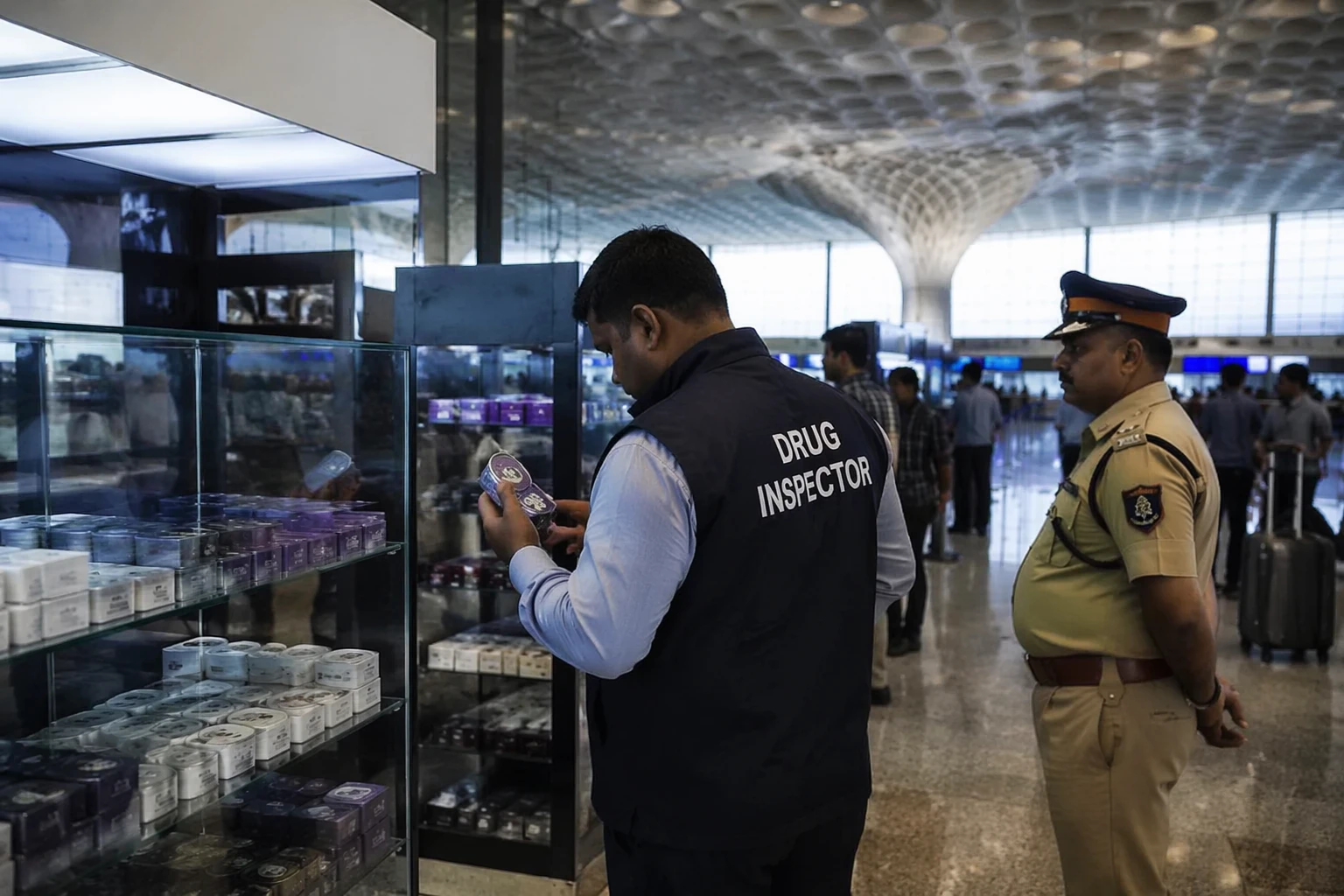
The stakes are high because nicotine pouches remain illegal and unapproved in India, even as the country allows some nicotine-replacement products such as patches and chewing gums through a registration process. The Central Drugs Standard Control Organisation says import registration and an import licence are required for drug imports, reinforcing the government’s position that the products cannot be sold freely simply because they move through an international departure zone.
Public-health concerns have sharpened the scrutiny. The Ministry of Health and Family Welfare estimates tobacco use kills about 1.35 million people each year in India, and the World Health Organization says India is the world’s second-largest consumer and producer of tobacco. A June 2026 study linked to the ICMR-National Institute of Cancer Prevention and Research found nicotine pouches being sold in 10 cities through online platforms, hookah shops and gig-delivery services, with products offered in 445 flavours and strengths as high as 120 mg.

For regulators, the airport case is now a corporate-governance problem as much as a drug-law case. If enforcement stops at an order to suspend sales, it will raise questions about whether politically connected conglomerates face meaningful consequences when inspectors find violations. If authorities prevail in court, airport operators could lose a key argument for treating prohibited nicotine products as ordinary duty-free merchandise.