Health
Indian scientists create detailed 3D atlas of human brainstem
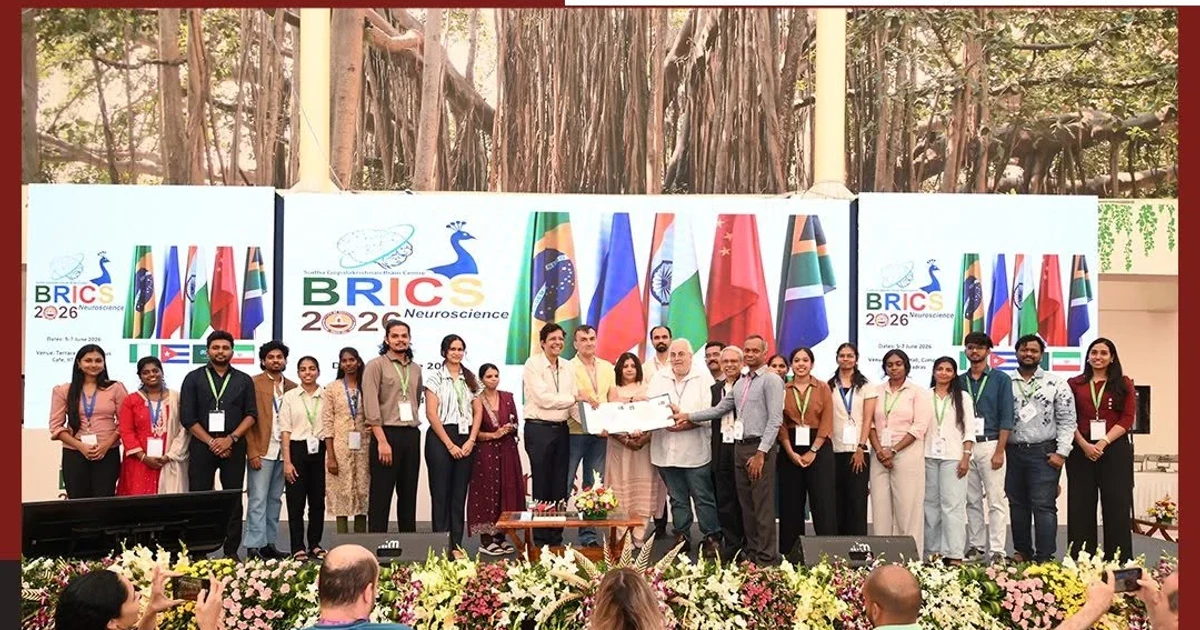
Scientists at the Sudha Gopalakrishnan Brain Centre at the Indian Institute of Technology Madras have built ANCHOR, a detailed 3D atlas of the human brainstem and the most comprehensive of its kind at cellular resolution. Released during the 3rd BRICS Neuroscience Symposium in Chennai in June 2026, the public platform combines more than 800 serial histological sections from fetal, childhood and adult brains, with Nissl staining and seven immunochemical markers to map more than 200 manually annotated structures.
The brainstem links the brain to the spinal cord and helps control breathing, heartbeat, sleep, wakefulness and movement. ANCHOR is designed to help scientists move from MRI scans of the whole brain to individual nerve cells. The human brain contains about 86 billion neurons, and an adult brain weighs roughly 1.2 to 1.5 kilograms, yet routine pathology often relies on only a few tissue samples.
ANCHOR covers three ages, 25 fetal gestational weeks, 9 years old and 54 years old, giving researchers a reference across development and adulthood. The atlas identifies more than 200 clusters of brain cells and nerve pathways, including over 200 nuclei and fiber tracts in the brainstem. Shubha Tole, a neuroscientist at the Tata Institute of Fundamental Research, called it an “unprecedented integration” of engineering, neuroscience and medicine.
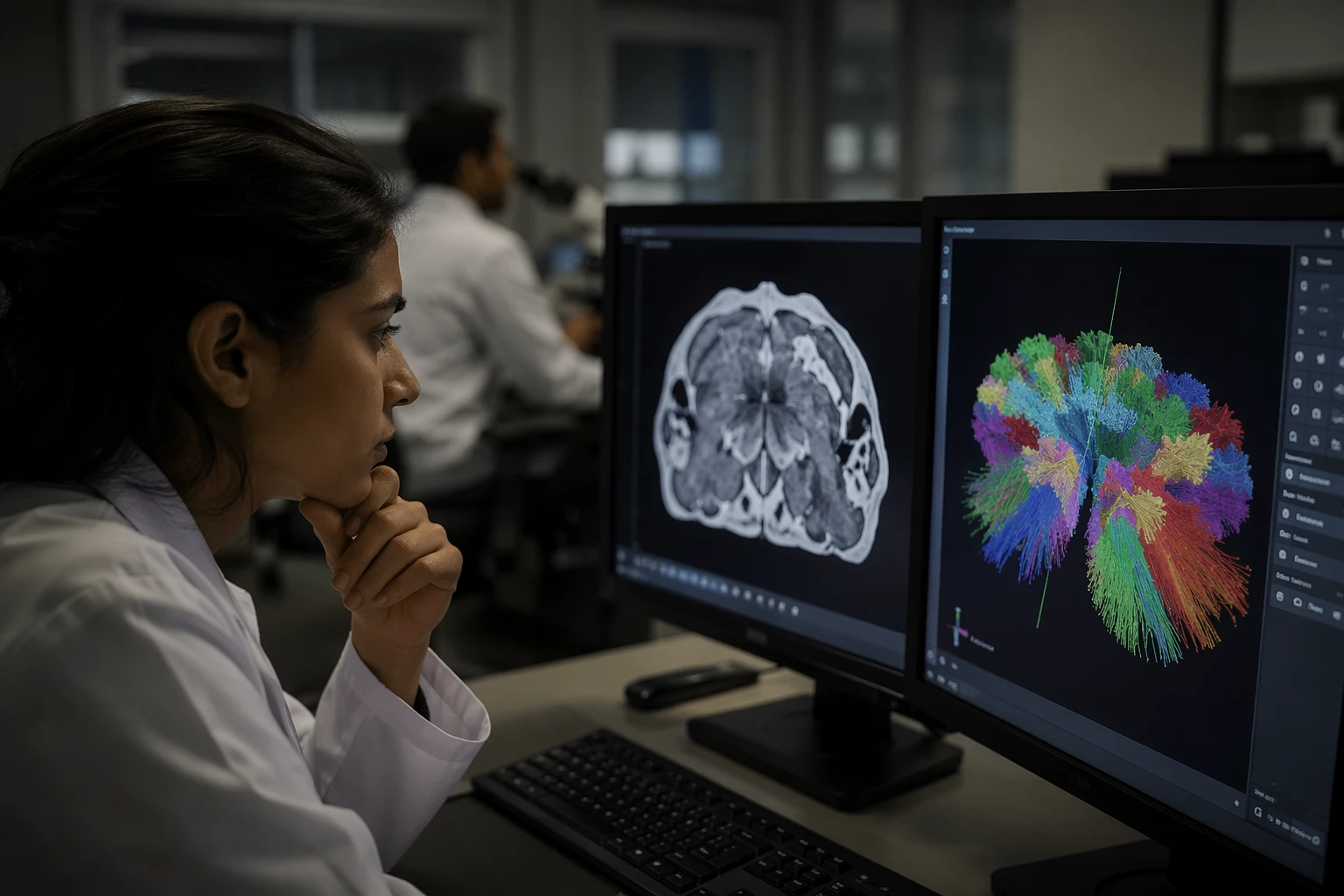
In 2019, researchers at IIIT Hyderabad created the first Indian Brain Atlas. Their first study used 50 subjects balanced across genders, and MRI templates based on Caucasian brains could mislead diagnosis because Indian brains differ in size and shape. More recently, the UK DRI and the Centre for Brain Research at the Indian Institute of Science launched a brain-ageing partnership in 2025.
Sources
- [1]news.google.com
- [2]the-star.co.ke
- [3]aol.com
- [4]anchor.humanbrain.in
- [5]biorxiv.org
- [6]thehindubusinessline.com
- [7]ukdri.ac.uk