Technology
India's first private orbital rocket set for maiden launch
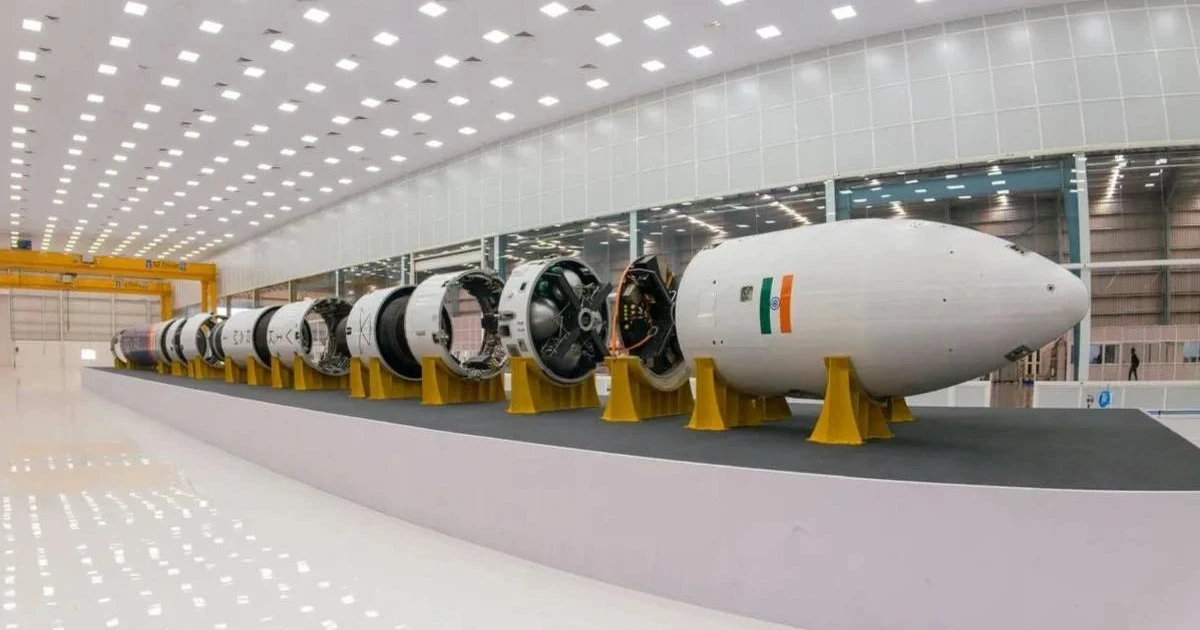
Skyroot Aerospace’s Vikram-1 was due to lift off Saturday from the Satish Dhawan Space Centre in Sriharikota, Andhra Pradesh, as India’s first privately developed orbital-class rocket. The mission, called Aagaman, has become a test of whether India can turn its state-led space record into a private launch business that can compete for commercial customers.
The rocket has been described as India’s first private vehicle intended to reach orbit, carrying small satellites to low Earth orbit with a payload capacity Skyroot has put at up to 350 kg. Other published estimates have placed the capacity at 300 kg or as high as 480 kg, underlining the uncertainty that still surrounds a new entrant trying to define its place in the launch market. Skyroot has said Vikram-1 is a seven-storey, multi-stage vehicle built with an all-carbon-composite structure, 3D-printed engines and high-thrust solid boosters.

The company said the first stage had been fully assembled, tested and readied for the maiden flight, with the rocket moved to the launch pad ahead of the attempt. One launch window ran from July 12 to August 4, but several reports identified July 18 as the planned liftoff date, placing the flight on the 46th anniversary of another landmark in India’s launch history. On July 18, 1980, ISRO’s SLV-3 placed Rohini RS-1 into orbit, a milestone that opened India’s space age. Vikram-1 is now meant to show that a private Indian company can do something more than repeat that history.
Founded in 2018, Skyroot became India’s first space-tech unicorn and has already flown Vikram-S in 2022, billed as the country’s first private satellite launch from ISRO facilities. That earlier mission gave the company a precedent for moving from demonstration flights to orbital capability, while the new rocket arrives after years of regulatory changes that gave private companies clearer rules and access to ISRO infrastructure through IN-SPACe and related support.

Pawan Kumar Chandana, Skyroot’s co-founder and chief executive, has said the launch would give India’s private space sector a major boost and provide valuable data. He has also said commercial launches are targeted for 2027. The immediate question is whether Vikram-1 can help establish a domestic launch market that attracts satellite customers, lowers costs and proves that India’s space success can extend beyond the state sector.
Sources
- [1]bbc.co.uk
- [2]thehindu.com
- [3]nextspaceflight.com
- [4]space.com
- [5]theprint.in
- [6]spacenews.com
- [7]youtube.com