Entertainment
Indie puzzle game What's the Password? recoups costs in 48 hours

Dan DiIorio said What's the Password? had already recouped its $3,750 development budget about 48 hours after launch, after selling roughly 1,000 copies on Steam and another 200 across mobile storefronts. By May 30, he said the game had generated about $4,500 in revenue after taxes, discounts, regional pricing and storefront cuts, leaving about $750 in profit.
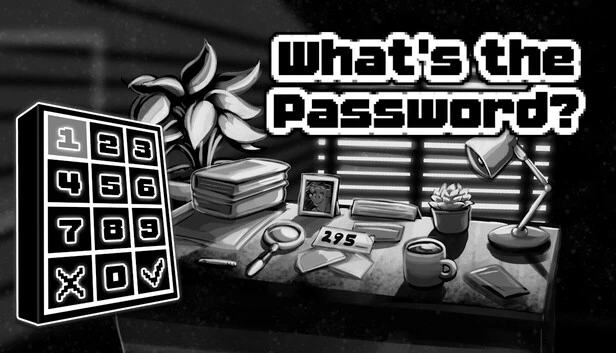
The numbers matter because the game is built on a severe constraint: every puzzle boils down to entering the correct four-digit password on a number pad. That limitation is exactly what gives the design room to breathe. Across 108 puzzles, the game shifts the logic from screen to screen, moving from visual ciphers and shape patterns to pure math questions and pattern-spotting, so each answer feels like a small deduction rather than a recycled trick.

TrampolineTales first announced the game on December 1, 2025, then released a demo on May 2, 2026 before the full launch on May 28 for Steam and mobile. The studio priced the game at $7.99 on Steam and $4.99 on mobile, and said it could be finished in about two hours. It also shipped with optional hints, achievements and randomized solutions, a structure that gives the short run time more replay value without adding mechanical clutter.
The result is a puzzle game that sells the elegance of restriction. Instead of layering on systems, DiIorio keeps returning to the same entry point, then changes the reasoning that leads to it. A visual sequence might ask players to decode symbols; another puzzle might hinge on arithmetic; another might require reading a repeating pattern in the numbers themselves. The answers are all four digits, but the logic behind them keeps mutating just enough to stay sharp.
TrampolineTales also said generative AI was not used in production, and it explicitly allows monetized video coverage of the game. For a compact indie release in an overcrowded market, that combination of low overhead, fast payback and a tightly controlled design loop has already turned a small puzzle concept into a profitable one.