Entertainment
Inside Chanel’s invisible power broker behind Jacob Elordi campaign
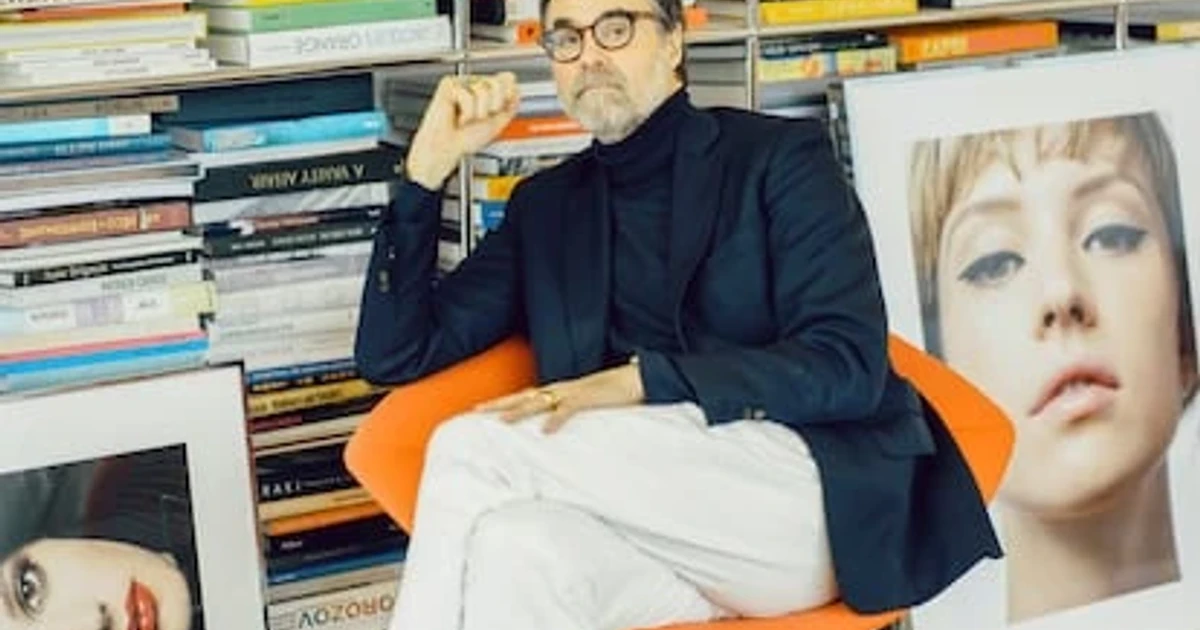
The most revealing thing about Chanel’s Jacob Elordi campaign is not the actor, but the executive who helped place him there. Thomas du Pré de Saint Maur sits inside the house’s creative machinery as an invisible power broker, the kind of figure who can shape the mood of a fragrance launch, the tone of a film, and the cultural signals Chanel is willing to send.
The executive behind Chanel’s image choices
Du Pré de Saint Maur is portrayed as unusually persuasive, someone who can pick up the phone and get an important person on the line. That ability matters in luxury, where image is built less by mass advertising than by the careful accumulation of access, trust, and taste. His network spans Martin Scorsese, Marion Cotillard, Gisele Bündchen, Luca Guadagnino, Lily-Rose Depp, Margot Robbie, and Timothée Chalamet, a list that makes clear how deeply Chanel’s brand story overlaps with cinema and celebrity.
The profile also points to a cosmopolitan, multilingual style and an aristocratic background, a combination that gives him the aura of a diplomat as much as a marketer. He does not come across as a conventional brand executive obsessed with reach and frequency. He reads more like a steward of myth, someone tasked with protecting the house’s codes while still making them feel alive in the present.
His own taste leans toward what he calls “sad novels,” and that melancholy streak gives a useful clue to the kind of elegance he seems to favor. It is not hard glamour, and it is not irony for irony’s sake. It is a controlled, slightly haunted refinement that suits Chanel’s habit of making emotion look disciplined.
Why Jacob Elordi fits the current Chanel playbook
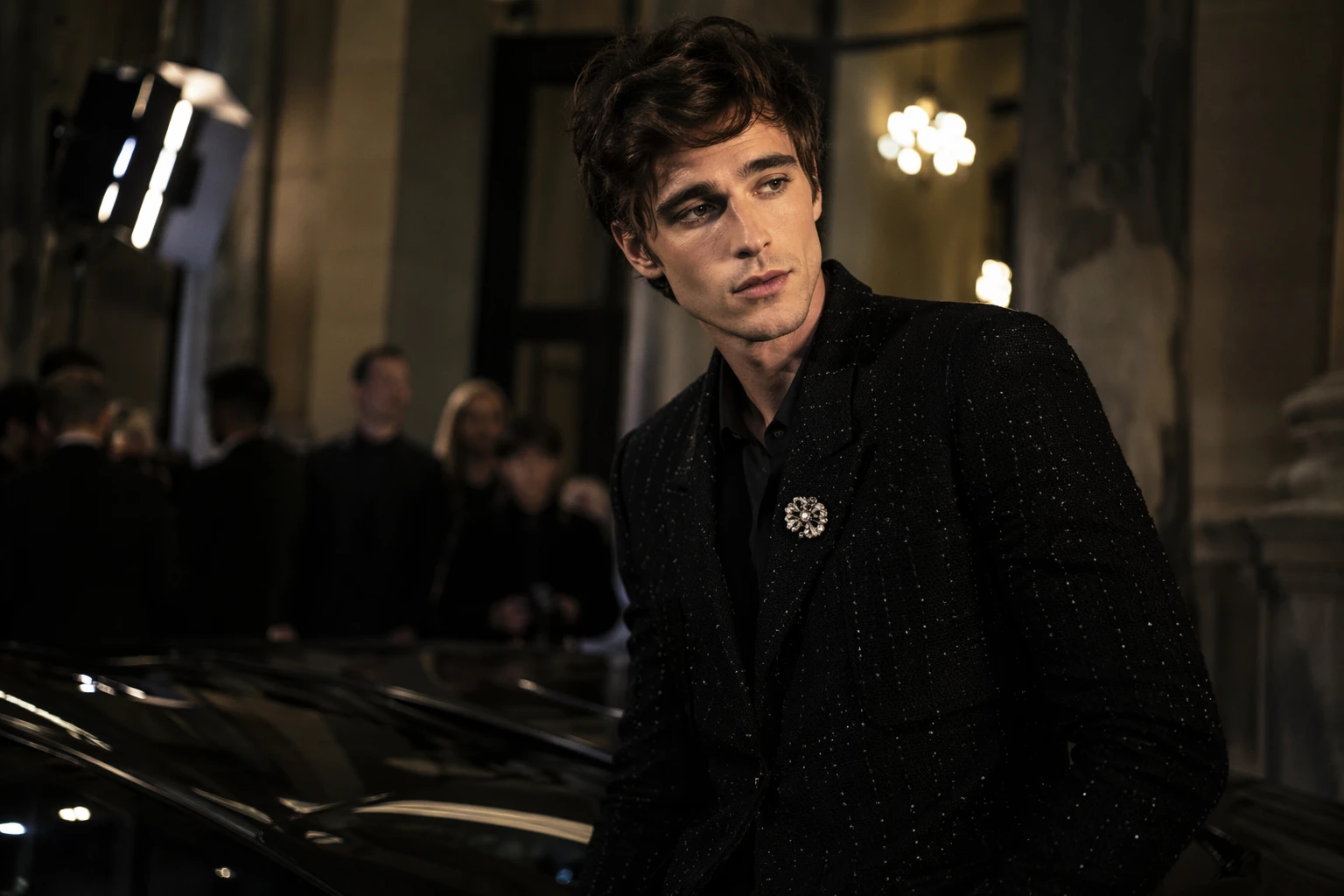
Elordi’s arrival as the new BLEU DE CHANEL ambassador says as much about Chanel’s strategy as it does about the actor. Chanel presents him as embodying strength, elegance, and a love of challenges, which is exactly the kind of polished masculinity the house wants to attach to one of its most visible men’s fragrances. He is not being sold as a rebel in the raw sense. He is being framed as a modern lead who can carry intensity without breaking the brand’s code.
The product itself reinforces that message. Chanel describes BLEU DE CHANEL L’Exclusif as the line’s most mysterious and intense expression, built around a woody, ambery, leathery profile with cistus labdanum and a sandalwood signature. It is also offered in three sizes, including a new 160 ml bottle, a small but telling sign that the launch is meant to feel expanded, serious, and commercially scaled.
That matters because fragrance is one of Chanel’s most strategic categories. A campaign like this is not only about a face, it is about translating the brand’s long-term mythology into a contemporary register that can still sell bottles. Elordi gives Chanel a current cultural reference point, but the product language keeps him anchored in a very old idea of luxury: intimacy, control, and depth.
What the “action film” approach reveals about luxury risk
Du Pré de Saint Maur says the new ad is unusual for Chanel because it is being treated like an action film rather than a quiet, contemplative brand image piece. That is a small but revealing shift. Luxury houses often trade on stillness and distance, but they also need enough energy to feel relevant in a crowded visual market where every brand is competing for attention.
The more striking detail is what Chanel does not allow. Du Pré recounts that Pedro Almodóvar declined involvement and that Quentin Tarantino wanted to star in the film, which Chanel could not accept. Those anecdotes show a brand willing to invite powerful auteurs into its orbit, but not willing to give up control of the frame. Chanel wants cinematic energy, yet it will not let the project collapse into someone else’s vanity or aesthetic overload.
That is where the rejected cowboy or Wild West feeling becomes useful as an industry clue. Chanel can borrow the pace and tension of an action film, but it still decides which cultural codes fit its mythology and which ones distort it. A Wild West look would push the house toward grit, parody, or spectacle. Chanel’s broader logic is the opposite: borrow excitement, keep the polish.
Why N°5 still defines the house’s limits and ambitions
If BLEU DE CHANEL L’Exclusif shows Chanel testing how modern men’s fragrance can look, N°5 shows why the brand can do that without losing its center. Chanel says N°5 launched in 1921 as the house’s first perfume, created with perfumer Ernest Beaux, and it continues to frame the fragrance as revolutionary in its composition, name, and presentation. That legacy matters because it sets the standard for every later launch.
Chanel also identifies Olivier Polge as its in-house perfumer creator, a reminder that the house treats fragrance as a living system rather than a sequence of disconnected campaigns. The long game is the point. Modern faces like Elordi can refresh the surface, but the underlying authority still comes from a lineage that reaches back more than a century.
That is the real power behind the brand. Du Pré de Saint Maur is not simply arranging celebrity cameos, and Chanel is not merely chasing attention. The house is deciding, case by case, how much cultural volatility it can absorb without weakening its own symbols. In that balance, N°5 remains the anchor, BLEU DE CHANEL becomes the experiment, and the invisible executive in the middle decides how far the brand can move while still looking unmistakably like Chanel.
Sources
- [1]english.elpais.com
- [2]chanel.com