Science
Inside NASA’s Command Center for Artemis Moon Mission
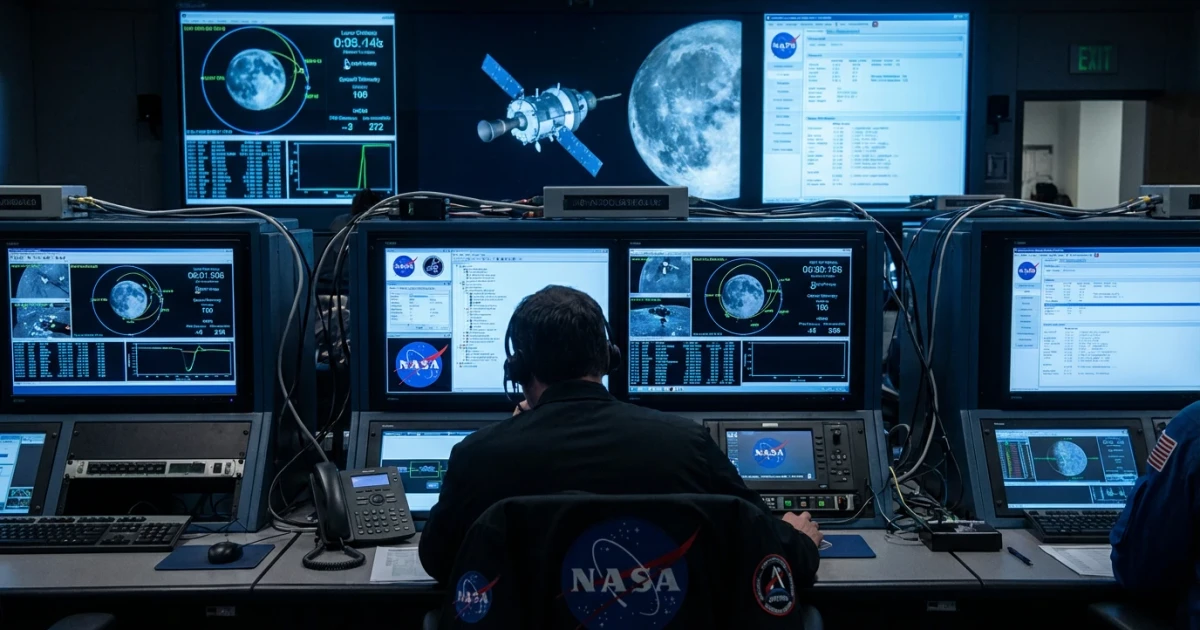
NASA’s Artemis program is set to make history as it prepares for a new mission to send astronauts around the Moon. At the heart of this ambitious undertaking lies a cutting-edge mission control centre, described by the BBC as the “nerve centre” orchestrating every aspect of the journey.
The Role of Mission Control in Artemis
The mission control facility is the operational backbone for Artemis, overseeing all flight, safety, and communications protocols. According to the BBC, this centre is responsible for monitoring real-time data from the spacecraft, issuing commands, and ensuring the crew’s safety throughout the mission’s duration. This nerve centre brings together engineers, flight directors, and support teams who have trained extensively for every scenario, from launch to lunar orbit and return to Earth.
The Artemis program, as detailed in the official NASA program overview, aims to lay the groundwork for sustainable lunar exploration, eventually serving as a stepping stone for future crewed missions to Mars.
Meet the Artemis Crew
As reported by CNN and highlighted by the BBC, the Artemis mission will be crewed by four astronauts—each bringing unique expertise to the historic flight. Their journey will mark the first time in over half a century that humans travel beyond low Earth orbit to circle the Moon.
- Diverse Representation: The Artemis crew includes the first woman and the first person of color assigned to a lunar mission, reflecting NASA’s commitment to expanding opportunities in space exploration.
- Rigorous Selection: Astronauts were chosen from a competitive pool and underwent intense training to master spacecraft systems, emergency procedures, and lunar mission protocols.
Readers can explore detailed profiles of the Artemis crew members, including biographies and mission roles, on NASA’s official page.
Mission Objectives and Timeline
The upcoming Artemis mission, as outlined in the Artemis II mission overview, will test the Orion spacecraft’s life-support systems and demonstrate the technologies needed for future lunar landings. The crew will perform a multi-day journey, orbiting the Moon before returning to Earth’s atmosphere for splashdown.
- The mission will last approximately 10 days, with the spacecraft traveling nearly a quarter of a million miles from Earth.
- Key objectives include testing deep space navigation, evaluating crew health, and rehearsing procedures for subsequent surface landings.
For those interested in technical specifics, NASA offers a comprehensive Artemis I fact sheet with mission statistics and spacecraft specifications.
Technology and Human Ingenuity
The Artemis missions leverage advanced technology, including the Orion spacecraft and the Space Launch System (SLS) rocket—both designed to endure the rigors of deep space travel. The mission control centre integrates artificial intelligence, real-time telemetry, and robust communications to manage the complex dynamics of lunar flight.
As the BBC notes, the nerve centre’s ability to coordinate between ground teams and the crew is vital for mission success, exemplifying the blend of human expertise and technological innovation driving Artemis forward.
Those interested in the underlying systems can explore NASA’s Artemis technology and systems page for in-depth details on hardware and infrastructure.
Looking Ahead
The Artemis mission represents not only a return to the Moon but also a renewed vision for international cooperation and scientific discovery. The BBC emphasizes that, by establishing a sustainable lunar presence, Artemis sets the stage for future endeavors—including potential crewed missions to Mars.
As mission control readies for launch, the world will be watching this new chapter in human spaceflight, underscoring both the technical marvels and human aspirations at the heart of the Artemis program.