Technology
Intel pushes 18A-P into risk production to lure chip customers
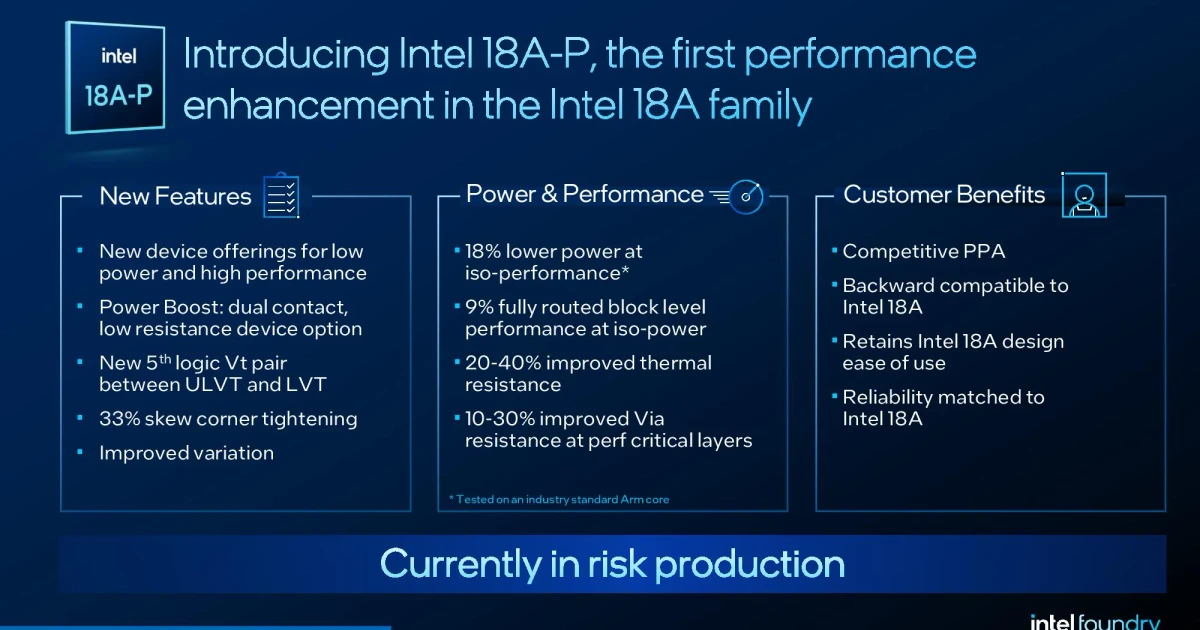
Intel moved its 18A-P process into risk production on June 16, turning a technical checkpoint into a test of whether the company can convince outside chipmakers that its comeback is real. The new node is the first performance enhancement in the Intel 18A family, and Intel is presenting it as a concrete sign that it can meet the schedules it has promised customers and partners.
The company said 18A-P offers 9 percent higher performance at the same power level or 18 percent lower power at the same speed compared with 18A. Intel also said the process is fully design-rule-compatible with 18A, which means existing intellectual property and design flows can be reused. That matters for potential customers because it lowers migration costs and reduces the risk of moving advanced designs onto a new manufacturing platform.

Intel framed the milestone as a credibility marker at the 2026 VLSI Symposium, saying it matched the timeline first shared with customers and partners last year. Naga Chandrasekaran, Intel Foundry’s executive vice president and general manager, said the update was intended to show customers and partners that Intel is committed to long-term leading-edge process innovation. The company’s pitch is not just that 18A-P is faster and more efficient, but that Intel can keep delivering refinements on schedule.
That promise carries extra weight because Intel is trying to turn advanced manufacturing into a business for outsiders, not just for its own products. Reuters reported in March that chief financial officer David Zinsner said CEO Lip-Bu Tan was increasingly willing to view 18A as a possible offering for external customers, a shift from earlier internal thinking that the node would matter mainly for Intel’s own chips. Intel has already said Panther Lake, its first client SoC built on 18A, was in production, and CNBC reported that 18A had been running at volume in Arizona since December 2025 and had reached PC chips in January 2026, though Intel still had not secured a major outside customer.
The timing gives Intel some momentum. Reuters said the company forecast second-quarter revenue of $13.8 billion to $14.8 billion, above the LSEG consensus estimate, after strong demand for central processors tied to AI workloads helped it sell chips it had previously written off. Fab 52 in Chandler, Arizona, was set to reach high-volume production using 18A later in 2025, underscoring how much Intel is leaning on its U.S. manufacturing footprint as it tries to regain standing with investors and win work from the world’s top foundries. If 18A-P performs as promised, it could become a more persuasive proof point than any prior announcement.
Sources
- [1]money.usnews.com
- [2]cnbc.com
- [3]newsroom.intel.com