Sports
International visitors discover Buc-ee's, Waffle House and free soda refills
The World Cup has turned ordinary American errands into a cultural tour. International visitors are discovering Buc-ee’s, Waffle House, Wawa and the still-surprising promise of free soda refills, and those stops say as much about the country as the matches do.
America beyond the stadium
The tournament is spread across 11 U.S. cities, nearly half of them in the South, and even more training sites are pulling players and reporters into places they might not otherwise have seen. That is why a Japanese sports journalist in Nashville ended up posting a meat-and-three plate and getting replies full of welcome and supper invitations, while Scottish tourist Shaun Alexander crossed from Texas to Boston and described the reception as warmer than the politics around the event. “It’s just remarkable the types of warmth that you kind of find and come across in the States,” he told NPR.
What looks like a food story is also a map of how major events spill into local life. Visitors are not just moving between stadiums and hotels; they are moving through regional habits, late-night diners, highway exits and convenience stores that locals often treat as routine. That is exactly why the World Cup is producing so many first impressions of America that have nothing to do with the scoreboard.
Buc-ee’s turns the highway into a destination
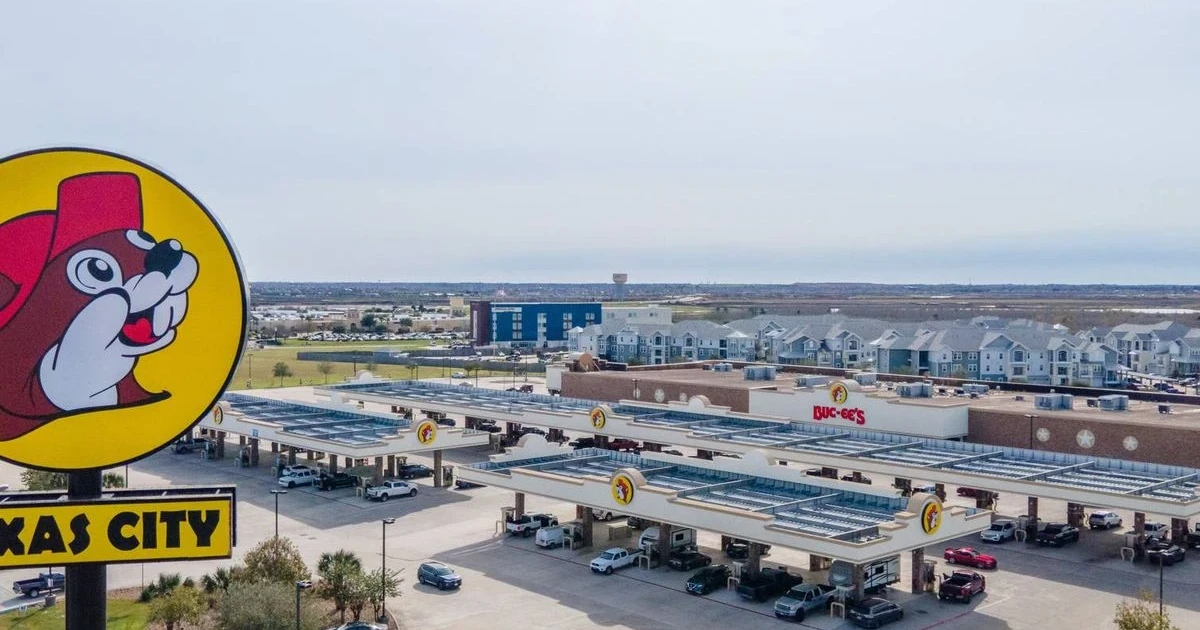
Buc-ee’s works because it is not just a gas stop. The company says it has been committed since its 1982 founding to a clean, friendly, in-stock experience, and its site highlights the chain’s reputation for clean restrooms. It also says all Buc-ee’s stores are open 24 hours a day, 365 days a year, a nonstop model that fits road-trip tourism almost perfectly.
The scale is part of the appeal. Buc-ee’s points to the world’s largest convenience store in Luling, Texas, at 75,593 square feet, and the world’s longest car wash in Katy, Texas, at 255 feet of conveyor. For international visitors, that turns a routine refuel into a spectacle of size, novelty and consumer excess, the kind of place that feels like an attraction even when it is still technically a convenience store.
That spectacle has also become part of the tourism infrastructure around the tournament. In North Texas, Fort Worth shuttles have been taking visitors to the Buc-ee’s near Texas Motor Speedway on days without matches, folding a roadside retailer into the city’s visitor economy. That is a reminder that mega-event travel does not stop at the stadium gate. It spills outward, routing money toward the businesses and bus lines that sit between the official venues and the rest of the region.
Waffle House as a Southern litmus test
Waffle House offers a different version of the same welcome. The chain says its system now tops 2,000 locations in 25 states, all open 24 hours a day, seven days a week, and its story traces the first restaurant to 1955 in Avondale Estates, Georgia. On its own site, the company frames the brand around people rather than just food: “We aren’t in the food business. We’re in the people business.”
That line helps explain why a 1 a.m. stop at Waffle House keeps landing as a cultural discovery for travelers. The restaurant is not only about waffles and hash browns; it is about the rhythm of Southern life, where the lights are on, the counter is open and the meal feels tied to the place. For visitors crossing the region during the tournament, that late-night diner becomes a kind of civic introduction to the South itself.
Wawa and the comfort of familiarity
Wawa shows how the East Coast packages convenience as community. Its homepage calls it an all-day, everyday convenience store with built-to-order food and beverages, coffee and fuel services, while its locations page describes stores as bright, clean, warm and welcoming, a “trusted town square” in the communities they serve. The company also says its first Wawa Food Market opened in 1964 in Folsom, Pennsylvania, after the business began as a dairy in 1902.
That positioning matters because it makes a convenience store feel like a neighborhood institution rather than an anonymous stop. For visitors, Wawa can read as a gentler version of the roadside America they are learning on this trip: built around speed, but wrapped in a promise of familiarity, coffee, custom food and easy access. In a tournament defined by movement, that kind of branded comfort becomes part of the travel story.
Free refills, abundance and health
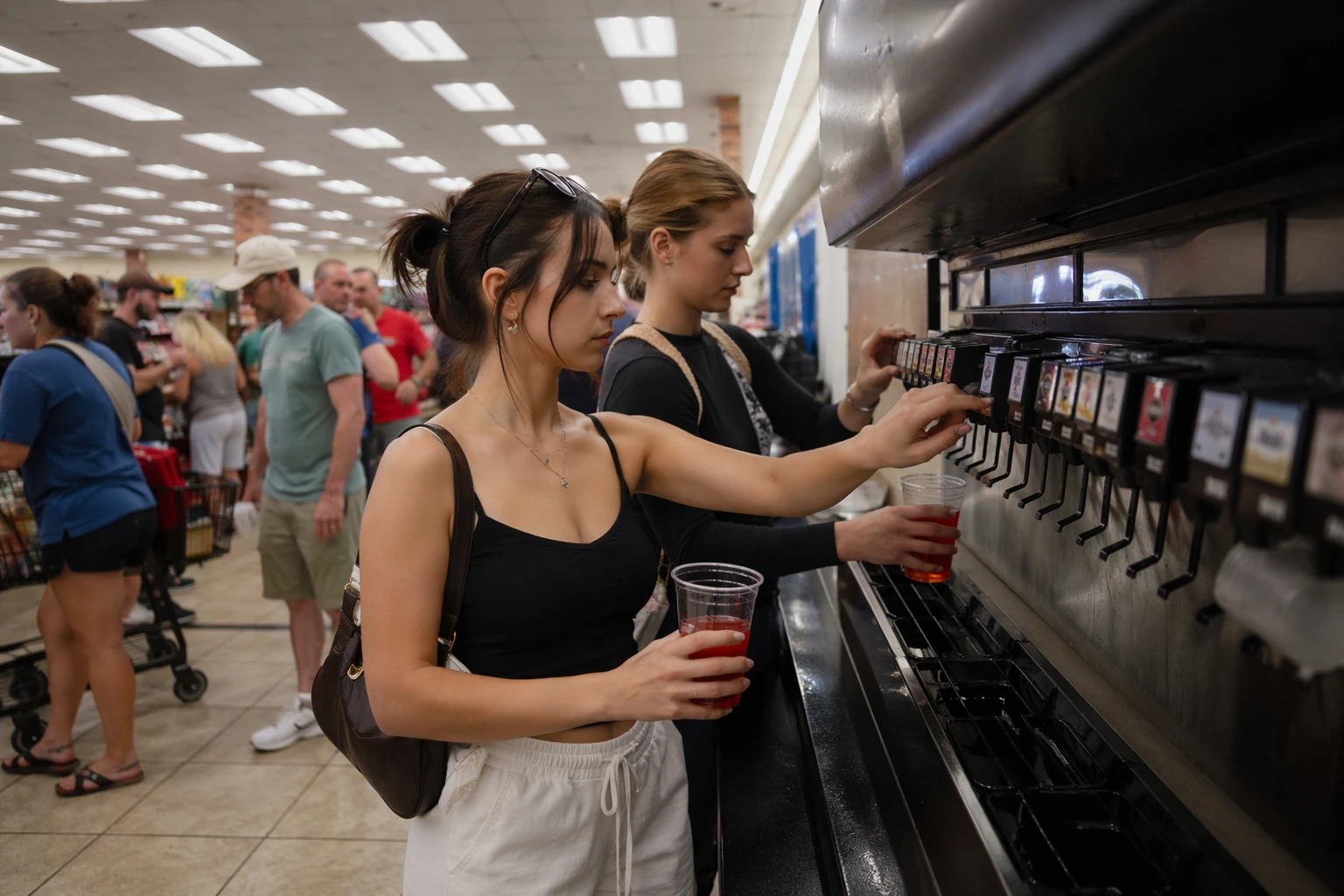
Free soda refills are the smallest cultural flash point here, but maybe the most revealing. A history of the custom from Youth For Understanding traces free refills to 19th-century American coffeehouses and later to soda fountains and diners, where complimentary top-offs became a way to keep people lingering. The same account notes that Europeans often noticed coffee being refilled without charge or even asking, a detail that captures how deeply the practice is tied to American hospitality and consumer culture.
That abundance, though, has a public-health dimension too. The CDC says the leading sources of added sugars in the U.S. diet are sugar-sweetened beverages, and it notes that too much added sugar can contribute to weight gain, obesity, type 2 diabetes and heart disease. So the bottomless cup is not just a quirky travel-memory item; it is also a symbol of how cheaply America can package excess, and how closely that excess is tied to everyday eating habits.
Taken together, these stops show why mega-event tourism is so commercially useful to host regions. The World Cup is moving people through stadium districts, training sites and highway exits, which means local chains and roadside icons become part of the itinerary, not just the background. For visitors, the result is a version of America that is regional, highly branded and deeply social, one where the road trip itself becomes part of the welcome.
Sources
- [1]npr.org