Technology
Investors Navigate Shifting Landscape in AI Trade
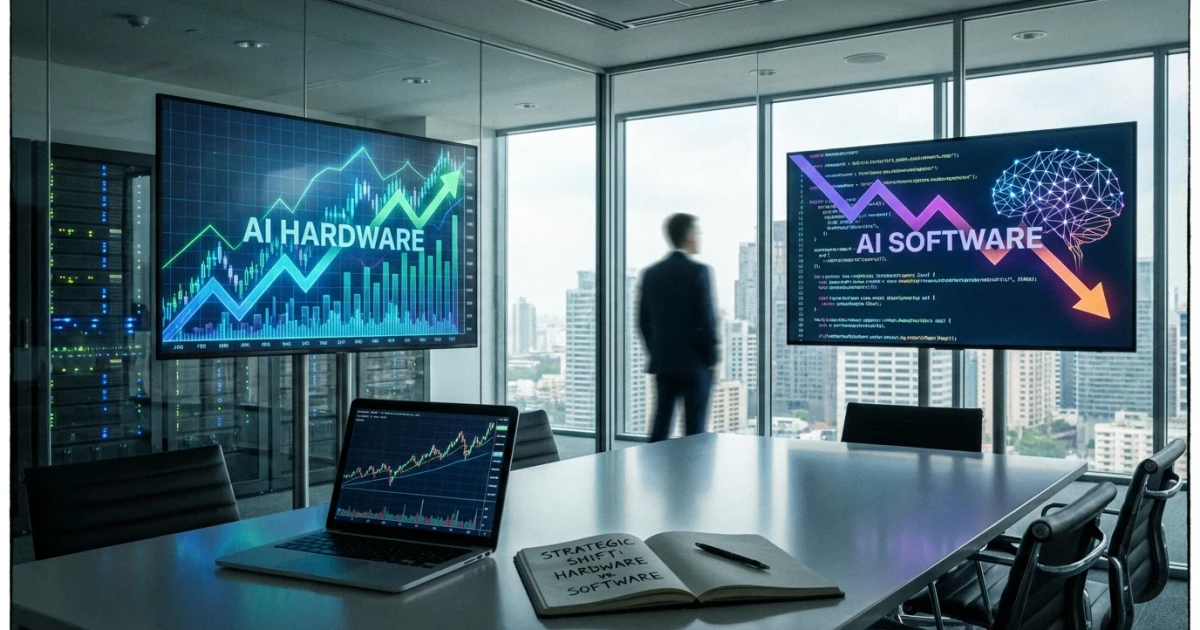
Artificial intelligence continues to reshape financial markets, but the once-homogeneous AI trade is increasingly dividing into two distinct segments: hardware providers and software innovators. Investors and analysts are now paying close attention to where future growth and sustainable returns are most likely to be found as the industry matures.
Understanding the Split: Hardware vs. Software
According to Yahoo Finance, the AI sector's explosive growth over the past several years has created two primary paths for investors. On one side are companies focused on building the physical infrastructure of AI—semiconductors, chips, and advanced computing devices. On the other are software and application providers, who leverage this hardware to deliver AI-powered solutions across industries.
- Hardware leaders such as NVIDIA and TSMC have driven much of the initial AI rally, with demand for AI chips fueling record-breaking revenue growth.
- Software innovators like Microsoft, Google, and OpenAI are rapidly developing platforms and services that bring generative AI, automation, and analytics to mainstream businesses and consumers.
Key Drivers for Hardware and Software
The hardware segment remains critical to the overall AI ecosystem, delivering the computational power required for advanced machine learning tasks. NVIDIA's financials show that data center revenues have surged as cloud providers and enterprises invest heavily in AI infrastructure. TSMC, as one of the world’s largest contract chip manufacturers, continues to scale production to meet global demand.
Meanwhile, the software side is seeing explosive growth in AI-powered applications, from productivity tools to creative content generation. According to Statista, global AI software market size is expected to grow steadily as organizations accelerate digital transformation efforts.
Challenges and Opportunities
- Hardware constraints: Capacity limits and supply chain issues can impact chipmakers’ ability to meet demand, as seen in recent production slowdowns.
- Software competition: The proliferation of AI platforms intensifies competition, driving innovation but also pressuring margins for software providers.
- Regulatory uncertainty: Both sectors face potential scrutiny over data privacy, AI safety, and export controls, adding complexity to investment decisions.
Choosing the Right Side for 2026 and Beyond
Yahoo Finance suggests that as the AI market matures, investors will need to evaluate where sustainable growth is likely to be strongest. The hardware trade may face headwinds as supply catches up with demand and margins normalize. By contrast, the software segment could see outsized gains as AI becomes embedded in every sector of the economy.
Some analysts recommend a balanced approach, with exposure to both hardware leaders and software innovators. Others caution that picking individual winners will require careful analysis of each company's competitive positioning, innovation pipeline, and ability to scale.
Looking Forward
The split within the AI trade presents both risk and opportunity. As hardware and software segments chart divergent paths, investors must stay informed about the latest developments, earnings reports, and industry forecasts. For those willing to do their homework, the AI sector remains one of the most dynamic—and potentially rewarding—areas of the market.