Politics
Iowa Democrats Face Tight Senate Primary Ahead of Fall Election
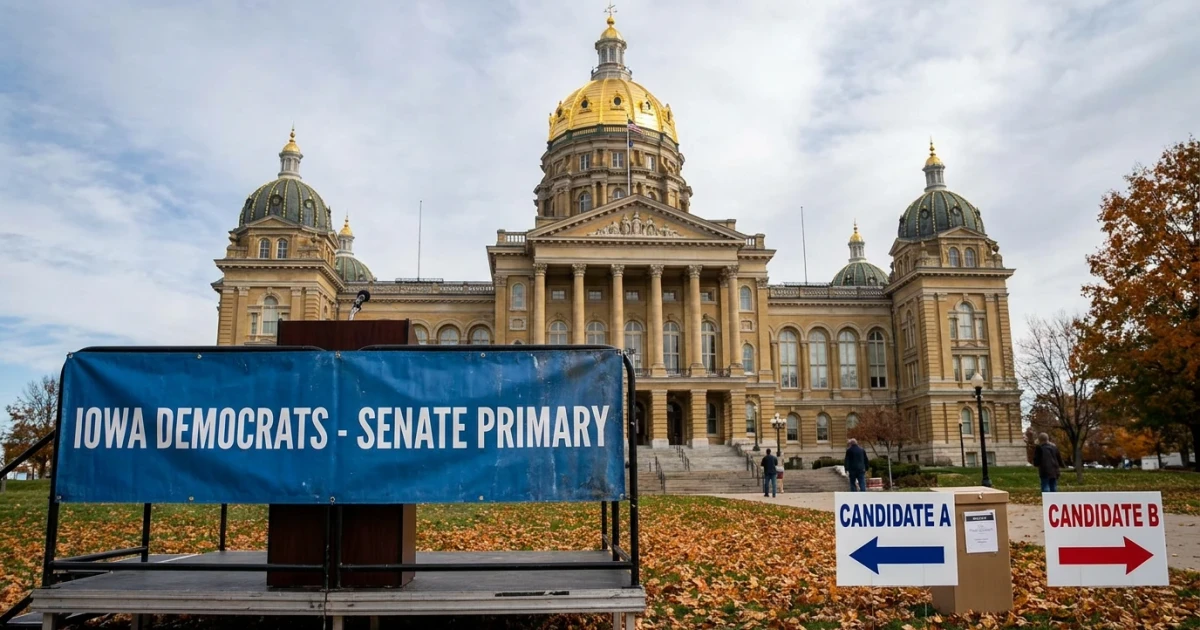
Iowa Democrats are heading into a competitive Senate primary, a pivotal contest as the party seeks to position itself for a strong challenge against the state’s Republican-held Senate seat in the general election this fall. The outcome of Tuesday’s primary will help determine the Democratic strategy and candidate for what many analysts consider a key race in the broader battle for Senate control.
Democratic Primary Draws Strong Field
The Democratic primary has drawn several notable contenders, each emphasizing their policy priorities and electability in a state that has leaned Republican in recent cycles. As reported by PBS, the race is viewed as one of the most competitive in recent Iowa history, with candidates working to build support among core Democratic constituencies.
- Candidates have focused on issues such as health care, agriculture policy, and economic opportunity, reflecting Iowa’s diverse electorate and economy.
- Turnout in the primary is expected to be a bellwether for Democratic enthusiasm heading into the fall campaign.
General Election Stakes and Republican Hold
The fall election will see Iowa Democrats attempt to flip a GOP-held Senate seat, a task made more challenging by the state’s recent voting history. According to Ballotpedia’s background on Iowa Senate races, Republicans have maintained control over the seat for multiple terms, though Democrats believe shifting demographics and national trends could make the contest competitive.
Official election results and turnout data from the Iowa Secretary of State provide historical context, showing the state’s swing potential in recent cycles. Democrats are hoping to replicate past successes in mobilizing both urban and rural voters.
Campaign Finance and Voter Dynamics
Campaign finance disclosures from the Federal Election Commission indicate that Democratic candidates have raised substantial funds, reflecting national interest in the race. These resources are expected to fuel a robust general election campaign regardless of the primary outcome.
Recent Pew Research Center voter surveys show that Iowa’s electorate is closely divided along partisan and demographic lines, with issues such as inflation, health care, and farm policy playing a major role in voter decision-making.
Expert Analysis and Forward Look
Nonpartisan analysts at the Cook Political Report currently rate the Iowa Senate race as competitive, noting that the eventual Democratic nominee will need to build a broad coalition to prevail in November. The outcome of the primary is expected to shape the tone and strategy of the general election campaign, with national parties closely watching Iowa as a potential battleground.
As the primary concludes, Democrats hope a strong candidate and unified party can capitalize on momentum and voter concerns, aiming to flip a key Senate seat in a state with a history of political shifts. Voters and analysts alike will be watching Tuesday’s results for clues about the direction of the race—and the balance of power in the U.S. Senate this fall.