US News
Iran Conflict Raises Concerns Over Fertilizer Supply for U.S. Farmers
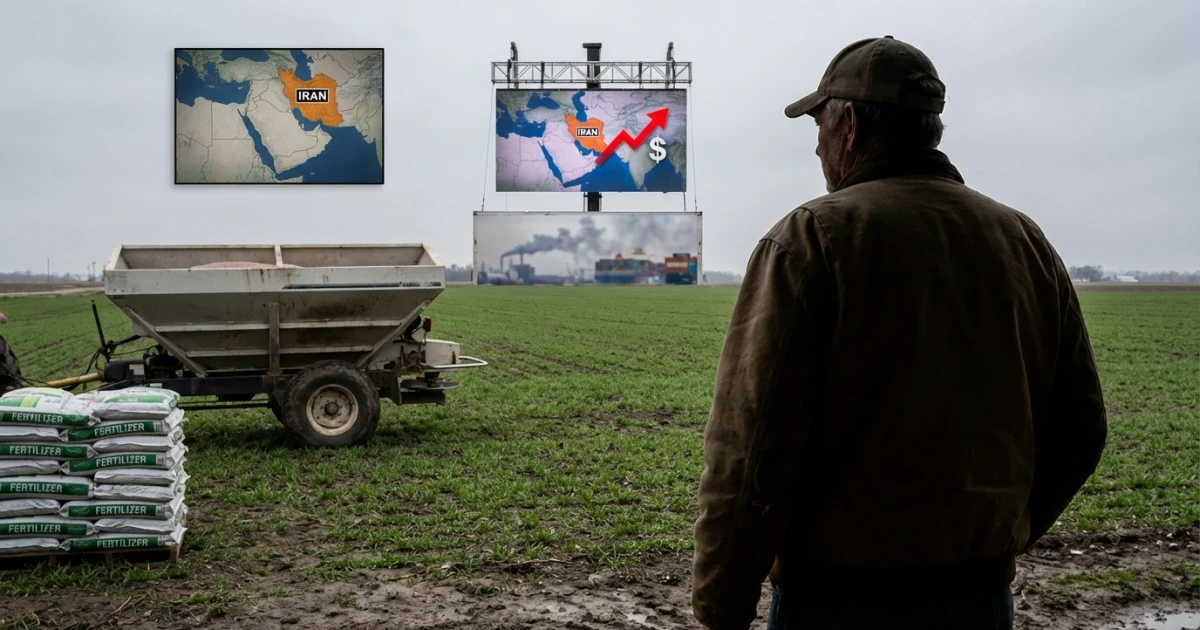
Rising tensions in Iran have prompted U.S. farmers to brace for possible increases in fertilizer costs and potential supply disruptions at a critical time for the nation’s agriculture sector. The conflict has sparked new uncertainties as planting season intensifies across the Midwest and beyond.
Fertilizer Markets Face Renewed Volatility
Iran, as a major player in global energy and fertilizer markets, significantly influences the production and pricing of key fertilizer components. The unfolding conflict has added volatility to international fertilizer prices and usage trends, raising concerns among U.S. growers who are already navigating volatile input costs.
- Nitrogen-based fertilizers rely heavily on natural gas, a commodity that Iran produces in large volumes. Any disruption to Iranian energy exports can ripple through global fertilizer supply chains.
- According to the International Fertilizer Development Center, Iran is among the top producers of urea and ammonia, two primary fertilizer sources widely used in U.S. agriculture.
- U.S. farmers source much of their fertilizer domestically, but the interconnected nature of global markets means supply shocks abroad can quickly impact local prices and availability.
Farmers Prepare for Higher Costs and Uncertain Supply
As the spring planting window approaches, the uncertainty around Iran’s export capacity has left many U.S. farmers concerned about both the cost and reliability of fertilizer delivery. The FAO’s international fertilizer use database shows the U.S. as one of the world’s largest consumers of fertilizer, underscoring the potential for significant domestic impact.
Previous geopolitical events, such as energy market disruptions or trade sanctions, have historically led to sharp spikes in fertilizer prices. For instance, the USDA’s Economic Research Service has analyzed how global shocks can drive up input costs, squeeze profit margins for American farmers, and even affect crop planting decisions.
Global Connections Drive Domestic Impact
While the U.S. imports a substantial portion of its fertilizer from countries like Canada, Trinidad and Tobago, and Russia, the interconnected global market means that disruptions in any major producing country—such as Iran—can affect world supply and pricing. This is especially true for nitrogenous fertilizers, which are sensitive to both natural gas prices and the stability of international trade flows.
Data from the International Fertilizer Association illustrates how price shocks tend to cascade from major exporting countries to global markets, affecting farmers worldwide.
Potential Responses and Looking Ahead
In response to the emerging situation, U.S. farm groups are urging policymakers to keep supply chains open and consider measures to buffer farmers from sudden price spikes. Some are exploring alternative fertilizer sources or adjusting fertilizer application rates to help manage costs.
As the situation in Iran evolves, agricultural analysts and organizations like the USDA and FAO are closely monitoring fertilizer markets for further potential disruptions or supply shifts. For now, U.S. farmers remain on alert, balancing their operational plans with a watchful eye on global headlines.
The coming weeks will be critical in determining the full extent of the impact on American agriculture, with both policymakers and farmers prepared to adapt as necessary to ensure stable food production and supply.