World
Iran retaliates with strikes on US bases in Bahrain and Jordan

Iran widened its retaliation against the United States by striking toward the U.S. Fifth Fleet in Bahrain with drones and an airbase in Jordan with missiles, a sharp escalation after Washington launched self-defense strikes over the downing of an Army Apache helicopter off the coast of Oman. The exchange pushed the confrontation from a maritime flashpoint in the Strait of Hormuz into direct pressure on U.S. forces and regional partners on land and sea.
The U.S. strikes began at 5 pm ET on June 9, after the helicopter was lost in the waters linked to the Strait of Hormuz. President Donald Trump said the United States “must, of necessity, respond” to the attack, underscoring how quickly the clash had moved from one incident at sea to a broader military exchange.
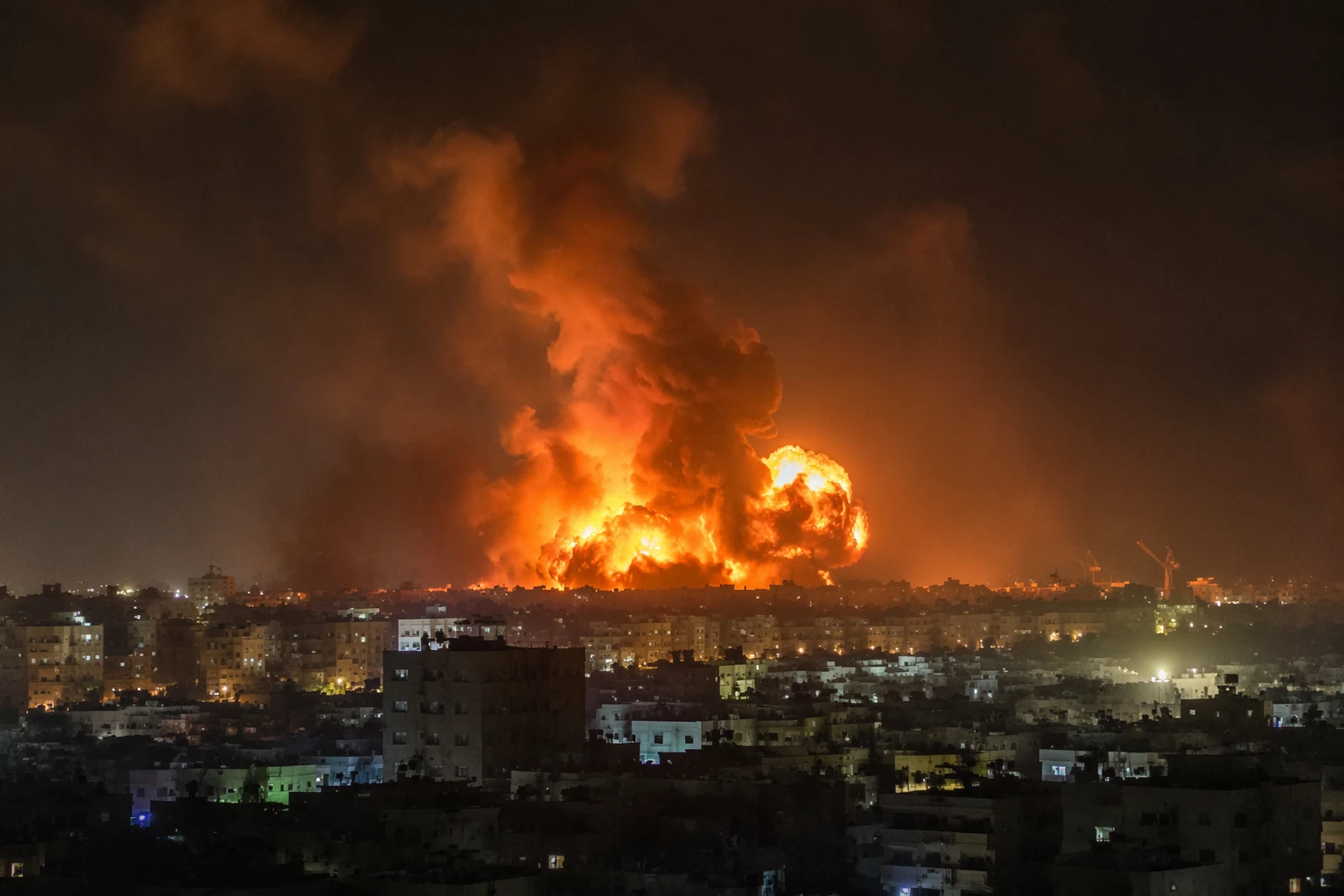
Iran’s response put some of the most exposed U.S. and allied nodes in the Gulf squarely in the crosshairs. Bahrain sounded air-raid sirens, Jordan said it shot down five missiles launched from Iran, and Kuwait said it was intercepting hostile aerial targets. That pattern showed Tehran probing multiple defenses at once, while also testing whether U.S. partners would absorb the first wave before the fight expanded further.
The stakes are higher because the region had already been bracing for spillover. On March 1, the United States, Bahrain, Jordan, Kuwait, Qatar, Saudi Arabia and the United Arab Emirates condemned Iran’s missile and drone attacks across the region, calling them a threat to civilians, infrastructure and sovereignty. The earlier warning now looks like a map of the danger ahead: Bahrain’s basing network, Jordan’s airspace, Kuwait’s interceptors and the shipping lanes running through the Strait of Hormuz.
Military pressure on Iran has also been building for months. A Defense Department fact sheet said Operation Epic Fury began on February 28 at 1:15 am and had struck more than 12,300 targets, flown more than 13,000 combat sorties and damaged or destroyed more than 155 Iranian vessels. The same fact sheet listed AH-64 Apache helicopters among the assets used, a detail that makes the loss of the downed aircraft even more consequential.
Retired Rear Admiral Mark Montgomery said any U.S. retaliation should focus on military targets and avoid economic sites that could deepen the conflict. Iranian Foreign Minister Abbas Araghchi said the United States had “tested our determination” and that Iran’s forces would “leave no attack or threat unanswered,” a warning that leaves few obvious off-ramps if the cycle of strikes continues.
Sources
- [1]news.google.com
- [2]edition.cnn.com
- [3]aljazeera.com
- [4]state.gov
- [5]media.defense.gov
- [6]bloomberg.com