World
Iran says it reached deal with Oman to co-manage Strait of Hormuz
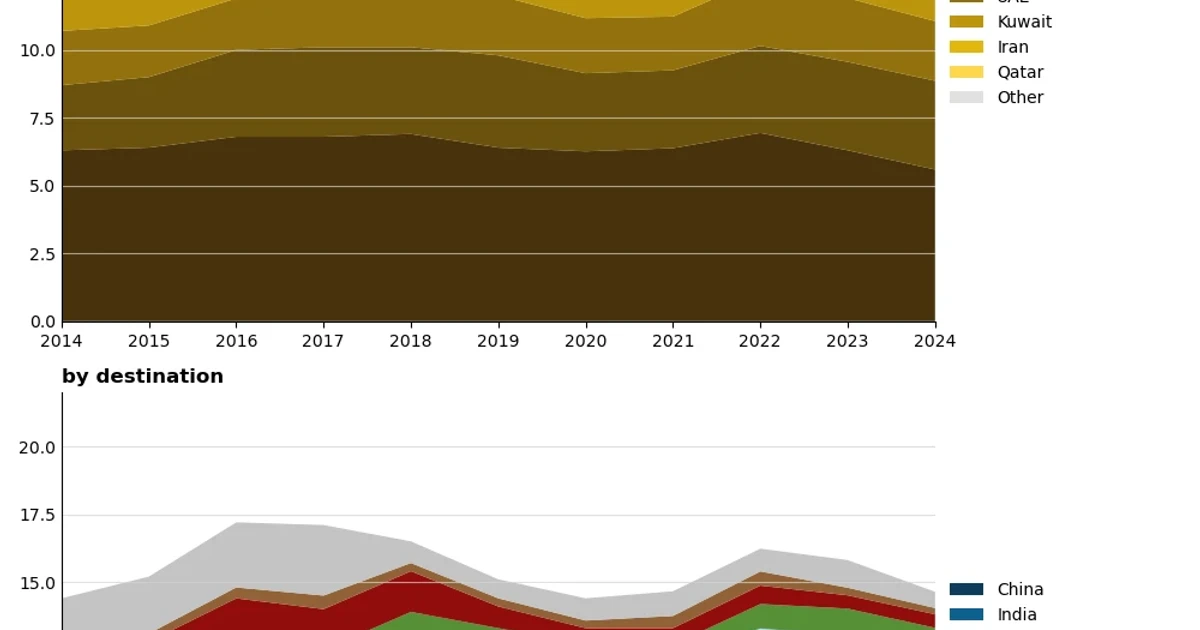
Iran’s Foreign Ministry said it reached an agreement with Oman to co-manage the Strait of Hormuz, with the final details still being worked out. The narrow waterway at the mouth of the Persian Gulf carries about 20.3 million barrels of oil a day, or roughly 25% of global maritime oil trade, making any change in its control a direct test of whether Tehran and Muscat can translate diplomacy into traffic flow.
Esmaeil Baqaei said on Aug. 3 that the talks were in the “final stage,” while Iranian Foreign Minister Abbas Araghchi said negotiations with Oman were in their final stages and emphasized that the discussions were bilateral. Reuters later reported that a proposed arrangement would give Iran control of inbound shipping and Oman control of outbound passage through the strait, a division that would put Muscat at the gate of one of the world’s most sensitive energy lanes.
U.S. officials were publicly more cautious. Marco Rubio said there had been progress in discussions with Iran and Oman, but that no final agreement had been reached. Scott Bessent, speaking on CNBC and cited by Scripps News, said there was a chance of a deal “today or tomorrow” to open the strait and move toward a more normalized situation. Reuters also said the proposed deal could be tied to broader regional diplomacy and possible peace talks, though that condition was not confirmed in Iran’s statement.
The political fight over Hormuz landed alongside a separate credibility battle over U.S. weapons stocks. Donald Trump denied reports that missile reserves were running low, dismissing claims that the military’s stockpile was depleted and saying the United States had massive, or “virtually unlimited,” munitions. That came after Reuters reported that the U.S. Army had used “virtually all” of its long-range precision missiles during the Iran war, and CNN said on Aug. 4 that the military had used nearly 80% of a key missile-defense interceptor stockpile.
The stakes extend beyond diplomacy. If any Iran-Oman arrangement alters how tankers move through Hormuz, it could affect global oil flows within hours and raise the pressure on Washington’s military posture at the same time. Because the strait sits at the center of both energy supply and regional force projection, the gap between official denials and on-the-ground bargaining will shape whether traders, allies and U.S. consumers see a de-escalation or another round of volatility in inflation-sensitive fuel prices.
Sources
- [1]cbsnews.com
- [2]reuters.com
- [3]cnn.com
- [4]bbc.com
- [5]britannica.com
- [6]youtube.com
- [7]aljazeera.com