World
Irish Police Reopen Refinery After Fuel Protest Disruptions
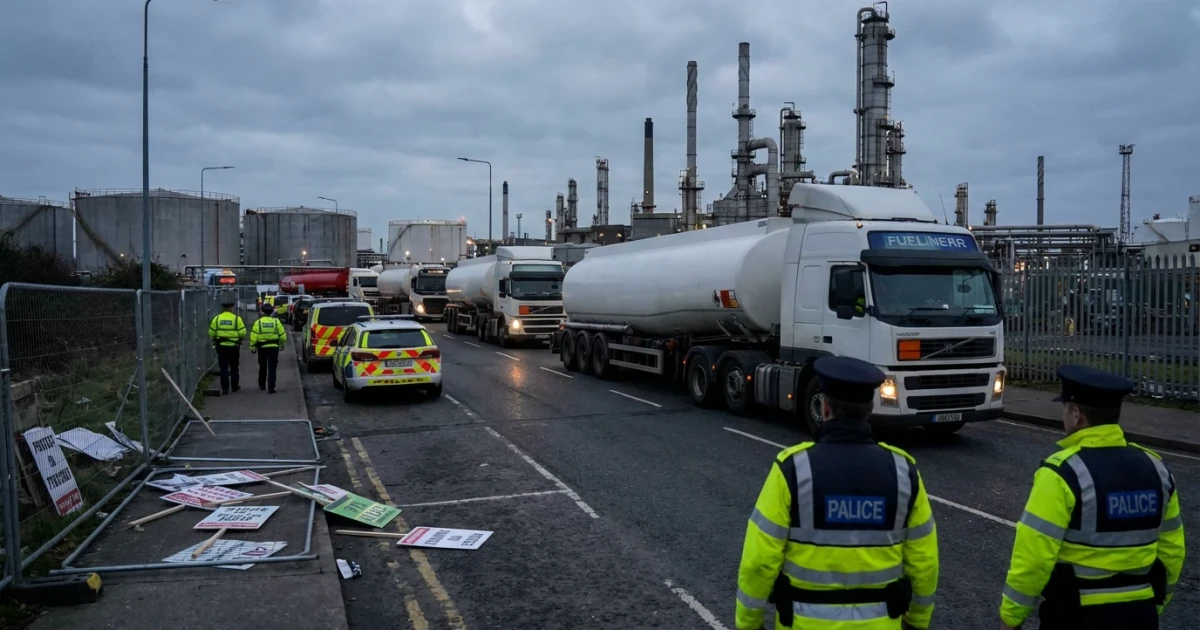
Irish police have cleared demonstrators blocking a major oil refinery, restoring critical fuel supplies after protests led to significant disruption across the country. The intervention, reported by AP News and BBC, brought an end to a standoff that had left fuel tankers stranded and caused supply concerns nationwide.
Refinery Blockade Causes Nationwide Fuel Disruption
The protest, which began earlier this week, saw demonstrators blockading Ireland’s primary oil refinery—a key facility integral to the national fuel supply chain. The blockade prevented fuel tankers from entering or leaving the site, leading to chaos at petrol stations and heightened anxiety over potential shortages. According to the BBC, tankers were unable to move for an extended period, significantly disrupting deliveries to forecourts.
- The refinery is a central hub for Ireland’s fuel distribution, with its closure impacting both urban and rural areas.
- Long lines formed at filling stations as drivers rushed to fill up, and several stations reported running out of certain fuel grades.
- The National Oil Reserves Agency (NORA) maintains strategic reserves, but the protest tested the resilience of Ireland’s fuel distribution system.
Police Action Restores Fuel Flows
On Friday, Irish police moved to clear the demonstrators from the refinery gates. According to reports from AP News, the operation included the removal of protesters and the arrest of several individuals. The action allowed tankers to regain access to the facility, resuming normal deliveries and alleviating pressure on supply chains.
- Authorities cited the need to maintain essential services and public safety as justification for the police response.
- BBC noted that the reopening of the refinery was met with relief from the transport and logistics sector, which had been facing mounting challenges amid the disruption.
Impact and Ongoing Concerns
The protests highlighted vulnerabilities in Ireland’s energy infrastructure. While the immediate crisis was averted with police intervention, the events underscored the importance of robust contingency planning and the role of strategic oil reserves. Government frameworks such as the National Energy Security Framework outline measures to respond to fuel supply threats, but the recent blockade demonstrated the potential for rapid disruption.
According to International Energy Agency data, Ireland relies heavily on a small number of refineries for its liquid fuel needs, making sustained blockades a serious risk for supply continuity.
Looking Ahead
With the refinery now operational and tankers back on the roads, attention turns to preventing future disruptions. Authorities and energy sector leaders are expected to review security protocols and strengthen coordination between law enforcement and critical infrastructure operators. The episode serves as a reminder of the delicate balance between civil protest and the need to maintain essential energy supplies for society.