US News
Israel and Lebanon Secure Ceasefire Amid Regional Talks
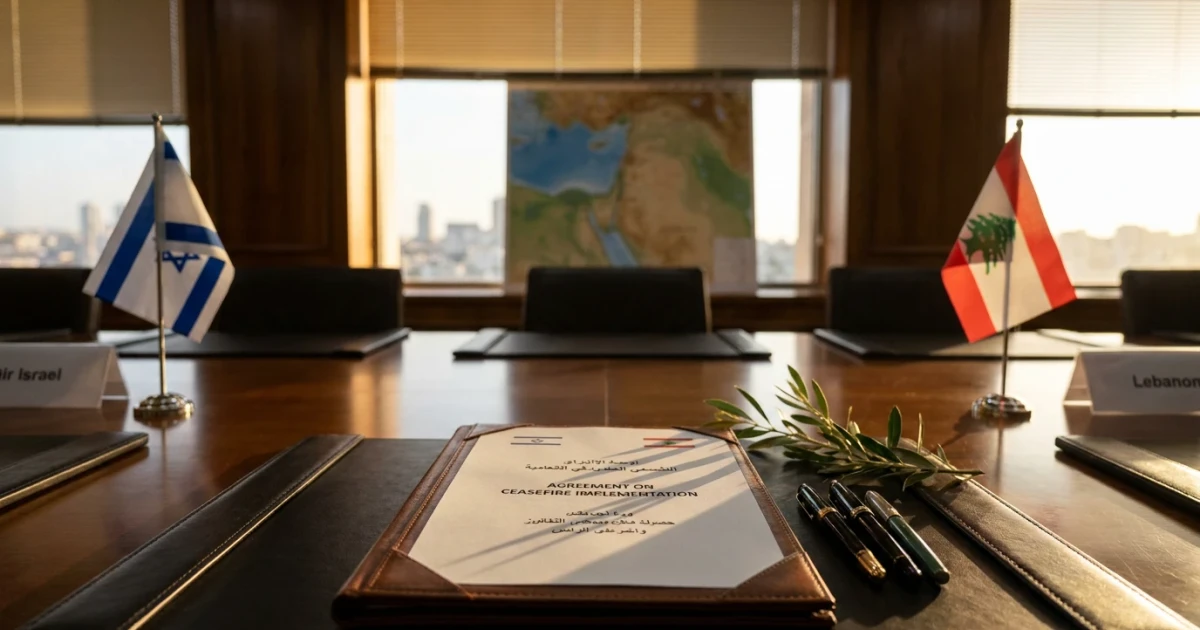
Israel and Lebanon have reached a landmark agreement for a full ceasefire, following weeks of intense negotiations that included the United States and Iran. This development, reported by Axios and The New York Times, represents a significant diplomatic breakthrough in a region historically marked by conflict and uncertainty.
Diplomatic Mediation and Regional Involvement
The ceasefire comes after the United States played a central role in mediating talks between Israel and Lebanon, according to Axios. The New York Times confirmed that Iran was also involved in the negotiations, reflecting the complexity of regional dynamics and the influence of external actors. This multilateral approach underscores the global stakes in maintaining stability along the Israel-Lebanon border, monitored by the United Nations Interim Force in Lebanon (UNIFIL).
Conditions Centered on Hezbollah
The ceasefire agreement is conditional upon specific steps by Hezbollah, Lebanon’s powerful armed faction and political party. Axios noted that the deal requires Hezbollah to scale back its military activity and reposition forces away from the border area. These steps are intended to address Israeli security concerns and ensure compliance with UN Security Council Resolution 1701, which mandates a buffer zone and restricts armed groups in southern Lebanon.
- Hezbollah must reduce its military presence along the border
- Ceasefire implementation will be monitored by UNIFIL (as per its mandate)
- Israel commits to halting air and ground operations in Lebanon
This conditionality reflects ongoing concerns about Hezbollah’s military capabilities and potential for renewed escalation.
Regional Impact and Economic Context
The agreement is seen as a critical step toward easing tensions not just between Israel and Lebanon, but also across the broader Middle East. The New York Times highlighted Iran’s participation, suggesting that Tehran’s influence over Hezbollah was instrumental in reaching the deal. Analysts have pointed out that the ceasefire could help stabilize the region, allowing both countries to focus on economic recovery. According to World Bank GDP data, Lebanon’s economy has struggled in recent years, and prolonged conflict has exacerbated social and financial challenges.
- Lebanon’s GDP has been declining, making stability crucial for rebuilding
- Israel’s border security expenditures have risen in response to past clashes
- Arms transfers to both countries have increased, according to the SIPRI Arms Transfers Database
The ceasefire may reduce military spending and encourage investment and reconstruction efforts in Lebanon, while offering Israel greater security assurances.
Implementation and Oversight
UNIFIL, established in 1978 and expanded after the 2006 conflict, will oversee the implementation of the ceasefire. Its role includes monitoring troop movements, verifying compliance with demilitarized zones, and reporting violations. The agreement aligns with previous peace accords and international mandates designed to prevent escalation and protect civilian lives.
While the ceasefire marks a promising turn, experts caution that its success will depend on sustained political will and practical enforcement. The Congressional Research Service notes in its analysis of Lebanon’s political landscape that Hezbollah’s dual role as a political party and military actor complicates long-term peace prospects.
Looking Ahead: Fragile Progress and Ongoing Challenges
The ceasefire agreement, backed by U.S. diplomacy and Iranian influence, opens the door for further dialogue and potential normalization between Israel and Lebanon. However, the conditional nature of the deal, particularly regarding Hezbollah’s actions, means that implementation will be closely watched by international observers. Regional actors and global powers alike will need to remain engaged to ensure that the ceasefire holds and leads to broader stability.
As the region moves forward, economic recovery, political reforms, and sustained peace will remain top priorities for both countries. The coming months will reveal whether this diplomatic breakthrough can withstand the challenges of a complex and volatile landscape.