World
Israel bill to expand West Bank antiquities control sparks alarm

A Knesset vote of 23-14 advanced a bill that would place West Bank antiquities and heritage sites under a new civilian body in Israel’s Ministry of Heritage, a move that would deepen Israeli control over occupied territory. Lawmakers sent the measure back to the Education, Culture and Sports Committee after its first reading, keeping alive a plan that could also authorize expropriation and purchase of real estate linked to archaeological sites.
The proposal would establish a Judea, Samaria and Gaza Heritage Authority, or in later drafts a Judea and Samaria Heritage Authority, with direct responsibility for antiquities and archaeology in the West Bank. A revised version widened the bill’s reach beyond Area C to include Areas A and B, where the Palestinian Authority now exercises varying levels of civilian control under the Oslo framework. That change would bring more of the territory under Israeli civilian authority, far beyond the military-run system that has long overseen West Bank antiquities.
Sebastia, near Nablus in the northern West Bank, has become the clearest flashpoint. Palestinian officials see the site as part of a wider struggle over control of land and history, with the territory itself claimed by Palestinians as the core of a future state. Hani Al-Hayek, the Palestinian Authority’s tourism minister, said the aim was to expand control and expand settlements in these areas, deep inside Palestinian territories.
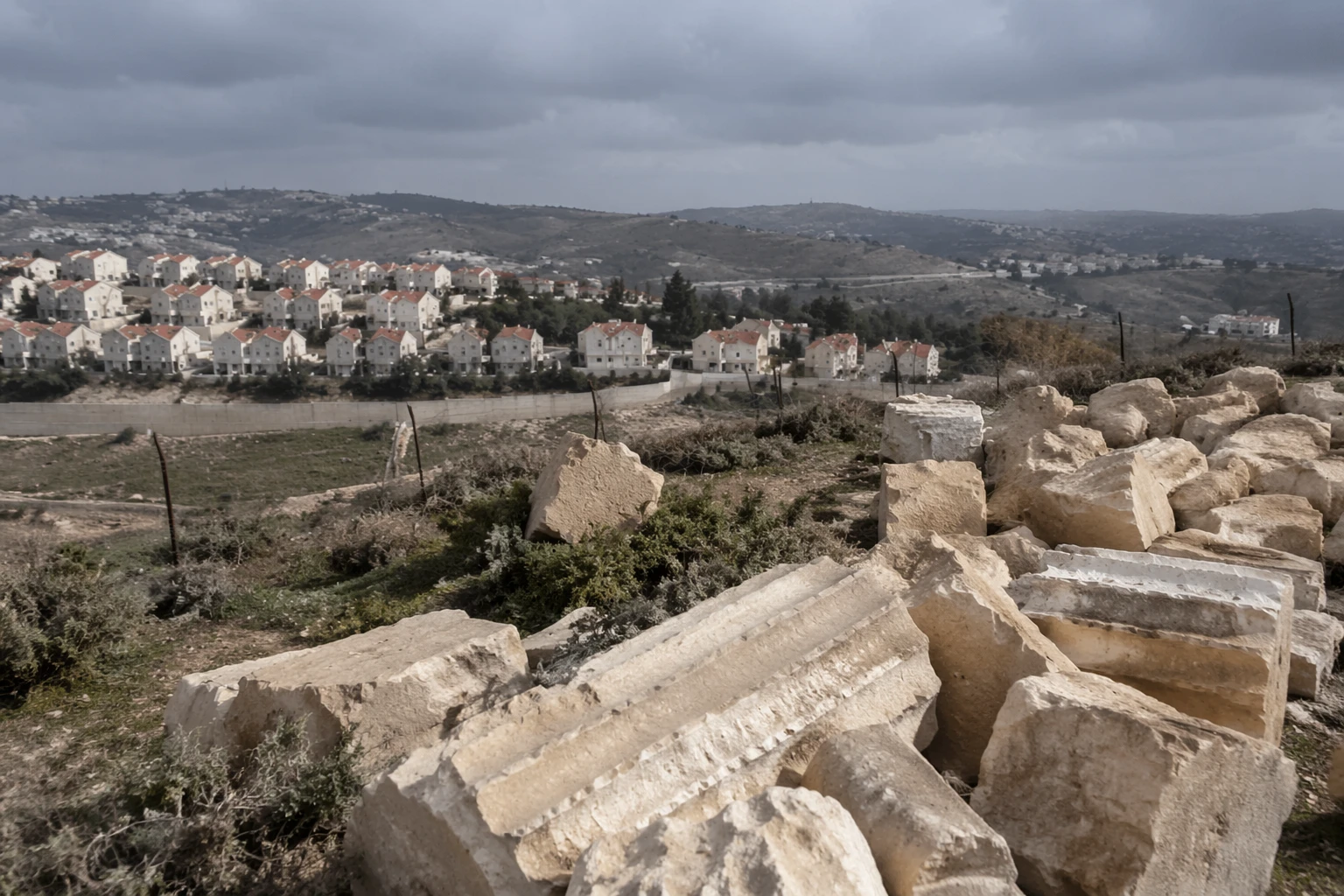
Peace Now, the Israeli settlements watchdog, said the bill mirrors the model used to create the Settlement Administration and would amount to de facto annexation. Archaeology is being used as a tool to expand settlements and confiscate land, turning heritage protection into a parallel mechanism of territorial control, the group said. Israeli legal officials have also said the bill would break Israel’s international obligations.
The legislation would create a civilian heritage authority alongside the Israel Antiquities Authority, shifting authority over ancient Roman-, Byzantine- and Crusader-era sites away from the long-standing military framework. Benjamin Netanyahu halted the legislative process in June 2026, after the bill had already cleared its first parliamentary hurdle, with an election expected by October 27.