World
Israel Expands Death Penalty to West Bank Terror Cases
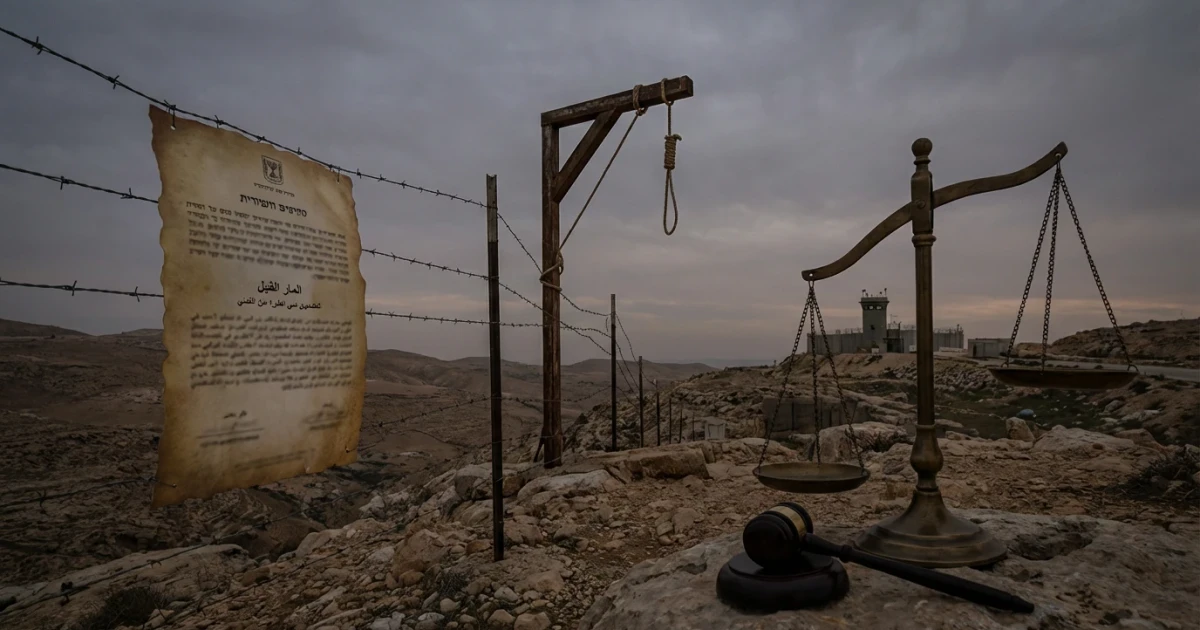
Israel’s parliament has approved a new law mandating the death penalty for Palestinians in the West Bank convicted of deadly terrorist acts, marking a significant shift in the country’s approach to capital punishment and intensifying debate over legal standards and human rights in the region.
Details of the New Law
The measure, reported by The Washington Post, stipulates that Palestinians convicted of intentionally killing Israelis in terrorist acts within the West Bank will face a mandatory death sentence. This law, which applies specifically to cases prosecuted in military courts in the occupied territories, does not extend to similar acts committed by Israeli citizens. The policy’s targeted scope has drawn scrutiny both domestically and internationally, with critics arguing it creates a dual legal system based on nationality.
Background: Israel’s Use of the Death Penalty
Israel has rarely used the death penalty since its establishment. According to the Knesset Lexicon, the death penalty was abolished for ordinary crimes in 1954 and has been applied only in exceptional cases, most notably the 1962 execution of Nazi war criminal Adolf Eichmann. In the West Bank, however, military courts have retained the legal authority to impose the death penalty, though it has not been carried out in decades. Data from B’Tselem indicate that while hundreds of death sentences have been issued historically in the West Bank and Gaza, actual executions are extremely rare.
Legal and Human Rights Implications
- Selective Application: The new law applies exclusively to Palestinians prosecuted in military courts, not to Israeli citizens, even if they commit similar crimes. This has prompted concerns from rights organizations and legal experts about discriminatory application of capital punishment.
- International Reaction: Human rights groups have consistently opposed the expansion of the death penalty in the region. According to analysis by Amnesty International and Human Rights Watch, the move could undermine fair trial guarantees and exacerbate existing inequalities in the Israeli-Palestinian legal system.
- Legal Precedent: Military courts in the West Bank have had death penalty authority since the beginning of the occupation but have rarely imposed the sentence. As outlined by Death Penalty Worldwide, Israel’s civilian courts have effectively abolished the penalty except in cases of crimes against humanity.
Debate Inside Israel
Supporters of the law argue it will serve as a deterrent to future attacks and offer justice for victims. Opponents, however, warn that it could fuel further violence and erode Israel’s adherence to international legal norms. The policy’s focus on Palestinians in the West Bank, prosecuted in military rather than civilian courts, has become a flashpoint in the wider debate over legal equality and the occupation.
Context in the West Bank
The occupied West Bank has long been governed under a separate legal system for Palestinians, with Israel maintaining military courts for security-related offenses. The new law cements a divergence from Israel’s civilian legal system and comes amid heightened tensions and violence in the region. According to the Jewish Virtual Library, calls to reintroduce or expand the death penalty have surfaced periodically following high-profile attacks.
Looking Ahead
The passage of this law sets a precedent for capital punishment in the Israeli-Palestinian context, with potential implications for future legal reforms and international relations. Observers note that the actual implementation of death sentences, as opposed to their legal authorization, will be closely watched by both advocates and critics in the months ahead.