Entertainment
Istanbul’s tango scene grows into a global dance destination
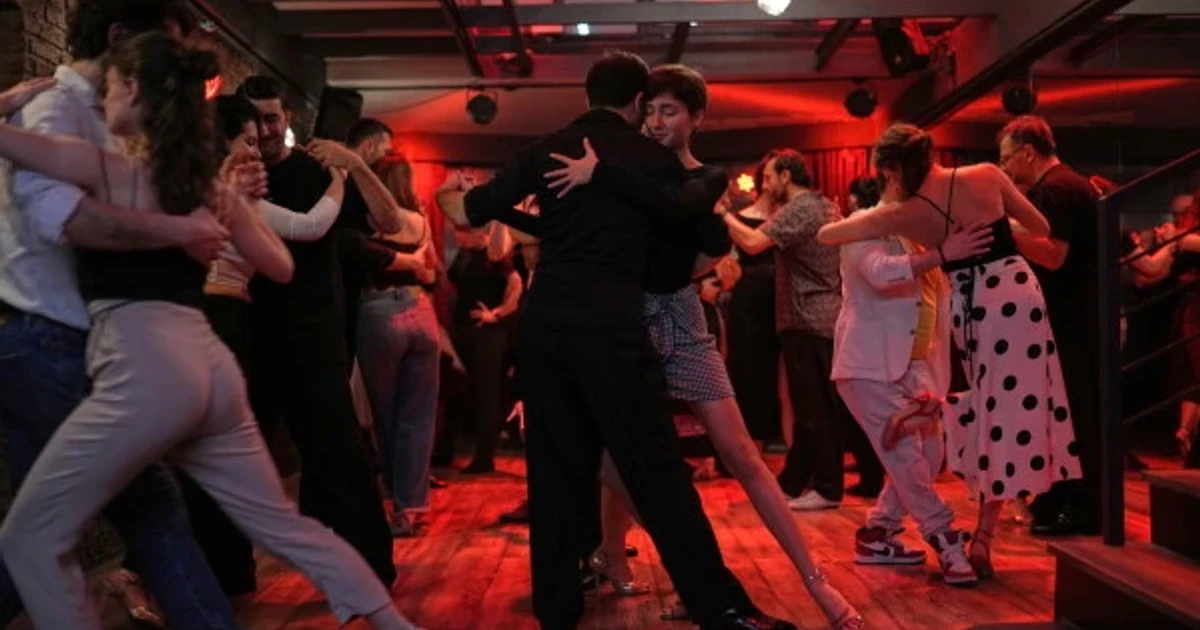
Night after night, Istanbul’s tango floor fills on both sides of the city, where dancers move between Europe and Asia as naturally as they move through a tanda. What began as admiration for an Argentine art form has matured into a dense urban ecosystem of schools, milongas, visiting teachers and committed local dancers. The result is a scene that now draws respect even from Argentine maestros who find a serious international hub, not a novelty, when they arrive.
A borrowed art form that found durable ground
Tango’s roots lie far from the Bosphorus. UNESCO traces the dance to the urban lower classes of Buenos Aires and Montevideo, shaped by European immigrant, African-descended and criollo traditions, and inscribed it on the Intangible Cultural Heritage list in 2009. Istanbul’s rise matters because it shows how a form born in the Río de la Plata can be made durable elsewhere when it is supported by institutions, regular gatherings and a community that keeps renewing itself.
In Istanbul, that support is visible in the spread of tango schools, university tango clubs, milongas, tango weekends and the Istanbul Tango Festival. The city’s tango life has moved beyond a few central venues and into the suburbs, with schools and social nights reaching from neighborhoods such as Beyoğlu, Kadıköy and Cihangir outward into a wider metropolitan map. The pattern is not just cultural enthusiasm, but infrastructure: a calendar, places to dance, places to train and a steady flow of people who return.
The social engine is the milonga
The nightly milonga is the scene’s heartbeat. Associated Press coverage describes tango enthusiasts gathering every night on both the European and Asian sides of Istanbul, a geography that gives the city an unusual rhythm: one dance community, two continents. Turkish locals, foreign residents, visiting international teachers and travelers all share that floor, which makes the scene both local and transnational at once.
That mix matters because tango depends on repetition and exchange. Local dancers bring continuity, traveling teachers bring outside technique and visiting students enlarge the social network that keeps classes, practica and social dances full. In Hürriyet Daily News, Gonca Çetin describes the city’s tango community as one that is “constantly growing and developing,” a line that fits the way Istanbul’s floor functions as both classroom and social club.
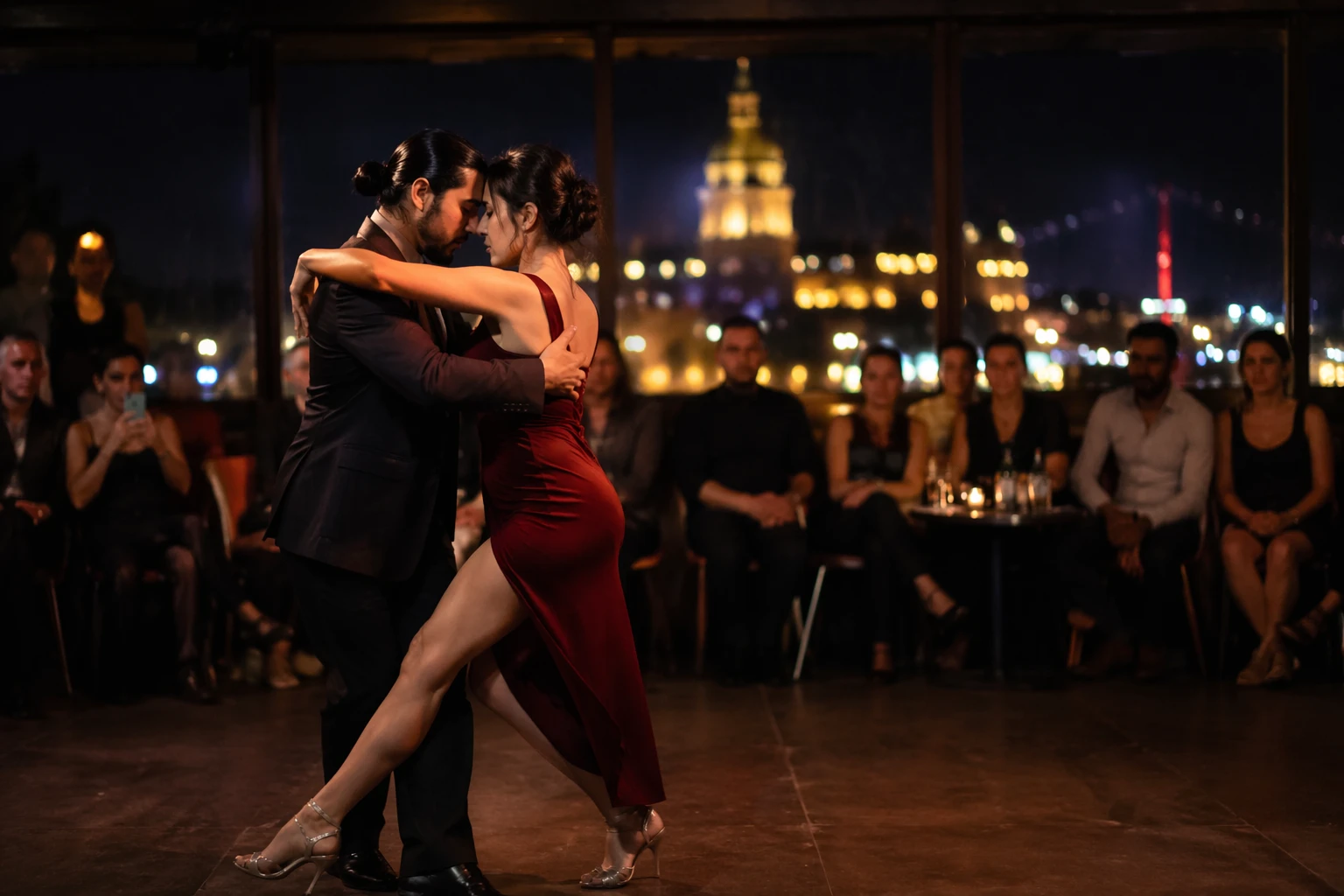
From beginner to teacher, and from center to suburbs
Gonca Çetin is one of the clearest examples of how Istanbul turns curiosity into expertise. AP identified her as a former beginner who became a tango teacher, and her own description of the community as “diverse, welcoming and constantly growing and developing” captures the openness that keeps new dancers coming back. That openness is not abstract; it is built into the city’s rhythm of regular lessons, repeated social nights and the presence of people who are willing to teach, host and mentor.
The spread from central Istanbul to the suburbs is equally important. Tango no longer depends on a single prestige district, even though places such as Beyoğlu, Kadıköy and Cihangir remain part of the scene’s identity. When schools multiply across the city, they create an entry point for students who may never have considered tango a natural fit. That is how admiration becomes a durable international hub: not through one headline event, but through a broad base of lessons and recurring social spaces.
A festival that measures the scale
If the milongas show daily vitality, tanGOTOistanbul shows institutional depth. The festival’s website identifies 2026 as the 18th edition, which signals a long enough run to build habits, reputations and repeat attendance. A 2025 listing described the event as bringing together 17 couples, 4 orchestras, 8 DJs, 15 competition categories and a jury from 8 countries, a profile that places Istanbul firmly inside the global tango circuit.
Those numbers matter because they show the scene is not only social, but organized at a scale that attracts international participation. Orchestras, DJs and competition categories turn a local dance calendar into a destination event, while the jury’s multinational composition reinforces the city’s status as a meeting point for different tango traditions. In practical terms, that means Istanbul can host both casual dancers and serious competitors without changing its identity.

The craft behind the dance
The city’s tango culture extends beyond the floor. AP highlighted Ercan Umay, who handcrafts tango shoes in a small Istanbul workshop, a detail that says as much about the scene as any crowded ballroom. Shoes are a small but telling sign of permanence: when a city supports a specialized craft for dancers, it is no longer borrowing an art form for occasional performance, but sustaining the conditions that make the art form livable.
That material culture also reinforces the city’s self-sufficiency. Dancers do not just arrive for a weekend and leave with memories; they find teachers, social venues and equipment made locally for the demands of the dance. The workshop becomes part of the same network as the milonga and the school, extending tango from social practice into craft and commerce.
A Turkish musical lineage that helps the genre feel at home
Istanbul’s tango boom also rests on a deeper musical memory. A 2023 culture piece noted that Turkish tango pieces were composed in the 1930s and 1940s, which helps explain why the dance does not feel entirely imported in the city. It also pointed to Necip Celal’s “Mazi Kalbimde Bir Yaradır,” written in 1928 and sung by Seyyan Hanım in 1932, as the first Turkish-language tango.
That history matters because it gives the current boom local roots, not just foreign glamour. When dancers in Istanbul move through a milonga today, they are participating in a global form that has already been translated, adapted and remembered in Turkish musical life. Combined with schools, clubs, shoes, weekend gatherings and a festival now in its 18th edition, that memory helps explain why tango in Istanbul has become more than a trend: it has become an institution.
Sources
- [1]nytimes.com
- [2]ap.org
- [3]hurriyetdailynews.com
- [4]ich.unesco.org
- [5]eternalcityistanbul.com
- [6]tangotoistanbul.com
- [7]tangopolix.com