World
Italy suspends Schengen with Spain after Ceuta migrant crisis

Italy temporarily suspended Schengen arrangements with Spain after the mass crossings into Ceuta, with Prime Minister Giorgia Meloni calling the images from the Spanish enclave “shocking.” The move turned a border crisis on Europe’s southern edge into a wider test of how quickly the bloc’s free-travel rules can be set aside when one member state feels overwhelmed.
The immediate pressure point was Ceuta, Spain’s North African enclave, where officials estimated about 49,000 migrants crossed from Morocco in 24 hours, while other accounts put the total as high as 60,000 over a broader period. The crossings, by land and sea, strained local services and security forces, and reports put the death toll at at least 18 in some accounts and as many as 57 in others.
Spain responded by deploying troops and tightening border security in Ceuta. Juan Jesús Vivas, the enclave’s regional leader, said the influx was overwhelming resources and urged Madrid to intervene, while Spain’s Interior Minister Fernando Grande-Marlaska was expected to travel to Ceuta as the government tried to regain control of the situation.
The crisis collided with a legal ruling that complicated Spain’s options. In July 2026, Spain’s Supreme Court ruled that migrants intercepted at sea while trying to reach Ceuta or Melilla could not be immediately returned to Morocco. That decision became a central reference point as the crossings accelerated and as Spain faced pressure to both harden the border and avoid unlawful returns.
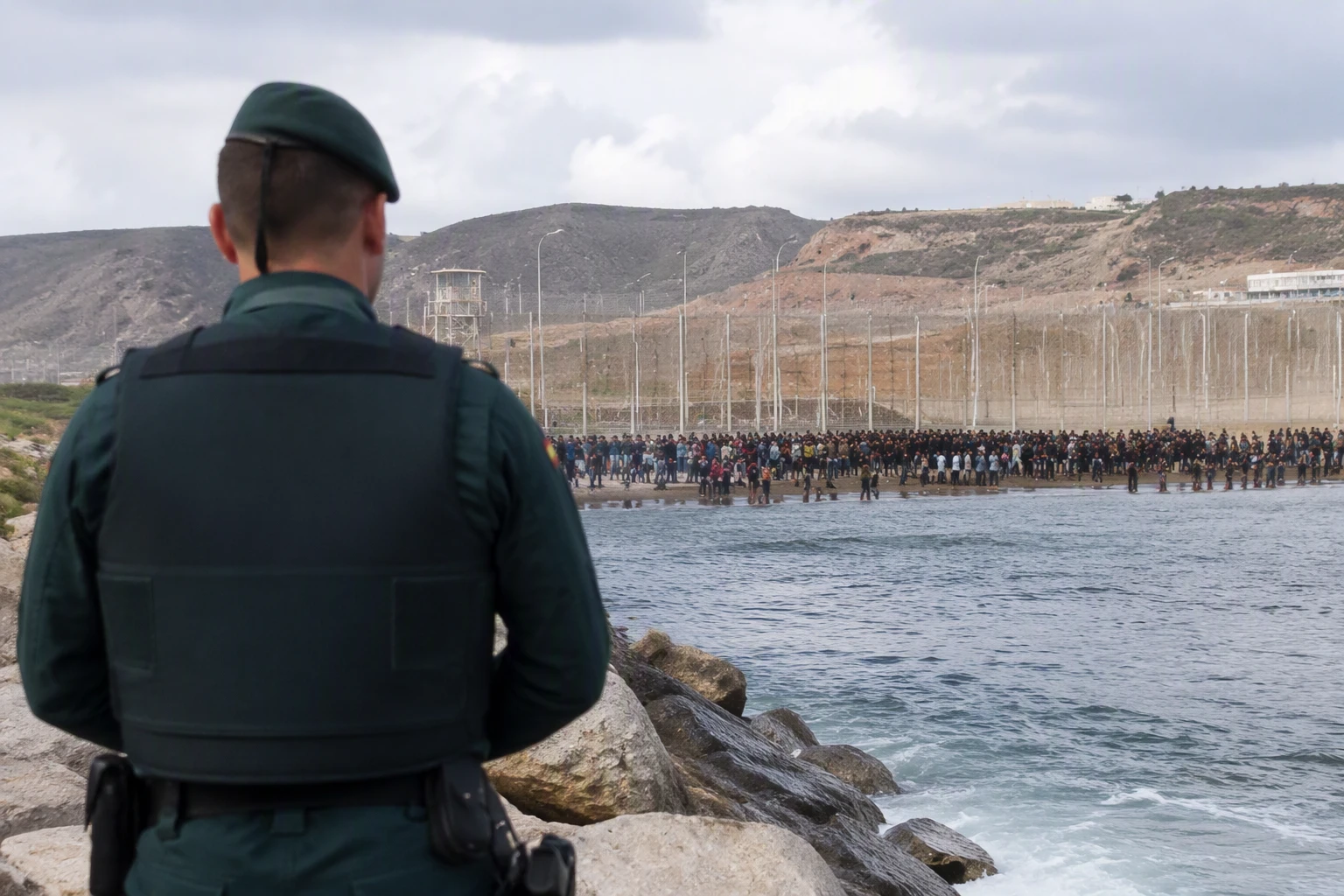
The fallout spread beyond Spain and Italy. France reinforced checks along its border with Spain, underscoring how a surge in one frontier can quickly trigger internal controls elsewhere in Europe. Italian politicians went further, with senior figures calling for Spain to be pushed out of the Schengen zone and Meloni warning that Italy was prepared to take “extraordinary measures” to defend its borders.
The episode revived memories of the May 2021 Morocco-Spain border incident in Ceuta, when diplomatic and migration tensions flared under similar conditions. This time, the political cost was immediate: Spain pressed for burden-sharing, Italy answered with suspension, and Schengen’s promise of open internal borders was again exposed as conditional when migration pressure spikes.
Sources
- [1]bbc.co.uk
- [2]reuters.com
- [3]bbc.com
- [4]cnn.com
- [5]politico.eu
- [6]aljazeera.com
- [7]acleddata.com
- [8]dw.com
- [9]npr.org