US News
James Comey Indicted Again Over Social Media Post
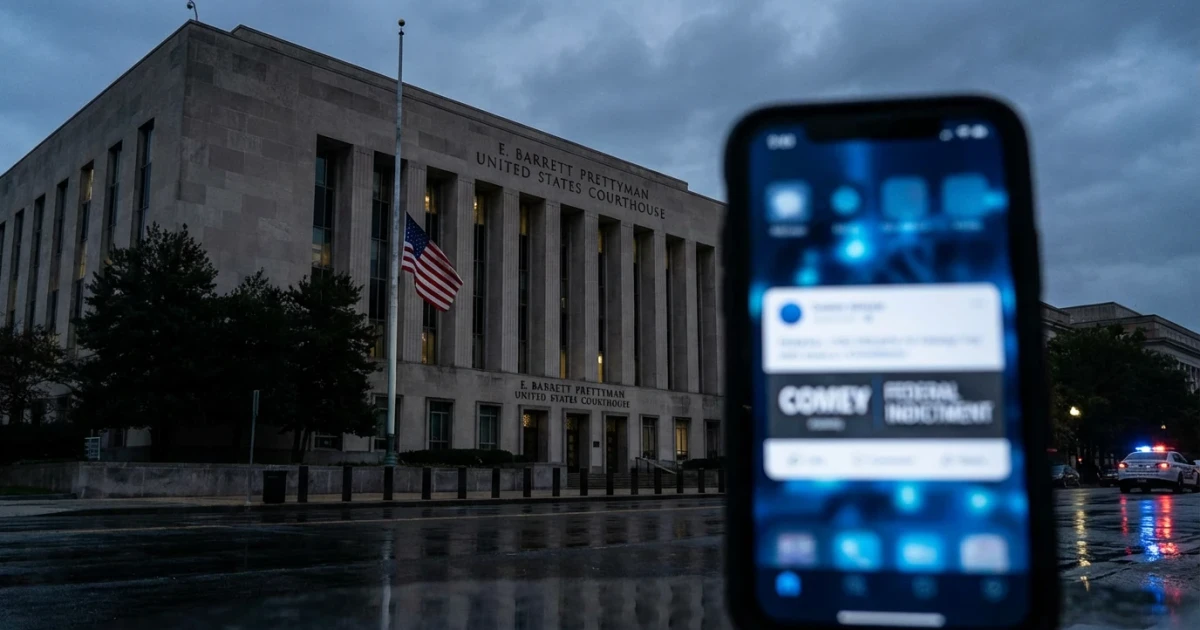
James Comey, the former director of the FBI, has been indicted by a federal grand jury for a second time, according to The Washington Post. The indictment, announced Tuesday, stems from a 2025 social media post in which Comey allegedly threatened former president Donald Trump.
Details of the Indictment
The grand jury's decision marks the latest legal challenge for Comey, who previously faced separate charges during the ongoing aftermath of the 2016 presidential election investigations. According to reporting from The Washington Post, this new indictment centers on a post Comey made in 2025 that authorities say violated 18 U.S. Code § 875, which deals with threats made via interstate communications, including social media platforms.
The specifics of the post and the precise language cited as a threat have not been made public, but the indictment alleges that Comey's statement constituted a criminal threat against Trump. Such charges typically require the prosecution to demonstrate that the communication was intended as a threat and transmitted in interstate commerce, which includes most social media activity.
Legal Context and Grand Jury Process
This is the second time a federal grand jury—an essential component of the U.S. criminal justice system—has moved to indict Comey. Grand juries are tasked with determining whether there is probable cause to bring criminal charges, operating independently from prosecutors and judges. For those interested in the process, the federal grand jury system has been a cornerstone in evaluating indictments of public officials for over a century.
According to the Federal Judicial Caseload Statistics, indictments for online threats have increased in recent years, reflecting the growing role of social media in public discourse and legal controversies.
Social Media's Role in Legal Disputes
The charges against Comey highlight the intersection between social media and federal criminal law. Under federal statute, knowingly transmitting threats to injure another person via electronic communication can result in felony charges. The prevalence of social media as a communication tool means that public figures and private citizens alike are increasingly subject to scrutiny for their online statements.
- According to the Pew Research Center, nearly 73% of U.S. adults use at least one social media platform, amplifying the reach—and risks—of public posts.
- Recent amendments to the National Defense Authorization Act have clarified and expanded federal jurisdiction over online threats and harassment.
Implications and Next Steps
Comey's indictment over a social media post is emblematic of a broader trend in which digital communications are increasingly at the center of federal criminal cases. The outcome of his case could set further precedent for how online speech is prosecuted, especially when it involves high-profile figures.
As the case moves forward, key questions remain about the boundaries of protected speech, the standards for proving criminal intent in online statements, and the evolving responsibilities of public officials in the digital age. The legal process, as outlined in the grand jury indictment form, will now turn to pre-trial hearings and, potentially, a federal trial.
With public interest in both Comey and Trump remaining high, the indictment is likely to fuel ongoing debates over political discourse, accountability, and the power of social media. The coming months will provide further clarity as evidence is presented and both sides make their arguments in court.