Health
James McMillian shows cooldown moves to end your workout
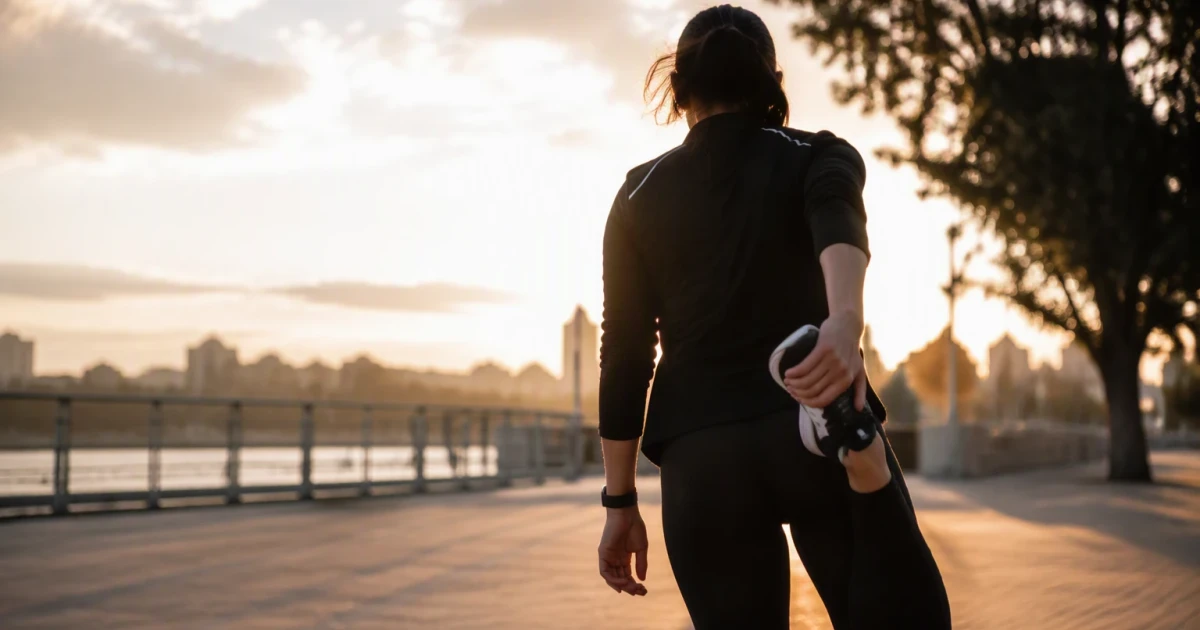
James McMillian is using Good Morning America to turn the post-workout fade-out into a teachable moment. The Tone House president is demonstrating cooldown moves, and the science behind them is more modest than the gym folklore around them: they can help you ease back to rest and keep joints moving, but they are not a guaranteed injury shield.
What cooldowns actually do
The Good Morning America wellness segment was published Aug. 8, 2026, with McMillian identified as the president of Tone House, a strength-and-conditioning athletic training facility in New York City.
The strongest everyday guidance frames cooldowns as a gradual transition, not a performance trick. An NHS cooldown routine is designed to help you gradually relax, improve flexibility and slow your heart rate, and its example takes about 5 minutes. The same routine includes a buttock stretch held for 15 to 20 seconds, a useful benchmark for how gentle this phase should feel.
A 2021 systematic review and meta-analysis in Frontiers in Physiology examined post-exercise stretching and its effect on strength, range of motion and delayed onset muscle soreness. The research base is concentrated on recovery-related outcomes, especially mobility and soreness, rather than on sweeping claims that a cooldown can solve every post-workout problem.
Where evidence beats fitness folklore
The idea that a cooldown will prevent injury is common, but the evidence is much thinner there. There is limited scientific evidence that a cooldown prevents injury, even though it still offers benefits.
The University of Maryland Medical System recommends a good warm-up and cool-down routine to enhance performance, reduce injury risk and help prepare the body for activity regardless of age or fitness level. Cooldowns are one piece of a larger load-management strategy, alongside sleep, hydration, realistic training volume and rest days.
For everyday exercisers, the most defensible claim is simple: a cooldown can help you downshift. It is unlikely to erase all soreness after a hard workout, and it should not be sold as a magic fix for overtraining, poor form or a sudden spike in intensity.
How to use McMillian’s demo after common workouts
McMillian translates an often-vague fitness ritual into something people can actually do at the end of a normal workout. After a run, a class or a strength session, the goal is to make the body feel like it is landing, not slamming on the brakes.
A practical cooldown can stay short and specific:
• Walk or march for a few minutes after intervals or a treadmill run so your breathing settles before you sit down.
• Use gentle static stretches after lifting or cardio, keeping each one comfortable rather than forcing range.
• Hold each stretch long enough to feel a release, not pain. The NHS example of 15 to 20 seconds is a good model for everyday use.
• Keep the whole routine around 5 minutes if that is all you have, then build longer only if it feels useful.
After strength training, the emphasis should be on easing tight areas that were loaded during the session. After running, a cooldown can focus on the lower body and hip area. After a group class or interval workout, the first job is simply to bring your heart rate down gradually instead of stopping abruptly at the finish line.
Why McMillian is a credible guide
McMillian’s background helps explain why GMA keeps bringing him back for fitness segments. Tone House has long carried a hard-edged reputation: in a 2016 piece, Business Insider called it “the hardest workout in NYC” and listed the gym at 32 E. 31st Street in the Nomad neighborhood of New York, NY 10016.
He also appeared in ABC News’ Dec. 29, 2025, workout segment “Tips to kickstart your workout,” and a GMA search result identified him as Tone House Director of Innovation in another basics-focused segment. Tone House’s own Instagram posts identified him as the facility’s newly announced president and noted that he had been with the organization for 9 years. Search snippets list him as a former all-star in football, wrestling, track and rugby, a NASM Certified Trainer, a Start TODAY trainer and part of the Adidas family.
The bigger takeaway for everyday exercisers
Special Olympics New York was launching an inclusive video workout series with its athletes and trainers.