Science
James Webb Telescope Captures Breathtaking 'Eye of God,' Revealing Secrets of Sun’s Fate
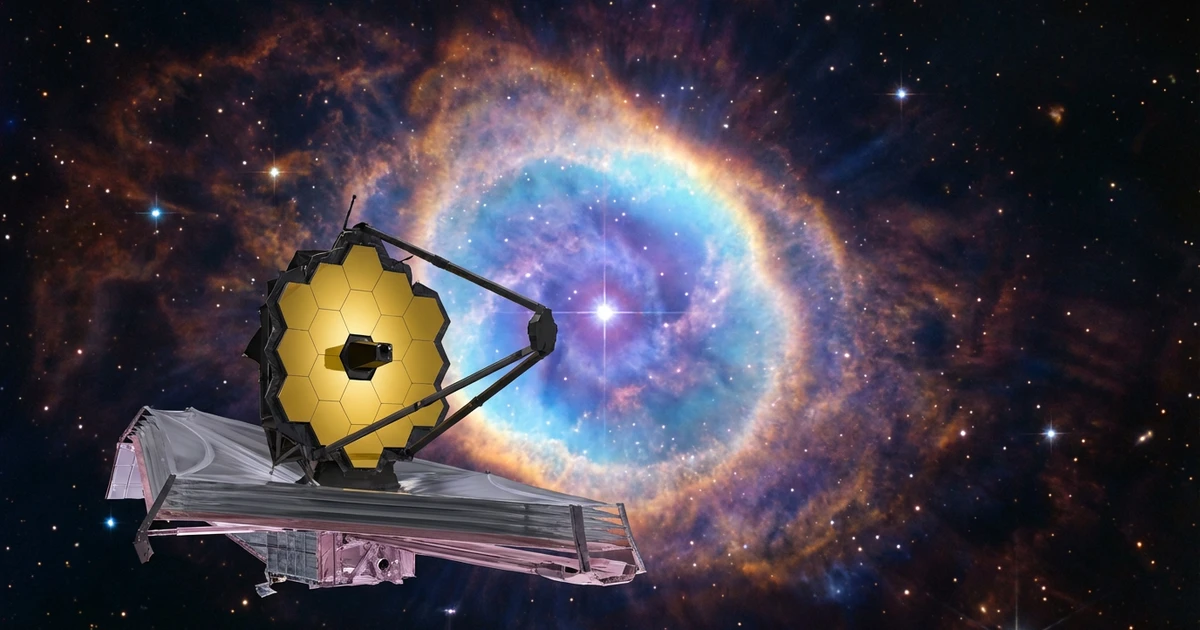
The James Webb Space Telescope (JWST) has delivered a mesmerizing new image of a distant nebula, often called the 'Eye of God', offering a dramatic preview of what the death of our own sun might one day look like. This latest observation marks a significant milestone in stellar astronomy and showcases JWST’s extraordinary ability to peer into the distant cosmos with unparalleled clarity.
Stunning Glimpse Into the Distant Future of the Sun
The image, released by NASA and widely covered by Live Science, features a planetary nebula—a glowing shell of ionized gas ejected from a dying star. Such nebulae are the final act in the life cycle of medium-sized stars like our sun. The nebula’s intricate rings and vibrant colors, revealed in high definition by JWST’s infrared instruments, are both scientifically invaluable and visually arresting.
- JWST’s detailed imaging provides astronomers with a template for understanding the processes that govern the end of stellar life cycles.
- The so-called 'Eye of God' moniker comes from the nebula’s haunting, eye-like appearance, which has fascinated both scientists and the public.
What the Image Reveals About Stellar Evolution
According to Live Science, the nebula captured by JWST is a dramatic representation of what will eventually happen to the sun—about five billion years from now. As the sun ages, it will exhaust its nuclear fuel, expand into a red giant, and ultimately shed its outer layers. The remaining core will illuminate the expelled gas, forming a planetary nebula resembling the one seen in the new JWST image.
- Planetary nebulae like the 'Eye of God' help astronomers trace the elements recycled into the galaxy, contributing to the formation of new stars and planets.
- The clarity of JWST’s image allows for precise study of nebular structure, chemical composition, and the physics driving the final stages of stellar life.
A Technological Triumph
The release of this image is being hailed as a watershed moment for the JWST mission. The telescope’s powerful infrared capabilities enable it to cut through cosmic dust that obscured previous views using older observatories. The 'Eye of God' image is not just a scientific achievement—it also represents a leap forward in astronomical imagery, inspiring both researchers and the general public.
Why This Matters for Astronomy—and Humanity
For astronomers, such detailed glimpses into the fate of stars like our sun unlock new possibilities for research into the life and death of stars. For the broader public, the 'Eye of God' image is a stark reminder of the sun’s eventual demise, but also a testament to the cycles of creation and destruction that shape the universe.
This observation underscores JWST’s role as a window into cosmic history and a tool for answering profound questions about our place in the universe. As the telescope continues its mission, more revelations about the life cycles of stars—and the ultimate fate of our solar system—are expected to follow.
Looking Ahead
With the James Webb Space Telescope just beginning its journey of discovery, astronomers anticipate many more breathtaking images and groundbreaking insights in the years ahead. Each new observation not only unravels the mysteries of distant stars but also brings humanity closer to understanding its cosmic origins and destiny.
Sources
- [1]Live Science