Business
January Jobs Report Shows Modest Growth Amid 2025 Stagnation
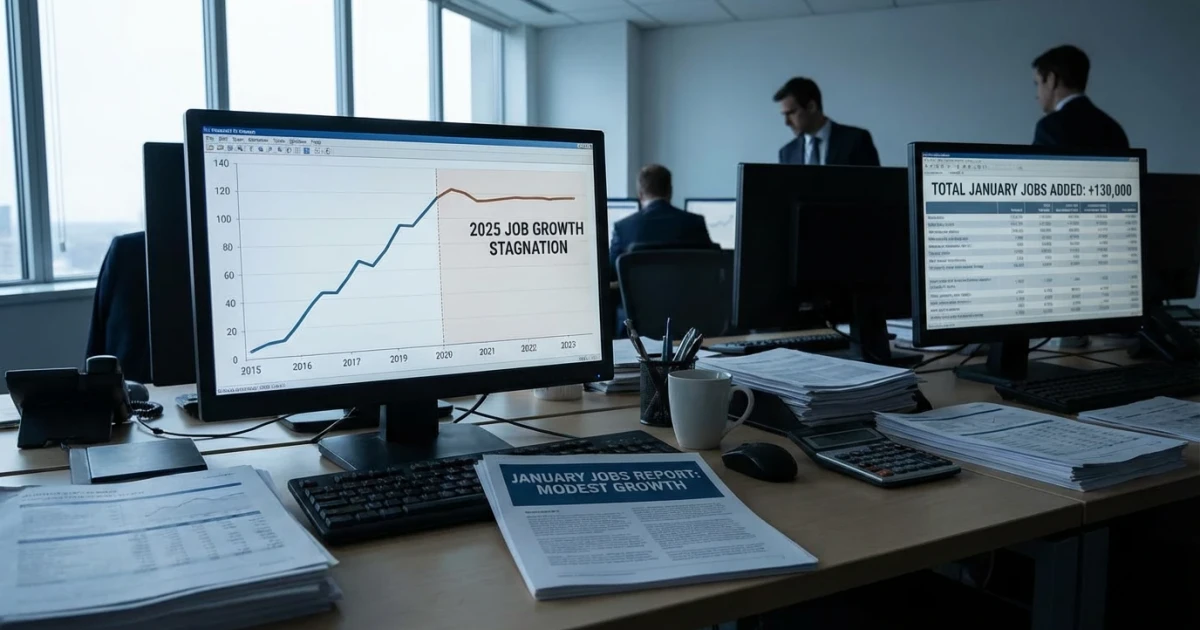
The U.S. labor market added 130,000 jobs in January, surpassing some expectations for the start of 2026. However, significant revisions to previous data indicate that labor market growth largely stalled during 2025, prompting economists and policymakers to weigh the implications for the broader economy.
January Job Gains Outpace Estimates
The latest report from the Bureau of Labor Statistics (BLS) showed nonfarm payrolls rising by 130,000 in January. This figure was considered a modest but positive sign for the start of the year. Sectors such as health care, government, and construction posted the largest gains, reflecting ongoing demand in essential services and infrastructure projects.
- Health care and social assistance led with robust hiring
- Government employment continued its steady growth
- Construction benefited from a mild winter and ongoing federal investment
Analysts noted that January’s hiring pace, while not exceptional, was stronger than feared given the uncertainty that clouded the labor market in late 2025.
2025 Job Growth Revised Downward
While the January headline was positive, the bigger story lies in the revised data for 2025. The BLS regularly updates its employment estimates as more complete information becomes available, and the latest revisions were stark: Job growth in 2025 was essentially flat, contrary to earlier reports of moderate gains.
According to the updated nonfarm payroll employment data, several months of 2025 saw negligible increases or even small declines in total jobs. Economists cited a combination of factors for the stall, including:
- Rising interest rates dampening business investment
- Slower consumer spending growth
- Ongoing supply chain adjustments
The detailed CES tables confirmed declines in sectors such as manufacturing and retail, offsetting gains elsewhere. This stagnation raises questions about the underlying health of the labor market.
Labor Force Participation and Unemployment
Despite the disappointing revisions, the official report indicated that the unemployment rate remained steady, suggesting that most Americans who want jobs are able to find them. However, labor force participation did not increase, reflecting lingering caution among workers and employers alike.
The BLS uses a birth/death model to account for business openings and closures, which can introduce volatility into monthly estimates. Recent adjustments suggest that new business formation may have slowed in 2025, further explaining the labor market stall.
Economic Outlook and Policy Response
Looking ahead, the Congressional Budget Office projects modest employment growth over the next several years, with policymakers debating how best to support job creation. Many economists urge caution, emphasizing the need for targeted investments in sectors poised for growth, alongside support for workers transitioning from shrinking industries.
With hiring resuming in January, analysts will closely watch upcoming data for signs that the labor market is regaining momentum or if the 2025 stall signals deeper challenges for the U.S. economy.