Business
Japan business sentiment turns negative as Middle East conflict bites
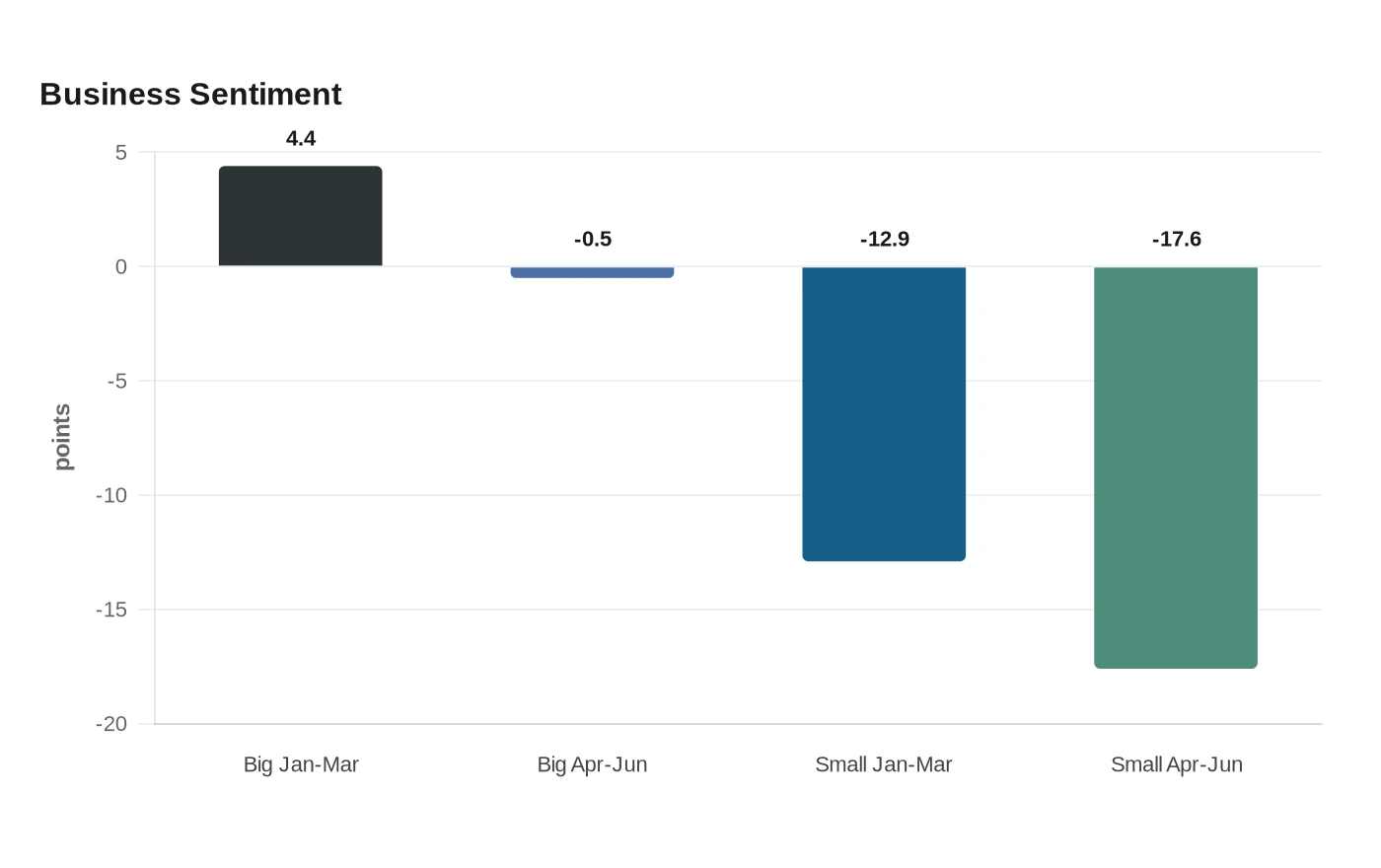
Japan’s corporate mood has slipped back below zero, a warning that the Middle East conflict is now reaching Asian boardrooms through higher energy costs, shipping uncertainty and fears of weaker demand. In the April-June quarter, the government’s Business Outlook Survey showed sentiment among big companies fell to minus 0.5 from plus 4.4 in January-March, while the reading for smaller firms dropped to minus 17.6 from minus 12.9.
The survey matters because it tracks the difference between firms saying business conditions are improving and those saying they are worsening. Jointly run by Japan’s Cabinet Office and Ministry of Finance since the April-June 2004 quarter, it covers corporations with capital of 10 million yen or more and is closely watched as a gauge of how pressure is moving through the economy.

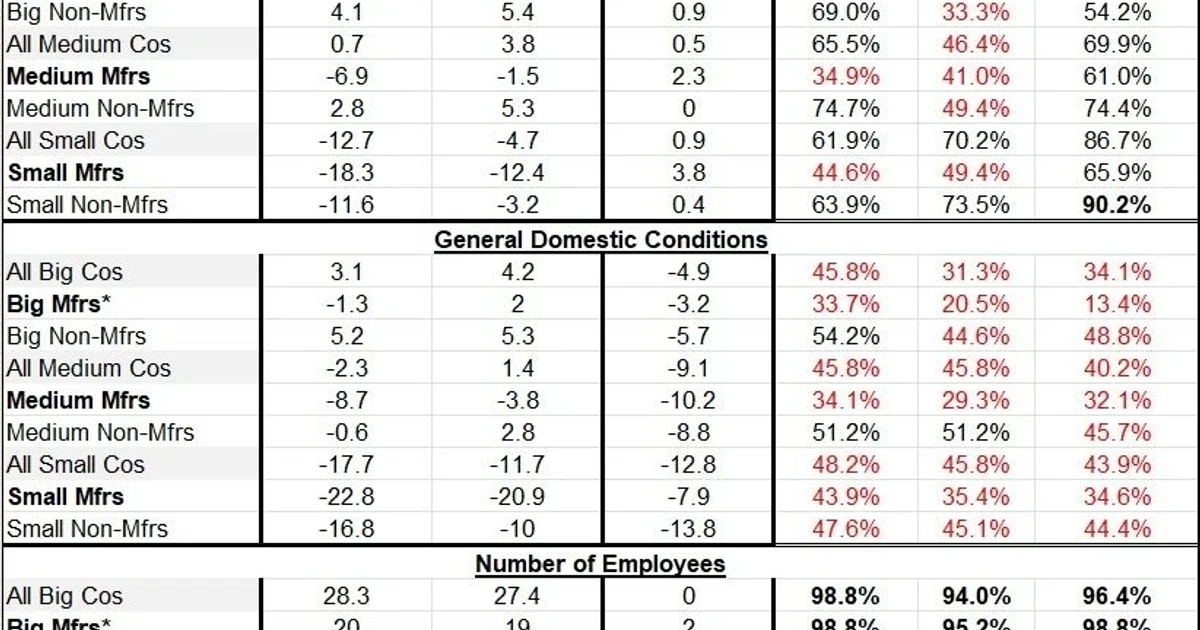
The latest figures show the strain is not confined to a single segment. Domestic economic conditions for big companies turned negative at minus 4.5 in April-June, even as the employment balance for large firms stayed tight at 25.7 at end-June, a reminder that labor shortages remain a live constraint. Yet firms still projected 8.2% growth in 2026 capital spending overall, and the outlook for big companies remained positive at 4.3 for July-September and 4.5 for October-December.
That mix suggests corporate Japan is not bracing for an outright collapse, but it is becoming more cautious as the conflict pushes up imported fuel and raw material costs. Retailers have been worried about fuel prices hurting consumption, while manufacturers have already faced shortages of key inputs. For smaller firms, which have less room to absorb higher bills, the deeper drop in sentiment points to a more immediate squeeze.
Tokyo’s policymakers have already flagged the same risk. In its April 28 outlook, the Bank of Japan said growth was likely to decelerate in fiscal 2026 because higher crude oil prices linked to the Middle East situation would pressure corporate profits and households’ real income. The central bank said fiscal 2026 inflation was likely to run at 2.5% to 3.0%, driven mainly by energy and goods prices, with risks to economic activity skewed to the downside and risks to prices skewed to the upside.
The Bank of Japan added in its April 21 Financial System Report that crude oil prices surged and asset prices and long-term interest rates fluctuated sharply after tensions in the Middle East increased since the end of February. Earlier in March, business sentiment had already fallen to 42.2, the weakest since February 2022, while forward-looking sentiment sank to 38.7 from 50.0 in February, the lowest since December 2020.
The damage so far has not pointed to recession, but the direction is clear: a conflict that began far from Japan is now feeding into costs, confidence and capital plans in one of the world’s most trade-exposed economies. That makes Japan an early indicator of how far the fallout can travel.
Sources
- [1]money.usnews.com
- [2]mof.go.jp
- [3]boj.or.jp