World
Japan fans’ stadium cleanup reignites debate over household gender gap
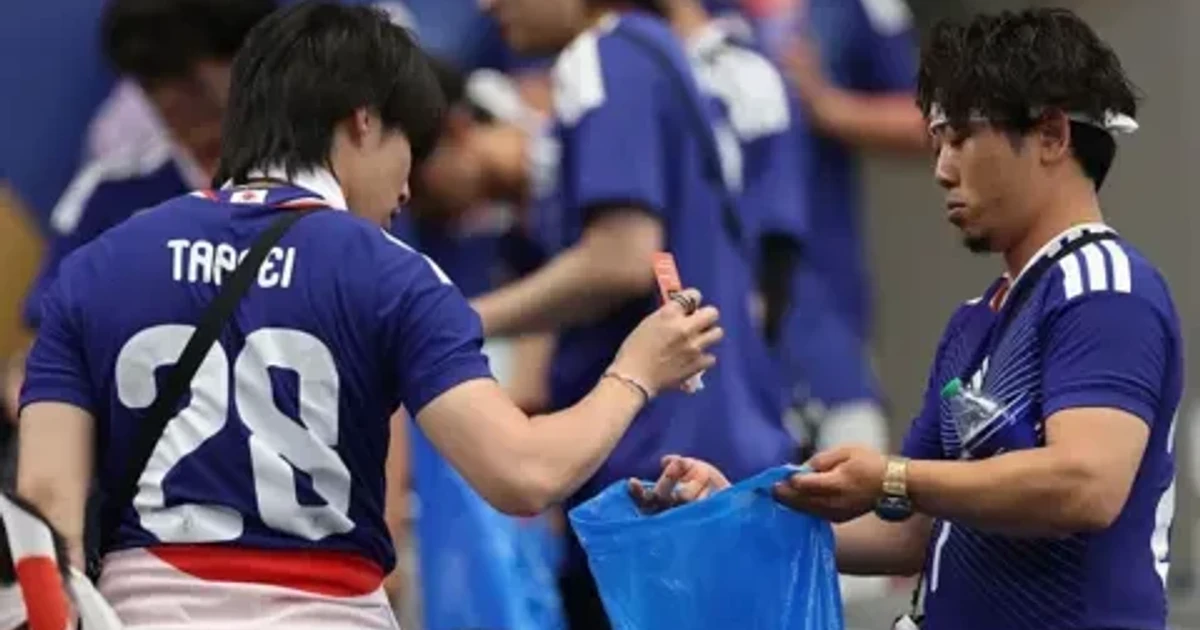
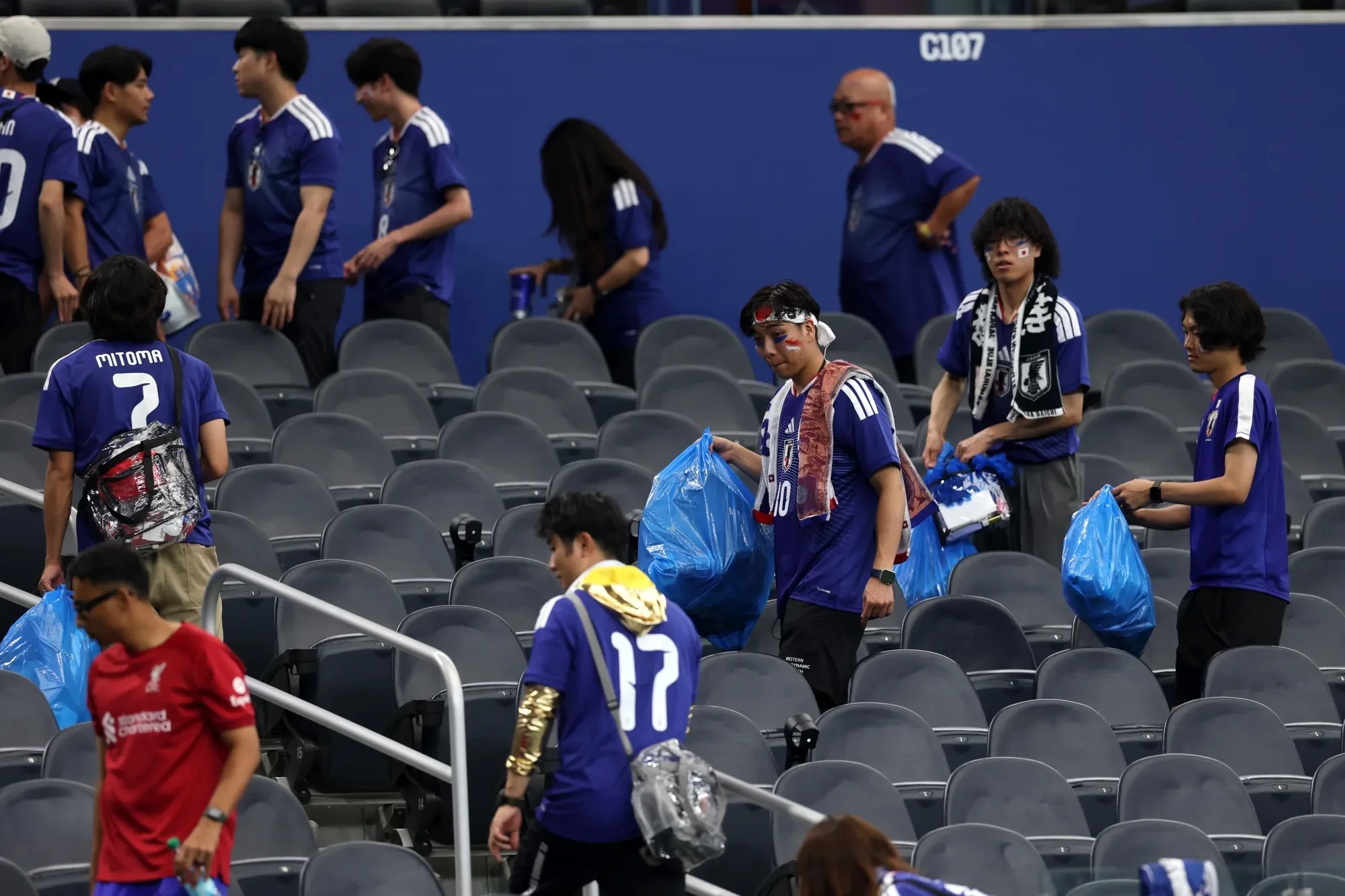
Japanese supporters once again drew praise for leaving their stadium section spotless, but the sight of fans collecting water bottles, wrappers and other trash in blue bags after Japan’s June 14 World Cup match against the Netherlands in Texas also reopened a far sharper argument at home. What looks abroad like a model of civic pride has become, for many in Japan, a test of whether the same sense of order reaches kitchens, laundry rooms and childcare.
Japan are appearing at their eighth straight World Cup, and the cleanup after the match fit a familiar international image: disciplined fans, tidy stands and a national habit of leaving places better than they were found. Supporters described the practice as “Japanese culture,” and the scene quickly circulated alongside the broader narrative of Japan’s public cleanliness.
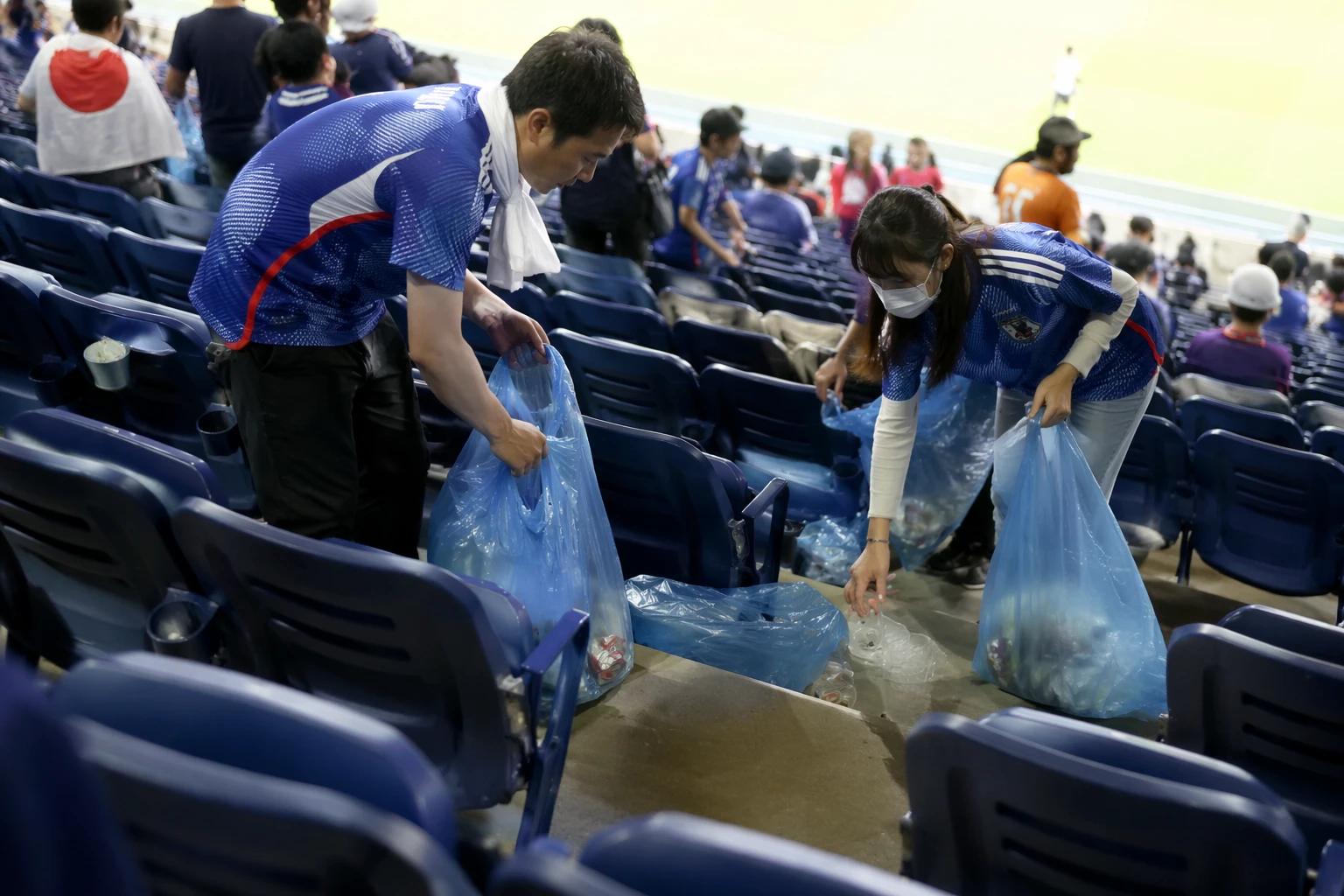
Inside Japan, though, the reaction was far less celebratory. A viral “please do it at home” poster fueled criticism that some men are willing to pick up litter in public while leaving housework to women. The backlash turned the stadium cleanup into a shorthand for a deeper complaint: that visible courtesy in public can coexist with entrenched inequality behind closed doors.
That critique is not anecdotal. Organisation for Economic Co-operation and Development-linked material and Japanese government fact sheets say Japanese men’s contributions to housework and childcare remain among the lowest in the developed world. One Cabinet Office Gender Equality Bureau fact sheet says the time spent by Japanese men on housework and child care is at the lowest level on a global basis. A Nippon.com summary of a Japanese national survey says wives in Japan spend about seven times as much time on housework as husbands.
The debate has also taken on broader policy weight. International Monetary Fund analysis has tied Japan’s unpaid domestic labor gap to the country’s low fertility rate, wage inequality and women’s heavy concentration in non-regular work. That makes the latest stadium cleanup more than a feel-good sports image. It has become another public measure of whether Japan’s national polish is matched by equality in the home.
Sources
- [1]bbc.com
- [2]yahoo.com
- [3]sports.yahoo.com
- [4]usatoday.com
- [5]gender.go.jp
- [6]nippon.com
- [7]imf.org