Politics
Japan passes flag vandalism law, sparking free speech debate

Japan enacted a law punishing vandalism of the national flag, pushed by Prime Minister Sanae Takaichi and the Liberal Democratic Party.
The Hinomaru now has the same kind of legal protection Japan already gives foreign flags. Opposition lawmakers warned the measure could hurt freedom of expression and may be unconstitutional. In March, Human Rights Watch warned that a flag-desecration law would pose a threat to free expression. Critics argued the scope of conduct covered by the bill remained vague, raising the risk of a chilling effect on social activities.
Defacing a flag can be part of a protest, performance art or other political dissent, and critics fear the new statute could be applied expansively to punish symbolic expression aimed at the government. Japan Today coverage put nearly 150 academics in opposition to the bill, adding to the pressure from lawmakers who boycotted proceedings in the lower house.
An LDP panel endorsed a revised outline of the bill on May 25, the lower house approved it on June 30, and substantive deliberations followed in the upper house committee before enactment. The lower house vote came amid an opposition boycott. The law now carries possible penalties of up to two years in prison or a fine of up to ¥200,000.
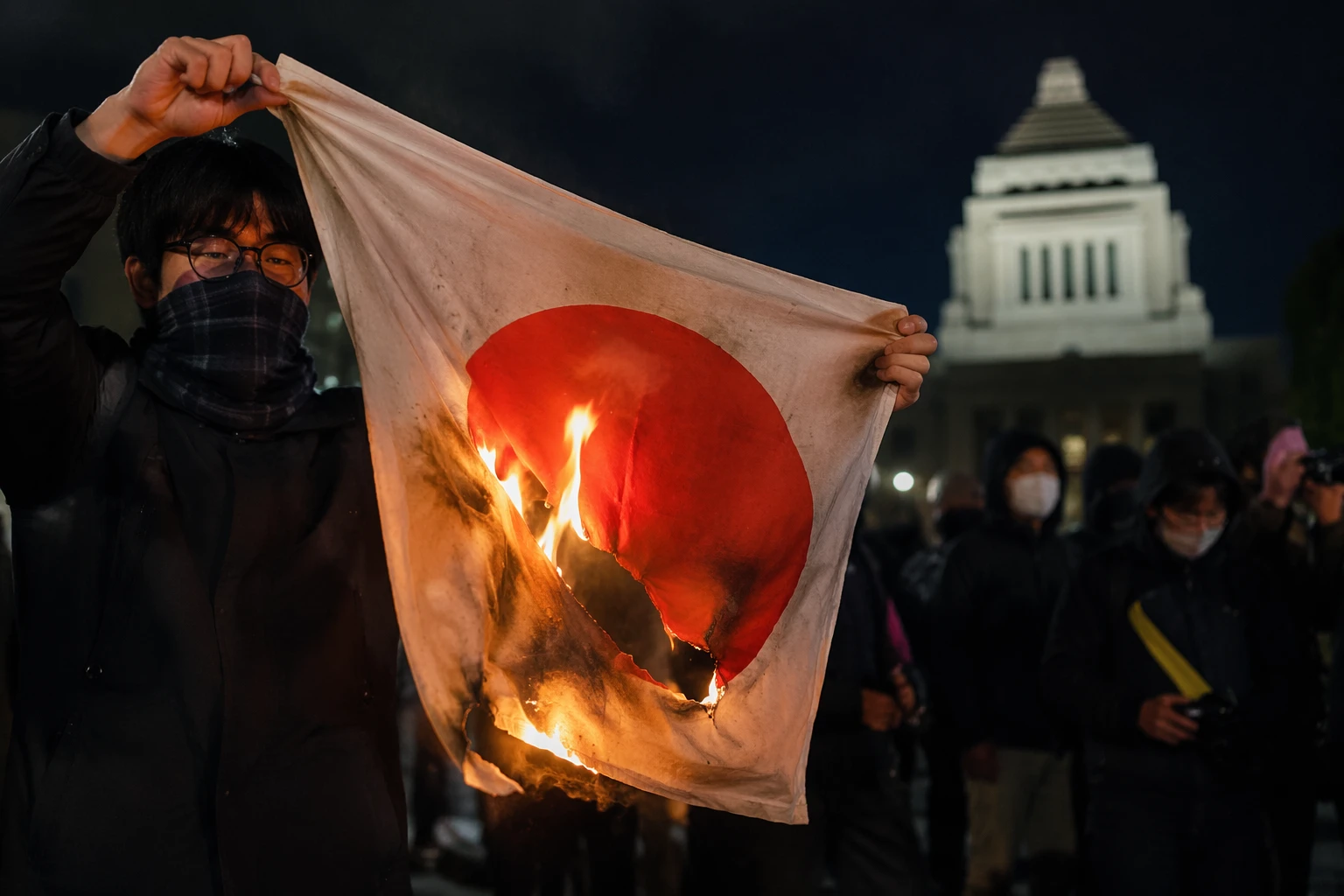
Japan’s Law Regarding the National Flag and National Anthem, which formally recognized the Hinomaru as Japan’s national flag, was passed in August 1999. Japanese law already criminalizes desecration of foreign flags.
In the United States, the Supreme Court’s Texas v. Johnson ruling protects flag burning as symbolic speech. Japan joins the small group of countries that formally penalize some forms of flag desecration.
Sources
- [1]apnews.com
- [2]wral.com
- [3]asia.nikkei.com
- [4]hrw.org
- [5]nippon.com
- [6]english.kyodonews.net
- [7]japantoday.com
- [8]cao.go.jp
- [9]mainichi.jp
- [10]youtube.com